




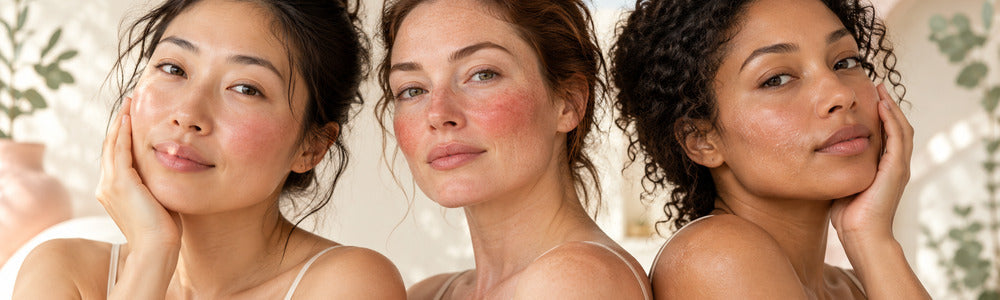
Rosacea vs. Sensitive Skin vs. Barrier Damage
Rosacea, sensitive skin and temporary barrier damage can all cause stinging, burning or visible color changes. Rosacea is a chronic medical condition; sensitive skin is a tendency to react; barrier damage describes impaired outer-layer function. They can overlap, so one symptom rarely settles the diagnosis.
Rosacea has recognizable patterns
Rosacea mainly affects the face and can cause flushing, persistent color, visible blood vessels, acne-like breakouts, eye irritation or skin thickening. It occurs across skin tones; redness may look violet or brown on deeper skin. Symptoms and subtypes vary, and acne can coexist.
The American Academy of Dermatology’s rosacea overview emphasizes professional diagnosis because treatment depends on the signs present.
Sensitive skin describes reactivity
Sensitive skin may burn, sting, itch or flush after products, heat, wind, friction or other exposures. It is not one disease and can accompany rosacea, eczema, allergy or otherwise normal skin. A product marketed for sensitive skin can still trigger an individual reaction.
Barrier damage often follows a trigger
Over-cleansing, repeated acids, scrubbing and strong acne routines can increase water loss and allow irritants to penetrate more easily. Symptoms may include tightness, flaking and widespread stinging. However, persistent central facial redness should not automatically be blamed on a “damaged barrier.”
A calm routine can support comfort
- Wash with lukewarm water and fingertips.
- Use a mild cleanser without scrubbing.
- Apply a simple moisturizer that does not sting.
- Pause optional exfoliants during active irritation.
- Use sun protection that the skin tolerates.
For diagnosed rosacea, follow the treatment plan. Gentle skincare can improve comfort and treatment tolerance, but it does not cure the condition. The AAD’s rosacea skincare tips recommend mild cleansing, moisturizer and sun protection.
Track useful clues
Record flushing triggers, product timing, eye symptoms and how long color changes last. Photographs in consistent light help show patterns. Do not repeatedly provoke a suspected trigger to prove the connection.
Common rosacea triggers vary widely and may include sun, heat, cold, spicy food, alcohol, stress or exercise. A personalized record is more useful than avoiding every item on a generic list. Modify one suspected trigger at a time when practical.
Frequently asked questions
Can rosacea damage the skin barrier?
Rosacea and barrier dysfunction can coexist, but barrier care alone may not control the medical condition.
Does facial redness prove rosacea?
No. Dermatitis, acne, medication reactions and other conditions can alter facial color.
Can natural ingredients trigger rosacea?
Yes. Botanical extracts, essential oils and fragrance can irritate susceptible skin.
This article provides education and cannot diagnose rosacea, dermatitis or another condition.