



Can You Reverse Sun Damage? What Skincare Can and Can’t Change
You can improve the appearance of some sun-related skin changes, but “reverse sun damage” is too broad a promise. Moisturizer can help dryness, certain actives may improve discoloration or fine lines, and sunscreen can prevent additional exposure. None of those steps erase prior UV-induced DNA damage or make suspicious skin changes safe to ignore.
What Skincare Can Improve
Dryness and Roughness
Moisturizer can improve dry, rough skin and support the skin barrier. This is a cosmetic improvement, not a reversal of underlying UV exposure.
Some Uneven Pigmentation
Ingredients such as vitamin C and selected exfoliating or pigment-focused actives may improve the appearance of some dark spots. Results depend on the type of pigmentation and the formula.
Some Fine Lines and Texture
Consistent skincare may soften the appearance of superficial lines and roughness. Deeper wrinkles and structural photoaging are more limited in what topical cosmetics can change.
What Skincare Cannot Reverse
- UV-related DNA mutations.
- Skin cancer or precancerous lesions.
- All forms of hyperpigmentation.
- Deep structural changes in collagen and elastin.
- The cumulative history of sun exposure.
The Most Important Step: Prevent More UV Exposure
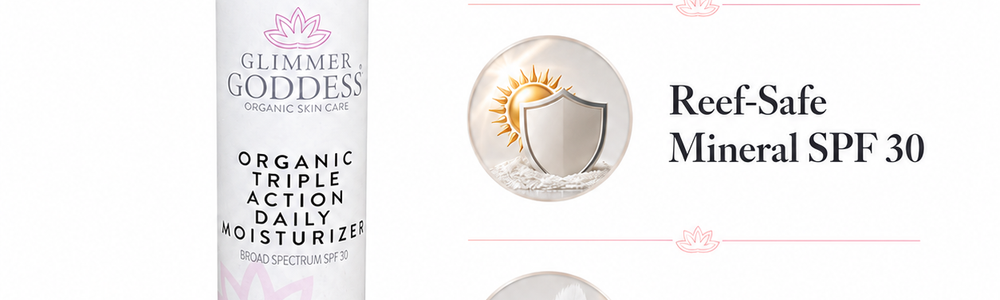
Broad-spectrum sunscreen, shade and protective clothing remain the foundation. The current Glimmer Goddess® Triple Action Daily Moisturizer – Organic SPF 30 is one current morning moisturizer with SPF 30.
For winter-specific UV guidance, see Winter Sun Protection: UV, Snow Reflection & Vitamin D Myths.
What About “Natural” Sun-Damage Remedies?
Aloe, oils, honey and other household ingredients are often promoted as ways to “repair” sun damage. They may moisturize or soothe in some contexts, but they do not reverse UV-induced cellular mutations or remove suspicious lesions. Natural origin is not proof of efficacy or safety.
Can Exfoliation Help?
Gentle exfoliation can improve surface roughness and some uneven-looking tone, but more exfoliation is not better. Irritation can worsen redness and post-inflammatory pigmentation, especially in skin prone to dark marks.
Can Professional Treatments Do More?
Dermatologists may use prescription topicals, chemical peels, lasers or other procedures for selected signs of photoaging. The appropriate option depends on skin type, the specific concern and whether a lesion is cosmetic or medically significant.
When to Get a Skin Check
See a dermatologist for a new or changing mole or spot, bleeding or crusting lesions, a sore that does not heal, or any area that concerns you. Cosmetics should never be used to postpone evaluation of a potentially serious skin change.
Frequently Asked Questions
Can sunscreen reverse old sun damage?
No. Sunscreen helps prevent additional UV injury; it does not erase past exposure.
Can moisturizer repair sun-damaged skin?
It can improve dryness and barrier comfort, but it cannot reverse DNA damage.
Can dark spots fade?
Some can improve with sun protection and appropriate topical care, while others are more persistent or need professional evaluation.
Is a tan a sign of healthy skin?
No. Tanning is a response to UV exposure and should not be treated as a health goal.
The Bottom Line
Some visible effects of sun exposure can be improved; the biological history of UV damage cannot be erased with skincare. Focus on preventing more exposure, improving cosmetic concerns realistically and getting suspicious changes evaluated promptly.
Sources: American Academy of Dermatology: Sun-damaged skin; FDA: Sunscreen and sun protection.