




Vitamin C Serum Benefits: 5 Myths & Facts
Vitamin C deserves its place in modern skincare, but it does not need “miracle” language to be useful. Topical vitamin C has been studied for antioxidant effects, pigmentation and visible signs of photoaging, while the quality of evidence still varies by formula, concentration and study design.
Myth 1: Vitamin C serum works like a natural sunscreen
Fact: Vitamin C is an antioxidant ingredient, not an SPF replacement. It may complement a daytime routine, but only a properly tested and labeled sunscreen should be relied on for UV protection.
Myth 2: The highest percentage is always best
Fact: Concentration is only one part of a formula. Stability, delivery system, pH, supporting ingredients and tolerability all influence performance. A systematic review of topical vitamin C research concluded that more work is still needed to define ideal concentrations and formulations for specific outcomes.
Myth 3: Vitamin C guarantees acne-free skin
Fact: Vitamin C may be included in routines for post-inflammatory marks or general antioxidant care, but it should not be presented as a universal acne treatment. Acne has multiple causes and may require evidence-based medications or dermatologic care.
Myth 4: You should see dramatic results overnight
Fact: Visible changes in tone or photoaging take time. Published studies generally evaluate consistent use over weeks or months, not a night or two. If a product promises an instant transformation of wrinkles or pigmentation, the claim deserves scrutiny.
Myth 5: Every vitamin C serum is essentially the same
Fact: Vitamin C can appear in different forms and formulation systems. Packaging, water exposure, light, air and the overall formula can influence stability. Judge the finished product rather than assuming that one ingredient name guarantees identical performance.
Where the evidence is strongest
Systematic reviews support interest in topical vitamin C for photoaging and pigmentation, while also emphasizing the limited size and consistency of the clinical literature. A realistic expectation is gradual improvement in the appearance of some concerns—not flawless skin or a guaranteed wrinkle cure.
The current Glimmer Goddess® Vitamin C Serum
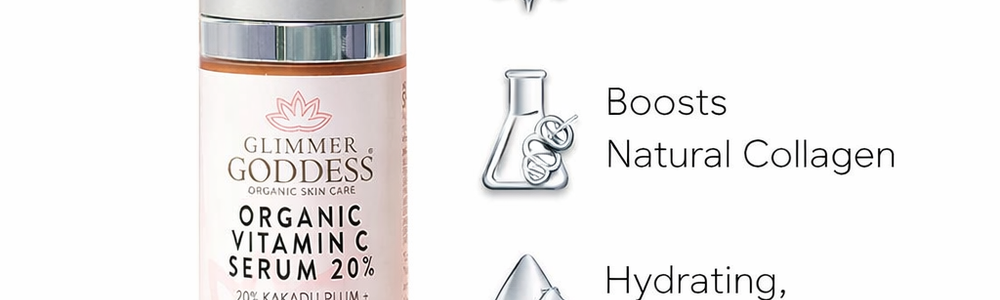
Our live Organic Vitamin C Serum 20% – Brightening Treatment with Hyaluronic & Ferulic Acid is the current product referenced in this guide. Use it according to its directions and pair daytime skincare with broad-spectrum sun protection.
For a deeper evidence review focused specifically on photoaging, read Vitamin C Serum for Aging Skin: What It Can Really Do.
FAQ
Can I use vitamin C in the morning?
Many people do, but there is no rule that every vitamin C formula must be used at a specific time. Follow the directions for your product and use sunscreen during the day.
Does tingling prove vitamin C is working?
No. Irritation is not proof of effectiveness. Persistent burning, swelling or rash is a reason to stop and reassess the product.
Can vitamin C replace my moisturizer?
Not necessarily. A serum and moisturizer perform different formulation roles. Use moisturizer if your skin needs additional hydration or barrier support.
Sources
- PubMed: Topical Vitamin C and the Skin—Systematic Review
- PubMed: Topical Vitamin C and Wrinkles—Systematic Literature Review
- American Academy of Dermatology: Sun Protection
Historical note
The original article called vitamin C “miraculous,” described it as a natural sunscreen and made broad acne and concentration claims. Those statements have been replaced with evidence-based expectations.


