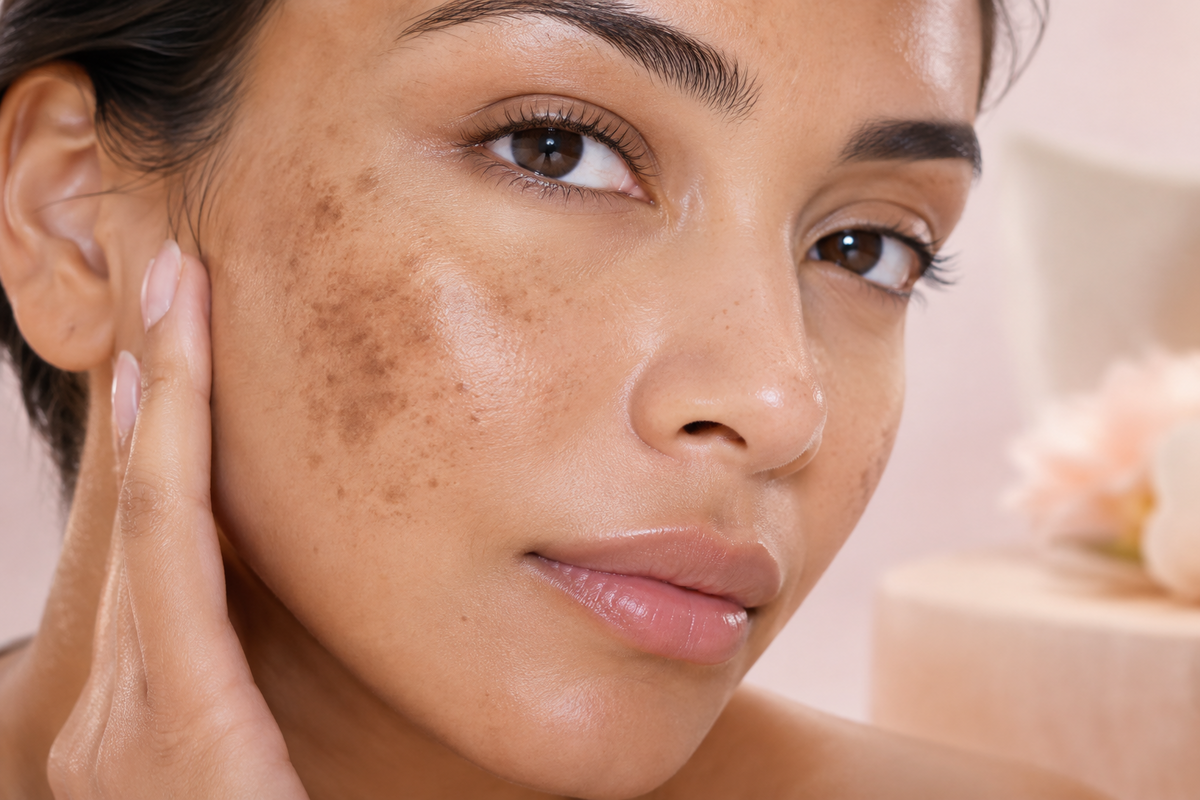





Black Spots on Face: Causes, Dark Spots & Gentle Care
Table of Contents
Last Updated: October 1, 2026
Black or dark spots on the face are often areas of hyperpigmentation, meaning the skin has produced more melanin than the surrounding area. Common causes include sun exposure, inflammation after acne or irritation, and hormonal changes associated with melasma. The most appropriate approach depends on the cause, but daily sun protection, gentle skincare and carefully chosen brightening ingredients are important foundations.
Dark spots usually improve gradually rather than overnight. A consistent routine that protects your skin barrier is generally more helpful than aggressively layering several exfoliating or brightening products at once.
For a broader overview of pigmentation concerns, visit our Dark Spot & Hyperpigmentation Solutions guide.
What Causes Black Spots on the Face?
Hyperpigmentation develops when the skin produces excess melanin, the pigment responsible for skin color. Different processes can trigger that increase, so facial spots that look similar may not necessarily have the same cause.
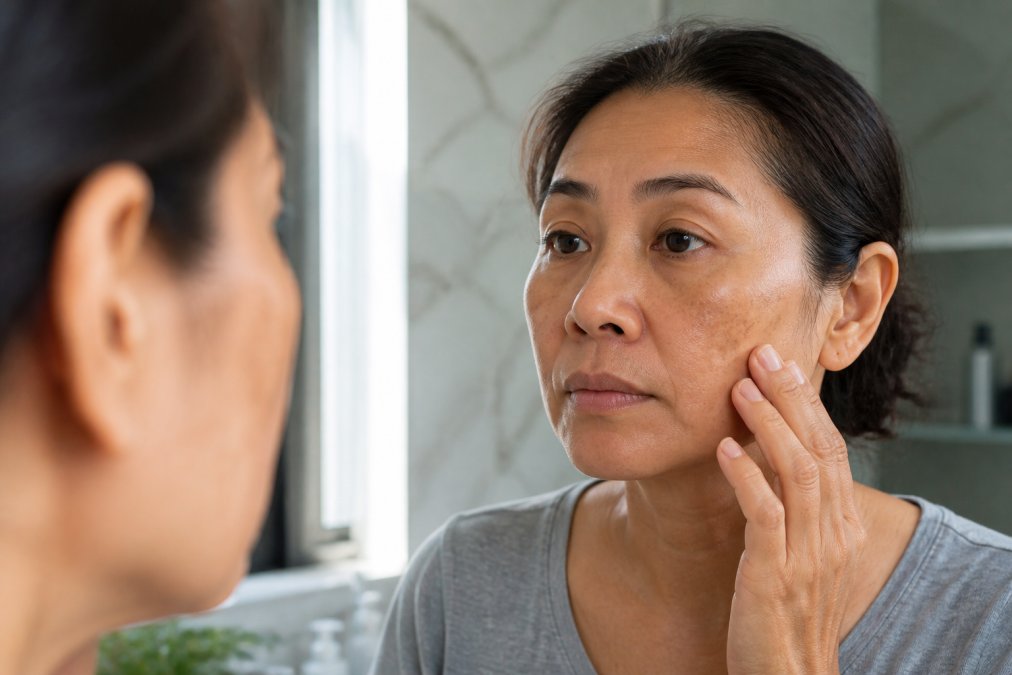
Sun Exposure and Melanin Overproduction
Ultraviolet exposure can stimulate melanin production and contribute to freckles, sun spots and uneven-looking pigmentation. It can also make existing discoloration appear darker.
Daily sun protection is therefore one of the most important steps in both preventing and managing visible dark spots. The American Academy of Dermatology recommends broad-spectrum, water-resistant sunscreen with SPF 30 or higher for exposed skin.
Post-Inflammatory Hyperpigmentation from Acne
Post-inflammatory hyperpigmentation (PIH) is a flat area of discoloration that can remain after acne or another inflammatory skin event resolves. Breakouts, picking, irritation, cuts and other forms of inflammation may stimulate additional pigment production.
PIH is not the same thing as an acne scar. According to the American Academy of Dermatology, these flat post-acne spots are areas of discoloration rather than structural scarring and often fade gradually with time.
Hormonal Changes and Melasma
Melasma is a pigmentation condition that commonly appears as symmetrical brown or gray-brown patches, often on the cheeks, forehead, nose or upper lip. Hormonal changes, sunlight and visible light may all contribute.
Because melasma can be persistent and may require individualized treatment, a dermatologist is the appropriate resource when discoloration appears to be melasma or does not improve with a gentle skincare routine.
Ingredients That Can Help the Appearance of Dark Spots
No cosmetic ingredient can erase every type of pigmentation, but several commonly used skincare ingredients can help support a brighter, more even-looking complexion when used consistently and appropriately.
Niacinamide, Vitamin C & Other Brightening Ingredients
| Ingredient | Cosmetic Role | May Be Useful For | Considerations |
|---|---|---|---|
| Niacinamide | Supports the skin barrier and helps improve the appearance of uneven tone | Dullness, uneven-looking skin tone and barrier support | Introduce gradually if your skin is reactive |
| Vitamin C | Antioxidant support and visible brightening | Dullness and uneven-looking pigmentation | Formula stability and skin tolerance vary by product |
| Kojic Acid | Used in some brightening formulations | Visible discoloration | May irritate sensitive skin |
| Alpha Hydroxy Acids | Exfoliate accumulated surface cells | Dull or uneven-looking surface texture | Overuse can cause irritation |
| Vitamin A / Retinoid Products | Support skin-cell turnover | Texture and some forms of visible discoloration | Can be irritating and may require careful introduction |
How to Exfoliate Without Damaging Your Skin Barrier
Exfoliation can help remove accumulated surface cells that make skin look dull or uneven, but more exfoliation is not necessarily better.
The appropriate frequency depends on the product, concentration, other active ingredients in your routine and your individual skin tolerance. If you develop persistent stinging, burning, redness, unusual tightness or flaking, scale back potentially irritating products and focus on gentle cleansing, moisturizing and sun protection while your skin recovers.
Vitamin C for Dark Spots: How It Fits Into a Routine
Vitamin C is an antioxidant commonly used to support a brighter-looking complexion and improve the appearance of uneven tone. It can fit particularly well into a morning routine alongside sunscreen.
A typical routine may include gentle cleansing, a well-tolerated vitamin C product, moisturizer if needed, and broad-spectrum SPF 30 or higher.
Glimmer Goddess® option: Our Organic Vitamin C Serum 20% – Brightening Treatment with Hyaluronic & Ferulic Acid is formulated for shoppers seeking antioxidant support and a brighter, more even-looking complexion.
Because every complexion is different, review the complete ingredient list and introduce new active products according to the product directions.
Natural Dark Spot Care at Home
Gentle home skincare can support a more even-looking complexion, but natural does not automatically mean safer, gentler or more effective. Botanical ingredients can be useful when they are incorporated into a properly formulated product, but kitchen remedies can be unpredictable.
Ingredients commonly found in soothing or brightening skincare formulas include:
- Aloe vera: commonly used to support a soothing, hydrated feel.
- Green tea: provides antioxidant compounds used in many calming skincare formulas.
- Oat-derived ingredients: commonly used in products intended for sensitive-feeling skin.
- Licorice-derived extracts: used in some formulas intended to support more even-looking tone.
- Niacinamide: supports the skin barrier while helping improve the appearance of uneven tone.
Avoid applying concentrated lemon juice, baking soda or similarly harsh homemade mixtures to facial dark spots. Irritation can make discoloration more noticeable, particularly in pigmentation-prone skin.
When introducing a new skincare product, follow the product directions and consider testing it on a small area first, particularly if your skin is sensitive or reactive.
Acne Scars vs. Dark Spots: What's the Difference?
Acne scars and post-acne dark marks are not the same thing.
Post-acne dark marks or PIH are changes in color. They are typically flat. True acne scars involve structural changes in the skin and may appear indented, pitted or raised.
This distinction matters because topical brightening products can help improve the appearance of pigmentation, but they cannot reconstruct significant structural acne scarring.
| Concern | Typical Appearance | At-Home Approach | When Professional Care May Help |
|---|---|---|---|
| Post-inflammatory hyperpigmentation | Flat area of darker discoloration after inflammation | Daily SPF, gentle skincare and an appropriate brightening product | Persistent or difficult-to-identify discoloration |
| Sun-related pigmentation | Flat brown or darker areas | Daily SPF and appropriate cosmetic brightening products | New, changing or concerning spots should be evaluated |
| Atrophic acne scar | Indented or pitted texture | Skincare can support hydration and overall appearance but cannot rebuild deep structural changes | A dermatologist may discuss procedural options |
| Raised acne scar | Raised or thickened tissue | General skincare has limited ability to change scar structure | Professional evaluation is appropriate |
| Melasma | Often symmetrical patches of discoloration | Gentle skincare and diligent sun protection | Dermatologist-guided care may be useful for persistent melasma |
If you are uncertain whether a mark is pigmentation, an acne scar or another skin concern, do not rely on a home “test” to diagnose it. A dermatologist can distinguish pigmentation from structural scarring and evaluate anything unusual or changing.
Why Irritation Matters
People with medium-to-deep skin tones may be especially prone to visible post-inflammatory hyperpigmentation after irritation or inflammation. This makes carefully selected products and procedures particularly important.
Aggressive exfoliation, strong peels and some procedures can trigger additional inflammation and pigmentation in susceptible skin. Professional treatments should therefore be individualized rather than selected solely according to skin tone or a social-media recommendation.
What If You Have Both Dark Marks and Acne Scars?
It is possible to have both structural acne scars and discoloration in the same area. A gentle at-home routine can focus on sun protection, barrier support and visible pigmentation, while a dermatologist can advise whether professional treatment is appropriate for scar texture.
After Professional Procedures
If you undergo a chemical peel, laser treatment, microneedling or another professional procedure, follow the aftercare instructions given by the clinician or licensed professional who performed it.
Different procedures have different healing timelines, so there is no single universal number of days to stop every active ingredient. In general, protecting healing skin from unnecessary irritation, picking and sun exposure is important, but your provider's instructions should take priority.
Preventing Black Spots and Dark Spots on the Face
Preventing new pigmentation often means reducing two important triggers: light exposure and unnecessary inflammation.
Sunscreen and SPF: Your First Line of Defense
Use a broad-spectrum sunscreen with SPF 30 or higher and follow the directions for application and reapplication. When outdoors, sunscreen works best as part of a broader sun-protection strategy that may include shade, a wide-brimmed hat and protective clothing.
The American Academy of Dermatology notes that tinted sunscreen containing iron oxides can provide additional protection from visible light, which is particularly relevant for melasma and pigmentation-prone skin.
Glimmer Goddess® sun protection: Explore our Organic Reef-Safe Sunscreen – Broad Spectrum SPF 40 or browse the complete Glimmer Goddess sunscreen collection.
Dark Spots in Deeper Skin Tones
Post-inflammatory hyperpigmentation is a particularly common concern in medium-to-deep skin tones. According to the American Academy of Dermatology, controlling the trigger that creates inflammation is an important part of preventing new dark marks.
That means treating the skin gently, minimizing picking and friction, avoiding products that repeatedly burn or sting, and protecting the skin from UV and visible-light exposure.
Skin tone alone should not determine a complete skincare or procedural plan. Individual sensitivity, medications, skin conditions and the cause of the discoloration all matter.
How to Layer Active Ingredients Without Overwhelming Your Skin
There is no universal rule that every vitamin C product, niacinamide product, exfoliating acid or Vitamin A formula must always be separated. Finished formulations vary, and some combinations are well tolerated while others can be irritating.
A safer approach is to:
- Introduce one new active product at a time.
- Follow the directions on each finished product rather than relying on generalized internet mixing rules.
- Avoid introducing several exfoliating or potentially irritating products simultaneously.
- Reduce frequency if persistent stinging, burning, redness or peeling develops.
- Ask a dermatologist or prescribing clinician how to combine prescription treatments with cosmetic products.
Our Organic Niacinamide Serum 5% is one lightweight option for shoppers seeking barrier support and improvement in the appearance of uneven-looking tone.
Other Factors That Can Influence Pigmentation
- Hormonal changes: pregnancy, hormonal medications and other hormonal shifts can contribute to melasma in susceptible people.
- Picking and scratching: repeated inflammation can leave new post-inflammatory dark marks.
- Friction: repeated rubbing may contribute to irritation and discoloration in some individuals.
- Visible light: sunlight in the visible spectrum can contribute to melasma and hyperpigmentation, particularly in darker skin tones.
The Emotional Impact of Persistent Dark Spots
Persistent facial discoloration can affect confidence and quality of life. If a pigmentation concern is causing significant distress, that is a reasonable reason to discuss treatment options with a dermatologist. Cosmetic concerns do not have to be medically dangerous to matter to the person experiencing them.
When to See a Dermatologist for Facial Spots
Not every brown, black or darker spot on the face is routine hyperpigmentation.
See a board-certified dermatologist if you notice a spot or growth that:
- changes in size, shape or color;
- bleeds, repeatedly crusts or does not heal;
- becomes raised or noticeably different from surrounding spots;
- itches persistently or becomes painful;
- appears unusual to you; or
- cannot be confidently identified as ordinary post-inflammatory discoloration.
Professional evaluation is also appropriate when pigmentation is persistent, spreading, worsening, suspected to be melasma, or not improving despite several months of careful skincare and sun protection.
Frequently Asked Questions
What causes black or dark spots on the face?
Common causes include sun exposure, post-inflammatory hyperpigmentation after acne or irritation, and melasma. Other skin conditions can also cause darker spots, which is why new, changing or unusual marks should be evaluated rather than automatically treated as hyperpigmentation.
Can vitamin C help the appearance of dark spots?
Vitamin C is commonly used in cosmetic skincare to support a brighter-looking complexion and improve the appearance of uneven tone. Results depend on the formula, skin tolerance and consistent use, and daily sun protection remains an important part of the routine.
Are dark spots from acne actually scars?
Not always. Flat discoloration left after a blemish is often post-inflammatory hyperpigmentation rather than a true acne scar. Acne scars involve structural changes in the skin and may be indented, pitted or raised.
How long do dark spots take to fade?
There is no universal timeline. Some superficial post-inflammatory marks gradually improve over several months, while deeper pigmentation and melasma may persist much longer. The cause, pigment depth, sun exposure and ongoing inflammation all affect how quickly visible improvement occurs.
Should I exfoliate dark spots every day?
Not necessarily. Excessive exfoliation can irritate the skin, and inflammation may make discoloration more noticeable. Follow the directions for your specific exfoliating product and reduce use if persistent stinging, redness or peeling develops.
When should I see a dermatologist about a facial spot?
Seek professional evaluation for a new or changing spot, especially one that changes in size, shape or color, bleeds, repeatedly crusts, does not heal or otherwise looks unusual. A dermatologist can also help with persistent melasma, hyperpigmentation or true acne scarring.
A Gentler Path to More Even-Looking Skin
Dark spots rarely require an aggressive routine. Start by understanding the likely cause, protect your skin from UV exposure, minimize unnecessary irritation and introduce targeted skincare ingredients gradually.
If you want a targeted serum, explore the Glimmer Goddess® Organic Dark Spot Serum, formulated to help improve the appearance of visible discoloration and uneven-looking skin tone.
Glimmer Goddess® skincare is handcrafted in small batches in Texas with vegan, cruelty-free formulas and certified organic ingredients where indicated. Our goal is to help you build a thoughtful skincare routine without overpromising what a cosmetic product can do.
This article is provided for general skincare education and is not intended to diagnose, prevent or treat a medical condition. Consult a board-certified dermatologist for persistent, changing or concerning pigmentation or for personalized medical treatment.