



Dark Circles vs. Puffiness: Why Aloe Vera Isn’t a Universal Fix
Dark circles and under-eye puffiness are often grouped together, but they are not the same concern. Dark circles can come from pigmentation, visible blood vessels, facial anatomy and shadowing, while puffiness involves swelling or prominent under-eye tissue. Aloe vera may feel soothing on dry skin, but it cannot correct every cause of either problem.
Why Dark Circles Happen
Under-eye darkness can reflect genetics, thinner skin, visible blood vessels, pigmentation, rubbing from allergies or shadows created by the natural contour of the eye area. Because the causes vary, no single cosmetic ingredient works for everyone.
For a deeper evidence review, see Aloe Vera for Dark Circles: What the Evidence Really Says.
Why Puffiness Happens
Puffiness is different from color. It may be more noticeable after sleep, high-sodium meals, crying, allergies or normal age-related changes around the eye. A cool compress can sometimes make temporary puffiness feel more comfortable, but persistent swelling deserves a closer look.
What Aloe Vera Can Realistically Do
Aloe-containing skincare may add hydration and a cooling feel to the skin surface. That can be pleasant when the under-eye area feels dry. It does not reliably erase hereditary pigmentation, hollowing, visible vessels or structural eye bags.
Avoid putting raw plant material, essential oils or cosmetic products into the eye. Even “natural” ingredients can irritate the delicate eye area.
Our guide Aloe Vera Around the Eyes: Skin Benefits, Safety & What Not to Put in Your Eyes covers the safety distinction in more detail.
What About Vitamin C Eye Products?
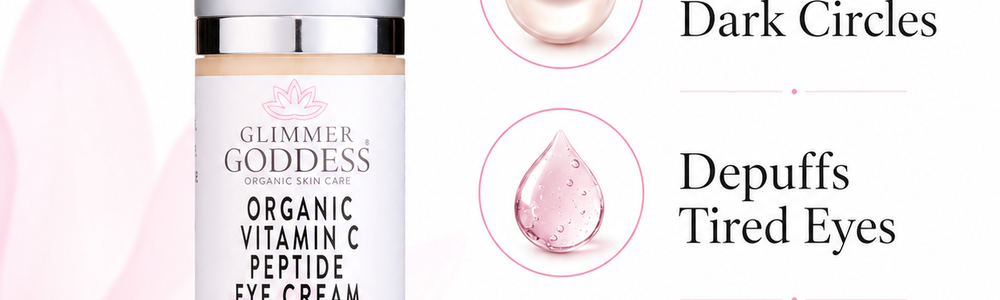
A current Glimmer Goddess® option is the Organic Vitamin C Eye Serum – Peptide Treatment for Dark Circles. It is a cosmetic eye-area product intended to support the appearance and feel of the skin; it should not be framed as a guaranteed fix for every cause of dark circles.
A Simple Under-Eye Routine
- Cleanse gently without rubbing the eye area.
- Apply a small amount of a well-tolerated eye-area moisturizer or serum.
- Use daytime sun protection around the orbital area as directed, avoiding the eyes themselves.
- Manage known allergy triggers with appropriate medical guidance rather than relying on cosmetics alone.
- Avoid repeatedly rubbing or pulling the skin.
When Cosmetic Skincare Is Unlikely to Be Enough
If darkness is mostly caused by deep tear-trough shadowing or prominent anatomy, topical skincare may have limited effect. If swelling is sudden, one-sided, painful or associated with redness of the eye, vision changes or difficulty breathing, seek medical care.
Frequently Asked Questions
Can aloe vera remove dark circles permanently?
No. It may hydrate the skin surface, but it cannot permanently correct all pigment, vascular or structural causes of dark circles.
Can I use fresh aloe directly under my eyes?
Fresh plant material can vary and may irritate. A properly formulated eye-area cosmetic is more predictable, and nothing should be placed in the eye.
Are puffiness and dark circles the same thing?
No. Puffiness is swelling or prominence; dark circles refer to visible darkness. They can occur together but may need different approaches.
The Bottom Line
Start by identifying whether the concern is color, puffiness, dryness or shadowing. Aloe can be a soothing cosmetic ingredient, but it is not a universal under-eye treatment—and persistent or unusual symptoms deserve professional evaluation.
Sources: American Academy of Dermatology: Dark circles under the eyes; Review of aloe vera in dermatology.