




Kakadu Plum and Other Plant Sources of Vitamin C
Plants such as Kakadu plum, camu camu, acerola and rose hips are often highlighted as natural sources of vitamin C. Their nutritional profiles are interesting, but comparing fruits by a single milligram-per-100-gram number can be misleading when the real question is how a finished skincare formula performs.
Plant vitamin C levels naturally vary
Vitamin C content can differ by species, cultivar, growing conditions, ripeness, processing and storage. Research on Kakadu plum, for example, has found substantial variation across samples. That is why an unsourced “highest vitamin C fruits” chart should not be treated as a fixed ranking.
Food data is not the same as topical skincare data
A fruit may be rich in vitamin C when eaten, but topical delivery depends on the ingredient used in the product and the way it is formulated. Ascorbic acid can be unstable, and vitamin C derivatives differ in stability and skin penetration.
Common botanical sources used in skincare
- Kakadu plum — an Australian fruit known for high vitamin C and phenolic content.
- Acerola — a vitamin C–rich fruit often used in extracts.
- Camu camu — another fruit valued for its vitamin C content.
- Rose hip — used in skincare primarily as an oil or extract; its contribution depends on the exact ingredient form.
How to evaluate a vitamin C product
Instead of choosing solely by the fruit named on the front label, look at the complete formula, packaging, storage directions and how well your skin tolerates it. Consistent sunscreen remains essential because vitamin C skincare does not replace UV protection.
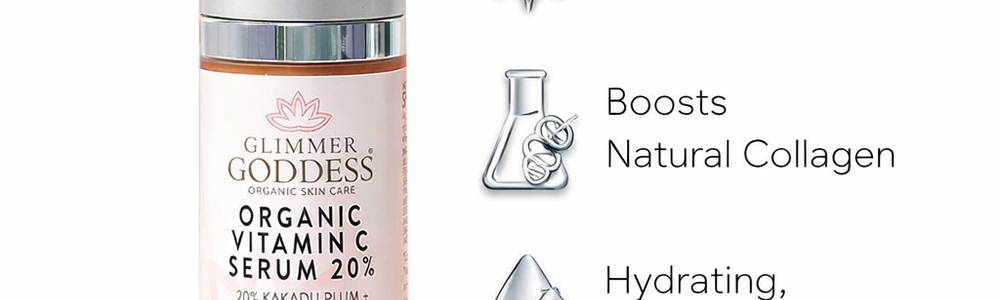
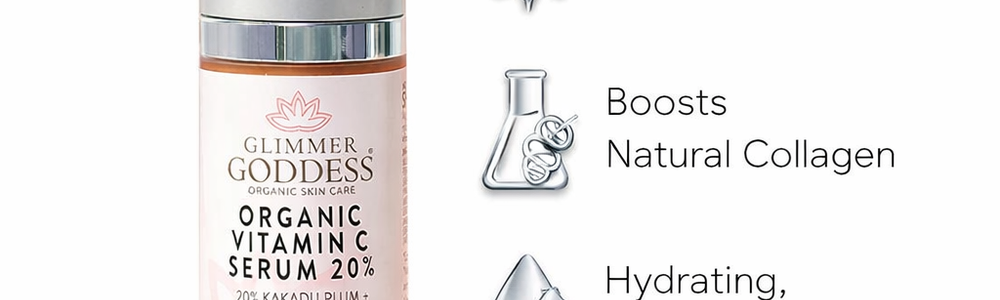
Glimmer Goddess® formula example
Our active Organic Vitamin C Serum 20% combines plant-based vitamin C sources with hyaluronic and ferulic acid. We recommend judging the complete serum—not any one fruit extract—as the cosmetic formula.
Bottom line
Plant sources of vitamin C can be valuable ingredients, but topical performance is a formulation question. Avoid dramatic rankings and focus on evidence, stability, tolerability and realistic cosmetic expectations.