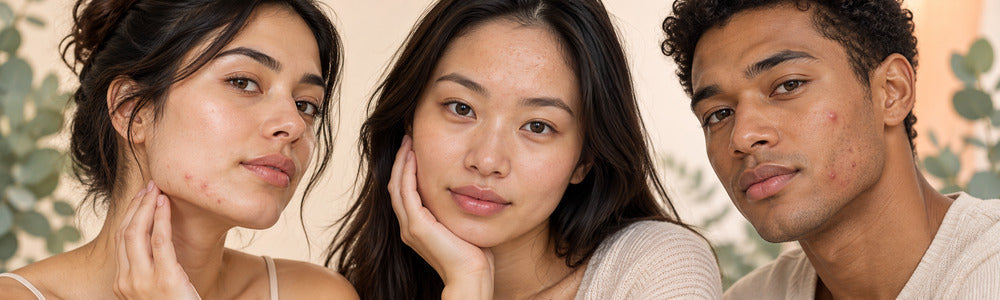




Sensitive Skin vs Damaged Skin Barrier vs Eczema: How to Tell the Difference
Sensitive Skin vs Eczema vs a Damaged Skin Barrier: How to Tell the Difference
If your face suddenly feels tight, stings after cleansing, or reacts to products youโve used for years, itโs easy to assume you have โsensitive skin.โ But in reality, many people are dealing with one of three things: sensitive skin, eczema, or a damaged skin barrier. This page helps you quickly identify whatโs most likely happeningโso you can follow the right routine without trial-and-error. Every recommendation is crafted with vegan, organic ingredients your skin will love, handcrafted in Texas.
Fast Answer: Which One Sounds Like You?
- If your skin reacts easily (fragrance, weather, new products) but doesnโt have persistent rash/patches โ itโs likely Sensitive Skin.
- If your skin suddenly stings, burns, peels, or feels โrawโ after over-cleansing or exfoliating โ itโs likely a Damaged Skin Barrier.
- If you get itchy patches, recurring flares, or diagnosed dermatitis โ itโs likely Eczema (atopic dermatitis) or an eczema-like flare.
If youโre unsure, start with patch testing before adding anything new: How to Patch Test Skincare (Sensitive Skin).
What โSensitive Skinโ Usually Means
Sensitive skin is reactive skin. Itโs more likely to sting, flush, or feel uncomfortable in response to triggers like fragrance, wind, heat, cold, or overly active formulas. Sensitive skin can be a long-term skin typeโor it can happen temporarily when your barrier is stressed.
Common signs of sensitive skin
- Stinging with fragranced products or strong actives
- Redness that comes and goes (often with temperature changes)
- Dryness that improves with gentle hydration
- โI canโt use most productsโ feelingโeven when skin looks mostly normal
Best next step: Sensitive Skin Care Routines
What a โDamaged Skin Barrierโ Usually Means
A damaged skin barrier means your skinโs protective outer layer (lipids + hydration factors) is compromisedโso moisture escapes and irritants get in more easily. This often happens after over-cleansing, hot water, harsh exfoliation, too many actives, or sudden weather changes.
Common signs of a damaged barrier
- Burning or stinging even with โgentleโ products
- New tightness, flaking, or peeling
- Skin feels hot, tender, or looks inflamed
- Breakouts + dryness at the same time (a classic barrier signal)
Best next step: Skin Barrier Repair Routine (AM + PM) and Skin Barrier Repair Creams
What โEczemaโ Usually Means
Eczema (often atopic dermatitis) is an inflammatory condition that can involve an impaired barrier, itch, and recurring flares. Many people with eczema also have sensitive skinโbut not all sensitive skin is eczema. If youโve been diagnosed, follow your medical guidance first. This page is skincare support, not medical care.
Common signs of eczema
- Itchy patches (often intense itch)
- Recurring flares in the same areas
- Dry, scaly, rough plaques or rash-like patches
- Common locations: hands, inner elbows, behind knees, neck, chest (yesโeczema can occur on the chest)
Best next step: Eczema Skincare Routine (AM + PM)
Decision Guide: Which Routine Should You Follow?
Choose the Sensitive Skin Routine ifโฆ
- Your main issue is reactivity (redness, stinging) without persistent rash/patches
- Your skin improves quickly with fragrance-free hydration
- You want a gentle daily routine that stays stable long-term
Go to Sensitive Skin Care Routines
Choose the Skin Barrier Repair Routine ifโฆ
- Your skin suddenly became reactive after over-cleansing or exfoliating
- You feel burning even with simple products
- You see peeling, flaking, tightness, or โrawโ texture
Go to Skin Barrier Repair Routine (AM + PM)
Choose the Eczema Routine ifโฆ
- You have itching + recurring patches or flares
- Your skin behaves in cycles (flare โ calm โ flare)
- Youโve been diagnosed (or strongly suspect eczema)
Go to Eczema Skincare Routine (AM + PM)
Product Support
When youโre unsure, start with the simplest, most barrier-respectful essentials firstโthen build.
Before introducing anything new, patch test: How to Patch Test Skincare (Sensitive Skin).
People Also Ask
- How do I know if my skin barrier is damaged or not? Look for sudden burning/stinging, peeling, tightness, and โrawโ sensitivityโespecially after over-cleansing or exfoliating.
- What is the 3 minute rule for eczema? A common guideline is to moisturize quickly after bathing/showering (often within a few minutes) to reduce moisture loss and calm dryness.
- Can you get eczema on your chest? Yesโeczema can appear on the chest, neck, hands, inner elbows, and other areas.
- Is eczema the same as sensitive skin? Noโeczema is an inflammatory condition; sensitive skin is a tendency to react. They can overlap, but theyโre not identical.
FAQs
Is eczema the same as sensitive skin?
No. Eczema is an inflammatory condition (often atopic dermatitis) with flares and itchy patches. Sensitive skin is a tendency to react to triggers. They can overlap, but the routines and flare-management needs can differ.
How do I know if my skin barrier is damaged?
Common signs include burning or stinging from gentle products, sudden tightness/peeling, redness that lingers, and skin feeling โrawโ after cleansing or exfoliating.
Should I wash my face in the morning if my skin barrier is damaged?
Often, yesโbut keep it gentle. If your skin is very reactive, consider a rinse with lukewarm water or a minimal cleanse, then go straight into hydration + barrier support. Avoid hot water and scrubbing.
What is an AM and PM skincare routine?
An AM routine focuses on gentle cleansing, hydration, moisturization, and daily UV protection. A PM routine focuses on cleansing away the day, then deeper hydration and repair-focused moisture support.
References
- American Academy of Dermatology โ Sensitive skin, dermatitis, and skincare guidance.
- National Eczema Association โ Eczema basics, flare patterns, and supportive care.
- DermNet โ Skin barrier function, dermatitis, and eczema clinical summaries.
- Cleveland Clinic โ Barrier disruption, irritation, and practical skincare recommendations.
- PubMed โ Research on barrier recovery, moisturization, and irritation triggers.