



What Calms and Nourishes Dry or Sensitive Skin for Streak-Free Tanning?
Last Updated: October 30, 2026
Quick Summary
Streak-free tanning on dry or sensitive skin starts with calming and conditioning the skin before color goes on. Exfoliate gently 24 hours ahead, moisturize dry zones like elbows and knees, and apply self-tanner in thin layers with a mitt. Choose fragrance-free, soothing formulas and hydrate daily once color develops.
- Exfoliate 24 hours before application, never the same day, and pat skin dry instead of rubbing.
- Look for shea butter, colloidal oatmeal, aloe vera, panthenol, and ceramides to calm reactive skin.
- Avoid added fragrance, essential oils, denatured alcohol, and high concentrations of exfoliating acids.
- Let moisturizer fully absorb before tanning, since a tacky surface can dilute formula and cause streaks.
- DHA-free tanners with erythrulose build gradually over three to five days for forgiving application.
Table of Contents
- Why Dry and Sensitive Skin Turns Self-Tanner Patchy
- How to Prep Skin for Self-Tanner Without Stripping It
- The Nourishing Layer: Moisturizers That Calm Before Color
- How to Apply Self-Tanner Evenly on Dry or Sensitive Skin
- Self-Tanning Tips for Dry Skin: What to Do After Application
- How to Fix Streaky Self-Tanner Without Starting Over
- Choosing a Formula: DHA-Free vs. Fast-Developing Tanners
- Build Your Streak-Free Tanning Routine
- Frequently Asked Questions
Why Dry and Sensitive Skin Turns Self-Tanner Patchy
Dry and sensitive skin turns self-tanner patchy because thirsty skin grabs color unevenly. Flaky patches absorb more formula than smooth areas, and reactive skin can flush or sting when a tanning formula lands on a compromised barrier. The result is a blotchy, streaky finish that no amount of blending can rescue.
Streak-free tanning starts one step before the bottle: calm and condition the skin first, then apply color. A well-hydrated surface absorbs self-tanner more evenly, which is why the prep and moisturizing steps matter as much as the formula itself.
The most common mistake is exfoliating aggressively the day of application. Over-scrubbing strips the barrier that sensitive skin already struggles to maintain. Gentle, spaced-out exfoliation works better than a single harsh session.
How to Prep Skin for Self-Tanner Without Stripping It
Prepping skin for self-tanner without stripping it means exfoliating gently a day ahead, then moisturizing dry zones before color goes on. Skin preparation plays a key role in how even a tan looks.
A simple prep sequence:
- Exfoliate 24 hours before application, not the same day
- Use a soft scrub or washcloth, never a rough mitt on reactive areas
- Pat skin dry instead of rubbing
- Moisturize elbows, knees, ankles, and heels before tanning
- Skip oils and heavy creams on the areas where color will set
- Patch-test a small spot if skin is highly reactive
The day-of rule is simple: clean, dry, and lightly moisturized at the joints only. A daily moisturizer applied the night before helps skin feel supple and ready.
The Nourishing Layer: Moisturizers That Calm Before Color
The right moisturizer calms skin and creates a smoother surface for color, which is the foundation of streak-free tanning. Hydration supports skin softness and helps the tan develop more evenly across the body. But for dry or sensitive skin, the formula matters as much as the moisture, some ingredients soothe, while others can trigger redness or stinging.
A Simple Ingredient-Screening Framework for Sensitive Skin
Before you layer any moisturizer under self-tanner, scan the label for these categories:
- Soothing ingredients to look for: shea butter, cocoa butter, colloidal oatmeal, aloe vera, tamanu oil, panthenol (pro-vitamin B5), and ceramides. These help calm dry, reactive skin and support the barrier.
- Potential irritants to approach with caution: added fragrance, essential oils (especially citrus, peppermint, and eucalyptus), denatured alcohol, and high concentrations of exfoliating acids. These can sting compromised skin or increase sensitivity.
- Patch-test first: apply a small amount to the inner forearm and wait 24 hours before using a new product on larger areas. This is especially important if you have a history of eczema or contact dermatitis.
A common pattern is that skin tolerates a short, simple ingredient list better than a long one with many botanicals. When in doubt, choose the fragrance-free option.
Body Butters and Lotions for Very Dry Skin
For very dry skin, use a rich body butter as part of your daily moisturizing routine, preferably the evening before tanning. Heavy oils or body butter immediately before applying sunless tanner can interfere with even color development. The Organic Whipped Body Butter for Extremely Dry Skin blends shea butter, cocoa butter, coconut oil, sweet almond oil, and vitamin E to soften dry-feeling skin. Massage a small amount into clean, slightly damp skin on non-tanning days or the evening before application. On tanning day, follow your self-tanner's directions and use only a light amount of moisturizer on particularly dry joints if needed.

Lighter options suit those who prefer a faster finish. The Organic Coconut Milk Body Lotion absorbs quickly, while the Organic Silky Dry Body Oil layers without heaviness. Each is designed to support hydration.
Fragrance-Free Options for Reactive Skin
Fragrance-sensitive skin may benefit from an unscented option with no added essential oils. Check the current full ingredient list and patch-test any new product; no formula can guarantee freedom from irritation.
Shoppers with fragrance sensitivities can look for fragrance-free options in the collection. Screening ingredients before application is the safest way to avoid irritation.
How to Apply Self-Tanner Evenly on Dry or Sensitive Skin
Applying self-tanner evenly on dry or sensitive skin means working in thin layers with a tanning mitt and blending the joints carefully. Even application depends on light coats, not a heavy hand.
Start at the ankles and work upward in circular motions. Use sparingly around elbows, knees, ankles, hands, and feet. Wash hands thoroughly after application and let the formula dry completely before dressing.
The DHA Free Self Tanner for Sensitive Skin - Glow builds gradually over three to five days with erythrulose, which gives a forgiving, beginner-friendly application.

Self-Tanning Tips for Dry Skin: What to Do After Application
Self-tanning tips for dry skin center on maintaining hydration after color develops. Moisturizing daily can help the tan look smoother as it develops and fades.
DHA Free Self Tanner for Sensitive Skin – Glow →
A Step-by-Step Post-Tan Routine for Dry or Sensitive Skin
Follow this schedule to support both skin comfort and tan longevity:
- First 6-8 hours: Let the tan fully develop. Avoid showering, sweating heavily, or applying any product to the treated areas.
- First shower: Use lukewarm water and a gentle, fragrance-free body wash. Pat skin dry with a soft towel, do not rub.
- Daily moisturizing: Apply a rich body butter or lotion every morning and evening, focusing on elbows, knees, ankles, and any dry patches. The Organic Whipped Body Butter for Extremely Dry Skin is a good fit for very dry areas.
- Every 2-3 days: Gently exfoliate with a soft washcloth or mild scrub to prevent dead skin from building up unevenly. Avoid harsh mitts on reactive areas.
- Before bed: A night moisturizer applied to dry zones supports skin softness while the tan sets.
Troubleshooting Uneven or Irritated Results
Even with careful prep, dry or sensitive skin can develop issues. Here is how to respond:
- Streaks or patchiness: Wait for the tan to fully develop, then gently exfoliate only the uneven areas and apply a gradual tanner over the whole area to blend. Moisturize daily to soften the transition.
- Dry, flaky patches: Increase moisturizer frequency and switch to a richer butter. Avoid scrubbing the flaky area, which can remove color unevenly.
- Irritation or stinging: Stop using the product immediately. Wash the area with cool water and a gentle cleanser, then apply a fragrance-free soothing lotion. If irritation persists, consult a healthcare professional.
- Fading too fast: Avoid long, hot showers and harsh body washes, which speed up fading. Reapply a gradual tanner every few days to maintain color.
Consistency matters more than intensity in a tanning routine.
How to Fix Streaky Self-Tanner Without Starting Over
Fixing streaky self-tanner without starting over means buffing the uneven areas and blending with a gradual formula. Light exfoliation on the streaks softens the contrast, and a slow-building tanner evens the tone over a few days.
Try these steps:
- Wait for the tan to fully develop first
- Gently exfoliate only the streaky areas
- Apply a gradual tanner over the whole area to blend
- Moisturize daily to soften the transition
- Give it a few days before judging the result
Watch out: scrubbing a fresh tan too soon removes color unevenly and can leave the skin more irritated than before.
Choosing a Formula: DHA-Free vs. Fast-Developing Tanners
DHA-free tanners build color slowly with erythrulose, while fast-developing tanners use DHA to create visible color within hours. The right choice depends on skin sensitivity and how much control the user wants over depth.
| Formula | How Color Develops | Best For | Consideration |
|---|---|---|---|
| DHA-free (erythrulose) | Gradual, over 3-5 days | Sensitive or reactive skin | Slower to build |
| Fast-developing (DHA + erythrulose) | Visible within hours | Events, experienced tanners | Less forgiving on dry patches |
The DHA Free Self Tanner for Sensitive Skin - Glow suits reactive skin that wants a believable, never-orange finish. The Organic Self Tanner - Fast Bronze Glow combines DHA and erythrulose with aloe vera, coconut oil, and shea butter for a golden-bronze result in hours.
For a deeper roundup, see 7 Best Natural Self-Tanners for Sensitive Skin.
Build Your Streak-Free Tanning Routine
Building a streak-free tanning routine means treating hydration as the first step, not an afterthought. A repeatable sequence keeps dry or sensitive skin calm and the color even.
The routine: exfoliate gently a day ahead, moisturize dry zones, apply in thin layers, then hydrate daily once color develops. For a full walkthrough, read How to Get a Natural Tan Without DHA: 2026 Guide.
Consistency matters more than intensity.
Choosing the Best Self-Tanner for Dry or Sensitive Skin
When comparing self-tanners for dry or sensitive skin, focus on the full ingredient list, fragrance preferences, the type of tanning agent, how quickly color develops, and whether the product's application instructions suit your routine. Reviews can help you understand the application experience, but individual results vary and a product described as gentle is not automatically irritation-free.
What makes a self-tanner dermatologist-recommended?
No one formula is universally dermatologist-recommended for sensitive skin. If you have eczema, persistent irritation, contact allergies, or an impaired skin barrier, ask your dermatologist about suitable products and postpone self-tanning on inflamed or broken skin. Patch-test a new formula before a larger application.
DHA-free self-tanner for the face and body
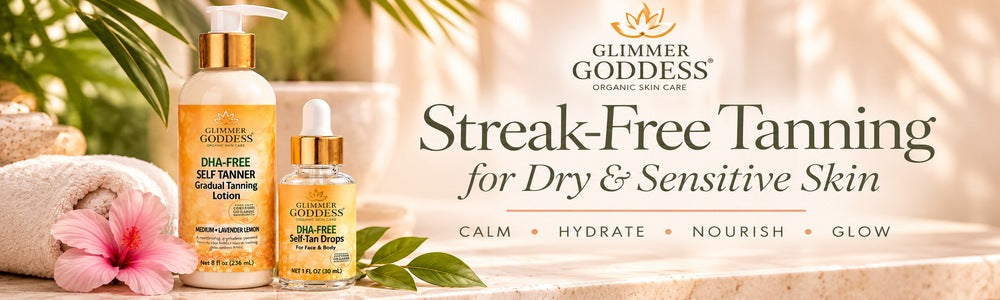
For a slower-developing option, consider Glimmer Goddess DHA-Free Self Tanner Lotion for the body or DHA-Free Tanning Drops for customizable face-and-body color. Their erythrulose-based color develops gradually over approximately 3–5 days; follow each product's directions and do not expect immediate darkening. Neither product replaces daily sunscreen.
How to evaluate self-tanner reviews and shopping listings
Whether shopping on a brand website or a marketplace, read recent reviews for streaking, transfer, skin comfort, fragrance, and actual color-development time. Verify that the listing describes the same scent, size, and formula you intend to purchase. Avoid treating a single review or a competitor comparison as a guarantee of results.
Frequently Asked Questions
Can I get a fake tan on dry skin?
Yes. Dry skin can be self-tanned, but flaky areas may develop darker or unevenly. Keep skin hydrated in the days leading up to application, avoid scrubbing irritated patches, and use less tanner over especially dry joints. If skin is cracked, inflamed or stinging, allow it to recover before applying a cosmetic tanning formula. Patch-test any new product.
What is the best fake tan that doesn't leave streaks?
No self-tanner is guaranteed to be streak-free on every skin type; technique matters as much as the formula. A gradual lotion can be easier to control than a fast-developing product, especially for beginners. Glimmer Goddess DHA-Free Self Tanner Lotion builds color over three to five days, allowing you to apply thin, even layers with a mitt and adjust gradually. Keep heavy oils away from freshly prepared skin and moisturize between tanning sessions.
What is the best sunless tanner for dry skin?
For dry skin, look for a moisturizing formula that spreads evenly and that you can tolerate. Glimmer Goddess DHA-Free Self Tanner Lotion is a butter-rich option that uses erythrulose for gradual color development over approximately three to five days. No single self-tanner is best for everyone. Moisturize regularly between tanning sessions, but avoid a heavy layer of body butter or oil immediately before applying color.
What should you look for in a self-tanner for sensitive skin?
Start with the ingredient list and the mechanism. A DHA-free formula using erythrulose is a common choice for reactive skin because it builds color slowly and is easier to control. Check for fragrance-free options if you react to essential oils, and look for soothing bases such as aloe vera, coconut oil, or shea butter. Patch-test on your inner arm 24 hours before a full application, and avoid formulas with heavy fragrance if your skin has reacted before.
How to self tan with no streaks?
Gently exfoliate a day ahead if your skin tolerates it, then start with clean, dry skin. Smooth a small amount of lightweight moisturizer onto especially dry elbows, knees and ankles, allowing it to absorb. Apply self-tanner evenly with a mitt, use less product on rough areas, and follow the formula's instructions. With Glimmer Goddess DHA-Free Self Tanner Lotion, build the color gradually over several days instead of applying heavy layers at once.
How do you fix streaky self-tanner on sensitive skin?
Wait until the tan has fully developed, then exfoliate the streaky area gently with a soft cloth or sugar scrub and rinse. Avoid harsh scrubbing, which can irritate reactive skin. Reapply a small amount of tanner to the faded patch and blend outward. For next time, prep with exfoliation and a moisturizing layer, and apply the tanner in thin, even coats rather than one heavy pass.
Can you moisturize before applying self-tanner?
Yes, and for dry skin it helps. Moisturize regularly in the days leading up to tanning. On application day, use only a light amount on very dry joints such as elbows, knees and ankles, and allow it to absorb. Avoid applying body butter or heavy oils over the entire area immediately before using self-tanner, since they can interfere with even color development. After your tan sets, moisturize daily to extend longevity and keep skin supple.
Dry and sensitive skin ask more of a tanning routine, but the payoff is a natural-looking glow that lasts. Glimmer Goddess offers DHA-free and fast-developing self-tanners alongside body butters and lotions made with certified organic ingredients, all vegan, cruelty-free, and handcrafted in small batches in Texas. Choose an appropriate formula based on your skin's needs and patch-test first. Get started with Glimmer Goddess and build a calmer, more even tan.
References & Further Reading
- American Academy of Dermatology Association. How to apply self-tanner. Evidence-informed steps for exfoliation, application, blending, drying and daily sun protection.
- U.S. Food and Drug Administration. Sunless Tanners & Bronzers. Information on DHA, cosmetic color and the distinction between sunless tanning and SPF protection.
- U.S. Food and Drug Administration. Required Warning Statement for Tanning Products Without Sunscreen. Explains that a cosmetic tan does not protect against sunburn.
Sun protection reminder: A DHA-free or conventional self-tanner does not replace sunscreen. Apply broad-spectrum SPF 30 or higher to exposed skin when outdoors, and reapply according to the label.