



Pumpkin Sugar Body Scrub: Where to Use It—and Why Body Scrubs Don’t Belong on Your Face
A pumpkin sugar body scrub is designed for thicker body skin—not as a shortcut facial exfoliant. Sugar granules can help buff away loose surface buildup on arms, legs and other body areas, but the face is more easily irritated by aggressive mechanical exfoliation. Use a body scrub gently, follow the product label, moisturize afterward, and skip exfoliation on sunburned, cracked or actively irritated skin.
What a Pumpkin Sugar Body Scrub Actually Does
A body scrub provides mechanical exfoliation: the granules physically loosen and remove some dead cells from the outermost skin surface. This can temporarily make rough or flaky areas feel smoother and help moisturizer spread more evenly.
It does not rebuild collagen, permanently tighten skin, erase scars, or treat a skin disease. Those are different goals that require different approaches.
Where Should You Use a Body Scrub?
Body scrubs generally fit best on areas such as:
- arms and shoulders;
- legs and shins;
- rough-feeling knees and elbows, using a light hand;
- other body areas specifically permitted by the product label.
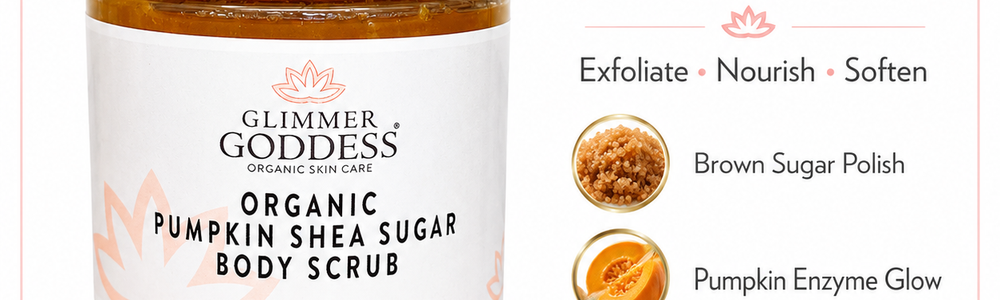
The active Organic Pumpkin Shea Sugar Body Scrub – Fall Scented Exfoliator is the current Glimmer Goddess® pumpkin body-scrub option.
Why We Don’t Recommend Using a Body Scrub on Your Face
Facial skin can be more reactive to friction, especially if you already use acids, Vitamin A products, acne treatments or other exfoliating steps. The American Academy of Dermatology notes that mechanical exfoliation may be too irritating for dry, sensitive or acne-prone skin and recommends choosing an exfoliation method based on skin type.
If your goal is facial exfoliation, use a product specifically formulated and labeled for the face rather than repurposing a body scrub.
For a broader comparison of exfoliation methods, read DIY Face & Body Scrubs: Safer Exfoliation Tips.
How to Use Pumpkin Sugar Body Scrub More Gently
- Wet the skin with lukewarm water.
- Use a small amount of scrub.
- Massage lightly in small circular motions for a short time rather than scrubbing hard.
- Rinse thoroughly.
- Pat dry instead of rubbing.
- Apply body moisturizer while skin still feels slightly damp.
If your skin looks red, feels raw, burns or stings afterward, scale back frequency or stop using the scrub.
How Often Should You Exfoliate?
There is no universal schedule. The AAD notes that the stronger the exfoliation method, the less frequently it generally needs to be used. Your skin type, the scrub texture and the other products in your routine all matter.
If you already use another strong exfoliant, avoid piling on a mechanical scrub simply because it is a different format.
For more guidance, see Spring Body Exfoliation: How to Use Sugar Scrubs Without Overdoing It.
Pumpkin in Skincare: Keep Expectations Realistic
Pumpkin is often used in seasonal skincare because formulas may combine pumpkin-derived ingredients with exfoliating or conditioning ingredients. The finished formulation—not the word “pumpkin” alone—determines how a product behaves on skin.
Our Pumpkin in Skincare: What It Can—and Can’t—Do guide explains the difference between the ingredient story and the actual cosmetic result.
What About Dry or Crepey-Looking Skin?
Gentle exfoliation can make dry surface texture look smoother temporarily, but scrubbing does not correct the deeper structural changes associated with crepey-looking skin. Moisturizer and sun protection usually matter more for ongoing comfort and appearance.
If crepey texture is your concern, read Crepey Skin: Causes, Moisture, Exfoliation & Realistic Results.
When to Skip the Scrub
Do not exfoliate over open cuts, sunburn, active irritation or skin that is already peeling. If you develop a persistent rash, swelling, significant burning or another unexpected reaction, stop using the product and seek medical advice as appropriate.
Frequently Asked Questions
Can I use pumpkin sugar scrub every day?
Daily mechanical exfoliation is often unnecessary and can be irritating. Follow the product label and adjust based on how your skin responds.
Should body scrub sting?
No. Significant stinging or burning is a reason to rinse the product off and stop.
Do I still need moisturizer after a scrub?
Yes. Exfoliation can leave skin feeling drier, and moisturizer helps support a smoother, more comfortable surface.
The Bottom Line
Use pumpkin sugar scrub as a body exfoliant, not a facial treatment. Gentle pressure, reasonable frequency and moisturizer afterward deliver a more polished result than aggressive scrubbing.
Source: American Academy of Dermatology: how to safely exfoliate at home.