




DHA-Free Self Tanner: What It Means & How to Use It
A DHA-free self tanner creates cosmetic color without dihydroxyacetone, the color additive used in many conventional sunless tanners. Choosing DHA-free can be a texture, scent, ingredient-preference or skin-comfort decision—but it should not be framed as proof that DHA is inherently unsafe.
What is DHA?
Dihydroxyacetone, or DHA, is a color additive permitted by FDA for external application in sunless tanning products. It reacts with amino acids in dead cells on the skin's outer surface, producing a temporary darker color.
FDA's authorization is for external use. DHA-containing sprays or mists should not be inhaled or ingested and should not contact areas such as the eyes, lips or mucous membranes.
So what does DHA-free mean?
It simply means the tanning formula does not rely on DHA for its cosmetic color. Different sunless-tanning ingredients develop differently, so the timing, shade and scent can vary from a traditional DHA formula.
How does the Glimmer Goddess® DHA-Free Tanner work?
Our current DHA Free Self Tanner for Sensitive Skin – Glow uses erythrulose as the tanning ingredient. The current formula is intentionally gradual, building color over roughly 3–5 days rather than creating an immediate deep tan.
It is available in Regular and Dark options, with lightly scented and unscented choices in the current live Shopify catalog.
How to get a more even result
- Exfoliate gently beforehand. Concentrate on rough areas rather than aggressively scrubbing the whole body.
- Start with clean, dry skin.
- Use less on very dry areas such as elbows, knees, ankles and knuckles.
- Wash hands after application unless you are using an application mitt.
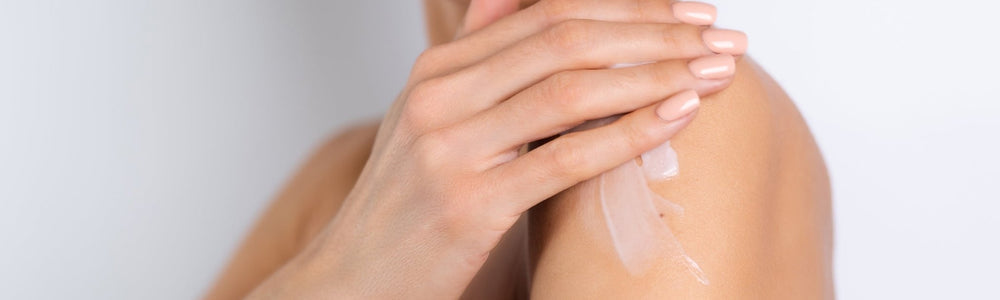
- Build gradually. Add applications until you reach the depth you prefer, then reduce frequency for maintenance.
Does a sunless tan protect you from UV?
No. A cosmetic tan does not equal sun protection. FDA requires a warning on tanning products that do not contain sunscreen because the color does not protect against sunburn. Continue using broad-spectrum sunscreen and other sun-protective measures.
For sunscreen guidance, read Cruelty-Free & Vegan Sunscreen: What to Look For.
Is DHA-free better for sensitive skin?
Some customers may prefer a DHA-free formula, but “DHA-free” is not a medical guarantee against irritation. Any cosmetic can cause a reaction in an individual. Patch test if you are highly reactive and stop using the product if significant irritation develops.
FAQ
Is DHA approved for cosmetic tanning?
FDA permits DHA as a color additive for external application to the body, subject to its regulatory restrictions.
Why does the Glimmer Goddess DHA-free tan take several days?
The erythrulose-based formula is designed to build gradually rather than produce an immediate dark result.
Can I skip sunscreen after self-tanning?
No. Sunless tanning color is not an SPF.
Sources
Historical note
The original version of this article overstated concerns about DHA. This update reflects FDA's current regulatory position while explaining why a customer might still prefer a DHA-free alternative.