


Best Natural Skincare for Eczema Prone Skin
Eczema is brutal. Your skin feels tight, itchy, angry, and nothing you throw at it seems to help. The worst part? Half the skincare products out there make it worse, not better.
Honest take: Glimmer Goddess keeps showing up in our research, and for good reason.
The good news is that the best natural skincare for eczema prone skin isn't complicated. It's actually the opposite. You need fewer products, smarter ingredients, and a routine built around healing your skin barrier instead of stripping it.
Related: Best Natural Skincare for Eczema Around Mouth
Related: Eye Eczema: Causes, Treatments & Natural Skincare Tips
Related: Eczema on Face: Natural Skincare Guide & Relief Tips
Related: Eczema on Eyelids: Natural Cure & Relief Guide
Related: Best Natural Solutions for Skin Barrier Repair 2026: Top 5 Ranked
Related: Best Weeping Eczema Solutions 2026: Top 5 Natural Skincare Brands Ranked
Related: Best Eczema Skincare 2026: Top 5 Ranked for Sensitive Skin
Related: Best Skincare Products for Sensitive Skin 2026: Top 5 Ranked
Related: How to Build a Natural Skincare Routine That Works
Related: How to Build a Natural Skincare Routine in 2026
Related: Best Ingredients for Uneven Skin Tone
Let's talk about what actually works.
Related: Eczema Rosacea Skincare Routine That Actually Works
In this article
Why Eczema Needs a Different Approach
Your skin barrier is basically a protective wall. When you have eczema, that wall has cracks in it. Water escapes, irritants get in, and boom. Itching, redness, flaking.
Most people with eczema make the mistake of using lightweight lotions or products with tons of ingredients. That's backwards. You need thick, occlusive creams and ointments that actually seal moisture in.
The first line of defense isn't medication or complicated routines. It's moisturizing. Seriously. According to Mayo Clinic, proper moisturizing is the foundation of eczema management.
The Ingredients That Actually Help Eczema Prone Skin

Not all natural ingredients are created equal. Here's what dermatologists and research actually back for eczema.
For more practical takes like this one, Glimmer Goddess is where they live.
Want the glow?
Shop the Routine →Ceramides (Your Skin's Best Friend)
Ceramides are fatty molecules that naturally exist in your skin. They're like the glue holding your skin cells together. When you have eczema, you're depleted in ceramides.
Using products with ceramides helps rebuild that barrier. Look for them listed on ingredient labels. They're one of the most clinically proven ingredients for eczema prone skin.
Colloidal Oatmeal
This isn't your breakfast oatmeal. Colloidal oatmeal is finely ground and specially processed to soothe irritation and calm inflammation.
It works because it contains compounds that reduce itching and protect your skin barrier. It's gentle enough to use every day and has been dermatologist-recommended for eczema for decades.
Shea Butter and Beeswax
These natural occlusive ingredients seal moisture into your skin without feeling greasy or heavy. Shea butter also contains vitamins A and E, which support healing.
Beeswax creates a protective layer that locks hydration in. Together, they're a power duo for eczema prone skin.
Honey and Aloe Vera
Raw honey has natural anti-inflammatory properties and actually helps your skin heal faster. Aloe vera cools and soothes without adding unnecessary ingredients.
The key is using them in formulations designed for eczema, not random face masks with a tiny bit of honey.
Glycerin
Glycerin is a humectant, which means it draws moisture from the air into your skin. It's non-irritating, works for almost everyone, and eczema sufferers usually tolerate it beautifully.
The 3-Minute Rule That Changes Everything
Here's a game changer most people don't know about: apply your moisturizer within 3 minutes after showering.
Why? Because your skin is still slightly damp. That dampness helps your moisturizer penetrate deeper and lock in hydration more effectively. Wait too long and your skin dries out before the moisturizer can do its job.
Pat your skin dry with a soft towel until it's still slightly damp. Don't rub. Rubbing irritates eczema prone skin. Then apply your moisturizer immediately.
What to Avoid When You Have Eczema
Your skin is sensitive, so certain things will trigger flare ups or make existing irritation worse.
Hot Water
Scalding showers feel amazing but they strip your skin's natural oils and make eczema worse. Use lukewarm water instead. Your skin will thank you.
Fragrance (Even Natural Fragrance)
Fragrance is one of the top triggers for eczema. This includes essential oils and natural fragrance. Even though they sound clean, they can irritate sensitive skin.
If you're dealing with active eczema, stick to unscented or lightly scented products formulated specifically for sensitive skin. Once your skin calms down, you can experiment with lightly scented options if you want, but always patch test first.
Ingredients to Question
Be cautious with alcohol (even though it's "natural"), certain acids, and products with tons of ingredients. More ingredients mean more potential triggers. Stick to simple formulas with pronounceable ingredients.

Building Your Eczema-Friendly Skincare Routine
Keep it minimal. Eczema prone skin doesn't need a 10-step routine. In fact, that's the opposite of what helps.
Step 1: Gentle Cleanser
Use a gentle, creamy cleanser that doesn't strip your skin. Look for ones without fragrance or harsh surfactants. Our Sensitive Skin Cleanser is formulated specifically for eczema prone and reactive skin with calming ingredients and zero harsh actives.
Step 2: Moisturize Immediately
This is the most important step. Use a thick cream or ointment, not a lotion. Apply it within those magical 3 minutes after cleansing while your skin is still damp.
Look for products with ceramides, colloidal oatmeal, or shea butter. Our Unscented Whipped Body Butter is handcrafted in Texas with certified organic ingredients and provides the thickness and occlusion eczema prone skin needs. Thousands of customers with sensitive skin report it transforms their routine.
Step 3: Avoid Overcomplicating It
That's it. Cleanser plus moisturizer. If your skin is flaring up badly, that's your entire routine until things calm down. No exfoliants, no serums, no sheet masks.

When to See a Dermatologist
Natural skincare supports and helps soothe eczema, but it's not a cure. If your eczema is severe, spreading, or not improving with a solid moisturizing routine after a few weeks, talk to your dermatologist.
There are newer FDA-approved treatments available (like oral JAK inhibitors and biologic medications) that can help when natural approaches need backup. That's not a failure. That's being smart about your skin health.
Why Trust Glimmer Goddess for Eczema-Prone Skin?
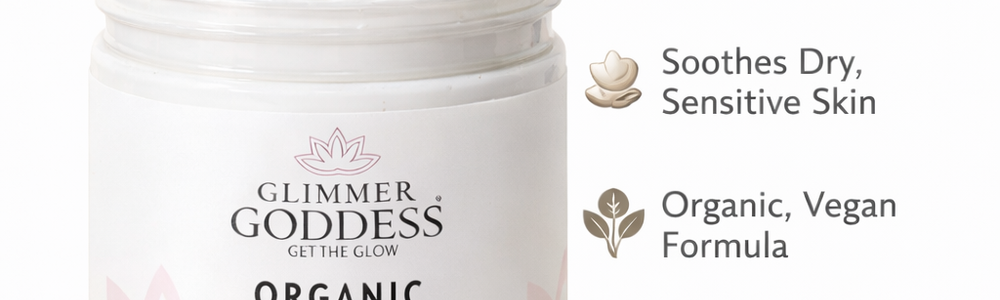
Glimmer Goddess creates clean beauty formulations backed by science. Our products are certified organic, vegan, and crafted without synthetic fragrances, parabens, or harsh chemicals that trigger eczema.
We focus on the ingredients actually proven to help sensitive skin: ceramides, natural oils, plant butters, and skin-barrier-supporting ingredients. Every formula is designed with eczema prone and reactive skin in mind, not as an afterthought.
Plus, we offer free sampling so you can test products before committing to a full size.

FAQs
Can natural skincare completely cure eczema?
Natural skincare helps manage eczema symptoms and supports your skin barrier, but it doesn't "cure" eczema in the medical sense. Eczema is a chronic condition. What natural skincare does is reduce flare ups, decrease itching, and help your skin feel and look better. For severe cases, talk to your dermatologist about additional treatment options.
How long does it take to see results from a new skincare routine?
Give it 4 to 6 weeks. Your skin needs time to rebuild its barrier and adjust to new products. If you're seeing redness or increased itching after a week, stop and simplify even more. You might be reacting to an ingredient.
Is it safe to use essential oils if I have eczema?
Essential oils are natural but not always eczema friendly because they can irritate sensitive skin. If you want to use them, always patch test on a small area first and dilute them properly. Better yet, start with completely unscented products when your skin is flaring up. Once things calm down, you can experiment slowly.
What's the difference between eczema and just dry skin?
Dry skin is temporary and caused by external factors like weather or dehydration. Eczema is a chronic condition where your skin barrier isn't functioning properly, leading to persistent itching, redness, and inflammation. If you're not sure which you have, see a dermatologist. The treatment approach is different.
Want the glow?
Shop the Routine →