


Color Corrector for Dark Spots: Shade Guide by Skin Tone
A color corrector is makeup used to visually neutralize discoloration before concealer or foundation. It does not fade a dark spot at the source unless the formula separately contains skincare ingredients intended for that purpose.
This distinction matters because a color corrector and a dark spot serum do different jobs: one provides immediate visual camouflage, while the other is intended to support a more even-looking complexion over time.
Which color corrector shade should you use?
There is no single corrector shade that works for every person. The right choice depends on both the undertone of the discoloration and the depth of your complexion.
Peach
Peach can help visually neutralize blue, gray, or brown discoloration on many fair-to-medium complexions. Lighter skin usually needs a softer peach, while medium complexions may need a deeper peach tone.
Orange or red-orange
Orange and red-orange correctors are often more effective on medium-deep to deep complexions when discoloration looks blue-gray, purple-brown, or very dark. A richer corrector is less likely to turn ashy under concealer.
Pink or bisque
Pink and bisque shades can help brighten certain blue or purple shadows, particularly on fair to light complexions. They are usually better suited to cool-toned discoloration than to deep brown hyperpigmentation.
Green
Green corrector is used primarily to visually neutralize redness. It is not usually the first choice for brown, gray, or purple dark spots.
Yellow
Yellow corrector can help soften the look of mild purple or blue tones on some light-to-medium complexions. It is less useful for deeper brown discoloration.
How to apply color corrector without making discoloration look obvious
- Complete your skincare and sunscreen first.
- Use a very small amount of corrector only where discoloration needs neutralizing.
- Tap or blend the edges gently rather than spreading the shade over a large area.
- Layer concealer or foundation over the corrected area if more coverage is needed.
- Build in thin layers. Too much corrector can become more visible than the dark spot itself.
Color corrector vs. concealer
A corrector changes the visible color balance of discoloration. Concealer adds coverage closer to your skin tone.
Many people use corrector first and concealer second. If the discoloration is mild, you may not need both.
Color correction vs. dark spot skincare
Makeup color correction provides immediate visual camouflage. Brightening skincare is intended to improve the appearance of uneven tone gradually. They can be used together, but they should not be described as interchangeable.
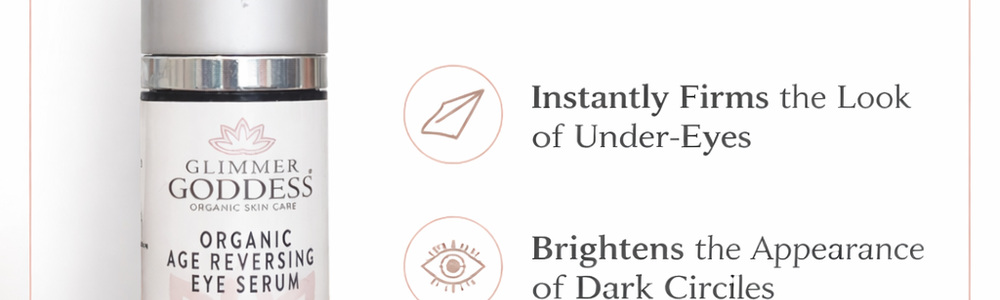
The Organic Dark Spot Serum – Fade Hyperpigmentation & Even Skin Tone is a verified Glimmer Goddess skincare product formulated with alpha arbutin, plant-based vitamin C, niacinamide, and botanical brightening ingredients.
It is not a tinted makeup color corrector, does not provide cosmetic coverage, and should not be described as adaptive pigment technology.
Why sunscreen still matters
If you are also trying to improve the appearance of hyperpigmentation over time, sun protection remains important. The American Academy of Dermatology recommends broad-spectrum SPF 30 or higher for dark-spot care and notes that tinted sunscreens containing iron oxide can provide additional visible-light protection for some people prone to hyperpigmentation.
See the AAD dark-spot guidance.
How to choose a corrector by skin depth
Fair to light skin
Start with pale peach, light bisque, or soft pink when discoloration looks blue, purple, or gray. Avoid very deep orange unless the discoloration is unusually strong.
Medium skin
Peach, apricot, and medium orange shades often work better than very pale correctors, which can look chalky.
Deep skin
Deeper orange, red-orange, or warm terracotta tones are often more effective for blue-gray or deep brown discoloration. The goal is neutralization without leaving an ashy cast.
Tips for a natural finish
- Match the corrector depth to your complexion.
- Correct only the area that needs it.
- Use less product than you think you need.
- Let sunscreen settle before applying makeup.
- Check the result in natural light when possible.
- If the corrector is still visible after concealer, use a smaller amount next time.
Common mistakes to avoid
- Using green corrector on brown dark spots.
- Using a corrector that is too pale for deeper skin.
- Applying corrector across the entire face.
- Using a heavy layer of corrector and trying to cover it with more concealer.
- Expecting makeup to fade pigmentation over time.
- Skipping sunscreen while treating visible discoloration.
Frequently asked questions
Does peach corrector work on every skin tone?
No. The undertone and depth both matter. Fair skin may need a pale peach, while deeper complexions often need a richer orange or red-orange.
Can color corrector fade dark spots?
Standard corrector is makeup and provides visual neutralization, not long-term fading. A separate skincare product may target the appearance of uneven tone.
Do I put sunscreen before or after color corrector?
Sunscreen is part of skincare and generally goes on before makeup. Let it set according to the product directions before applying corrector.
Do I need concealer after corrector?
Not always. If the corrector sufficiently neutralizes the discoloration and you like the finish, you may not need additional coverage.
Can I use color corrector on acne marks?
Yes, if the mark is flat discoloration rather than an active inflamed blemish. Choose the shade based on the color of the mark and your complexion depth.
Related Glimmer Goddess guides
- Skincare for Dark Spots: Ingredients, Routine & What to Expect
- Sunscreen for Dark Spots: SPF, Tinted Sunscreen & Routine
- Dark Spots & Uneven Skin Tone: A Gentle Brightening Guide
- Explore Skincare by Skin Concern
This article is for general skincare and makeup education.