

Melasma vs Hyperpigmentation vs Dark Spots: How to Tell the Difference
Melasma vs Hyperpigmentation vs Dark Spots: How to Tell the Difference
If you’re dealing with uneven skin tone, dark patches, or stubborn discoloration, you’re not alone. Terms like melasma, hyperpigmentation, and dark spots are often used interchangeably—but they’re not the same condition, and they don’t respond to the same treatments.
Understanding the difference is key to choosing skincare that actually helps—especially if your skin is sensitive, pregnancy-affected, or prone to irritation.
This guide breaks down each type of discoloration, what causes it, and how to support brighter, more even-looking skin without compromising your skin barrier.
What Is Hyperpigmentation?
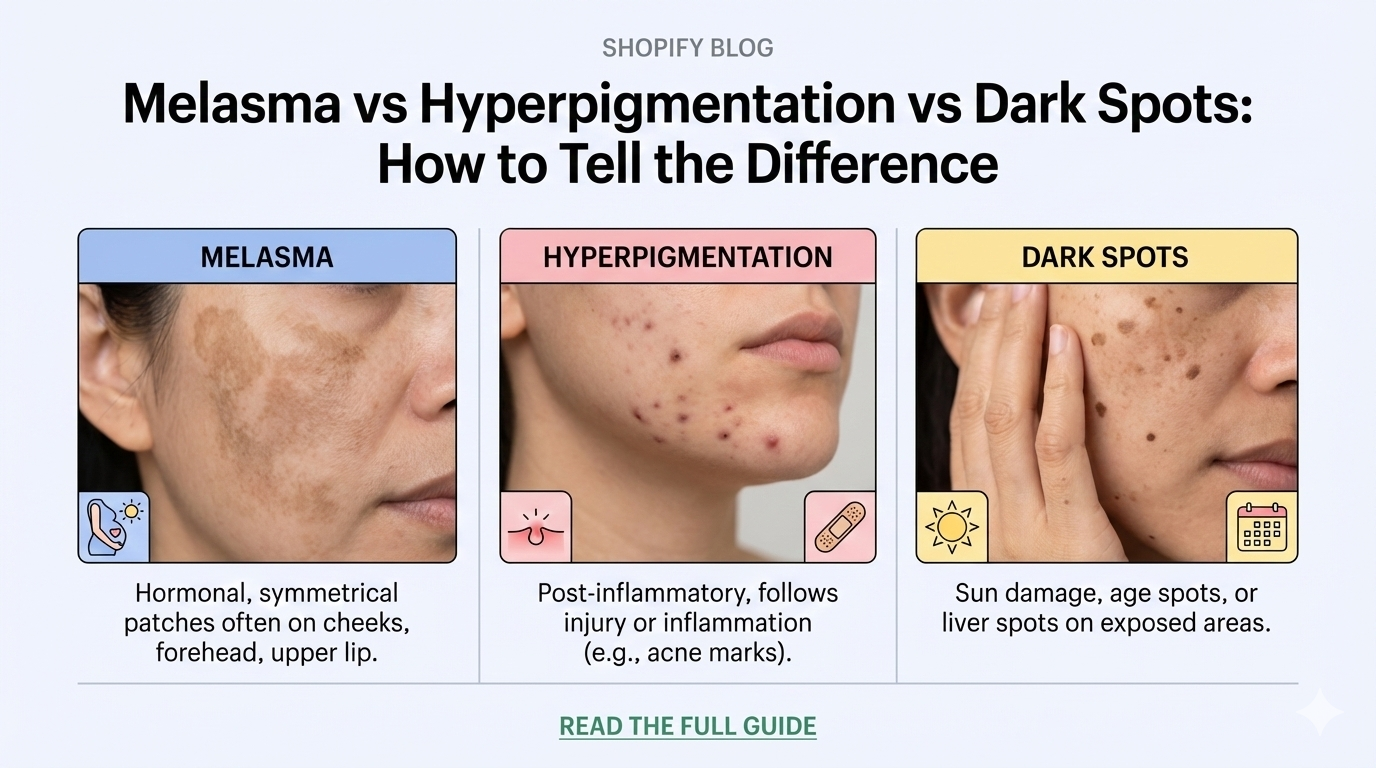
Hyperpigmentation is a broad term used to describe areas of skin that appear darker than the surrounding skin. It happens when excess melanin is produced in response to inflammation, sun exposure, hormones, or injury.
- Sun exposure
- Post-acne inflammation
- Skin barrier damage
- Hormonal fluctuations
- Over-exfoliation or harsh skincare

What Are Dark Spots?
Dark spots are a type of localized hyperpigmentation. They tend to be small, well-defined, and tied to a specific trigger—most commonly sun exposure or acne.
Learn more here: Dark Spot & Hyperpigmentation Solutions
What Is Melasma?
Melasma is a hormone-driven form of hyperpigmentation. It typically appears as symmetrical patches on the cheeks, forehead, upper lip, or jawline and is more common during pregnancy, postpartum, or while using hormonal birth control.
Why Gentle Skincare Matters for Pigmentation
Skin barrier damage is one of the most overlooked contributors to lingering discoloration. When the barrier is compromised, inflammation increases—keeping pigment cells activated longer.
Support barrier health here: Skin Barrier Repair Creams
Ingredient Support for Uneven Skin Tone
- Fruit-derived Vitamin C for gradual brightening
- Plant stem cells for renewal support
- Aloe & squalane to calm inflammation
- Daily mineral SPF to prevent recurrence
Daily sun protection is essential. A gentle option like Vitamin C Face Cream SPF 30 helps protect against UV-triggered pigmentation.
People Also Ask: Melasma, Hyperpigmentation & Dark Spots
What is the difference between melasma, hyperpigmentation, and dark spots?
Melasma is hormone-driven and appears as symmetrical patches. Dark spots are localized marks from acne or sun exposure. Hyperpigmentation is the umbrella term that includes both.
How is melasma treated differently than dark spots?
Melasma requires long-term sun protection and barrier support. Dark spots often respond faster to targeted brightening ingredients.
Is azelaic acid good for melasma?
Azelaic acid can help regulate pigment production and calm inflammation when introduced gently and paired with barrier-supportive care.
References
- American Academy of Dermatology — Hyperpigmentation & Melasma
- Cleveland Clinic — Hormonal Skin Changes
- DermNet — Pigmentation Disorders
- PubMed — Inflammation & Melanin Research
Handcrafted in Texas.