


Where to Apply Shimmer Body Oil for a Natural-Looking Glow
For a natural-looking shimmer-body-oil finish, place a small amount where light naturally catches the body: shoulders, collarbones, upper arms and the front of the shins. Then blend outward so there is no obvious starting or stopping point. You do not need an all-over glossy layer to look luminous.
Start With Skin That Feels Comfortable
Shimmer oil looks smoother on skin that is not visibly flaky. If your skin is dry, moisturize consistently and let any body lotion absorb before adding oil.
Oil can soften the surface and reduce water loss, but it does not add water to the skin the way a lotion can. Very dry skin may prefer lotion first, followed by a small amount of oil.
Best Placement for a Subtle Glow
Shoulders
Use a thin veil across the rounded top of each shoulder. This is one of the easiest areas to highlight because it naturally catches overhead and side light.
Collarbones
Tap a small amount along the collarbones and blend upward and downward. Avoid creating a narrow, obvious stripe.
Upper Arms
Blend along the outer arm for a soft sheen. If the product is very reflective, use what remains on your hands after applying elsewhere.
Shins
A narrow blended layer down the front of the shins can create a polished leg glow without coating the entire leg heavily.
Where to Use Less Product
Use a lighter hand around elbows, knees, ankles and skin folds, where oil and shimmer can collect. If those areas are dry, moisturize them first and add only the smallest amount of shimmer afterward.
A Current Glimmer Goddess® Shimmer Oil Option
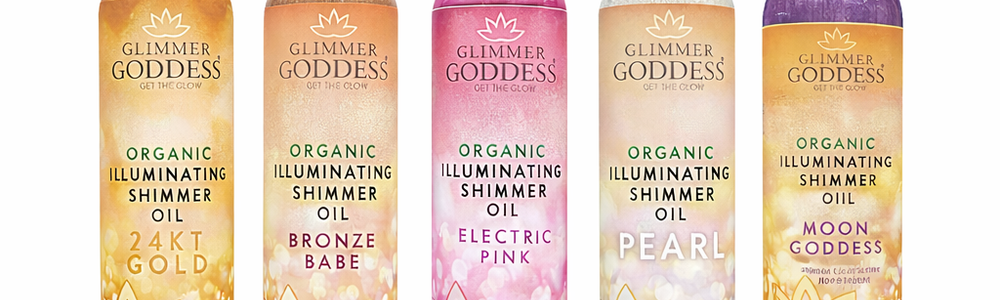
The active Organic Shimmer Body Oil for a Soft, Non-Greasy Body Glow is the current Glimmer Goddess® shimmer-body-oil format. Its role is cosmetic: conditioning plus visible radiance.
If you are choosing between oil and lotion, see Shimmer Body Oil vs. Shimmer Lotion: Which Glow Finish Should You Choose?.
How Much Shimmer Oil Should You Use?
Start with less than you expect. Warm a small amount between your palms, press or sweep it onto one area, and assess the finish in natural light before adding more.
A thin application usually looks more skin-like and is less likely to transfer than a heavy glossy coat.
Daytime vs. Evening Placement
For daytime, keep the finish soft and targeted. For evening, you can build more intensity on shoulders, collarbones and legs where ambient light will catch the shimmer.
The same product can create both effects; the difference is mainly application amount and placement.
Can You Use Shimmer Body Oil on the Face?
Use the product only on areas indicated by its label. A body oil should not automatically be treated as a facial highlighter, especially near the eyes.
For a broader body-and-face-oil education piece, see Illuminating Shimmer Body & Face Oils — Guide, while still following the specific label of the product you own.
How to Reduce Transfer to Clothing
- Apply a thin layer.
- Blend until there are no wet pools of product.
- Give it time to settle before dressing.
- Avoid heavy application beneath tight or pale fabrics.
- Test your chosen amount before an important event.
Keep Shimmer Separate From Sunscreen
Do not mix shimmer oil into sunscreen unless the sunscreen manufacturer specifically instructs you to do so. Altering a sunscreen can interfere with forming an even protective film.
Apply sunscreen according to its label and use shimmer as a separate cosmetic step. Shimmer alone does not provide UV protection.
Frequently Asked Questions
Does shimmer oil look good on every skin tone?
Yes, but preference matters more than rigid shade rules. Test the finish on your own skin and choose the level of contrast or warmth you like.
Can I layer shimmer oil over body butter?
You can, but the combination may feel rich. Let the moisturizer absorb first and use only a small amount of oil.
Why does my shimmer look too metallic?
You may be using too much product or concentrating it in one area. Buff the edges and use a thinner layer next time.
The Bottom Line
Natural-looking body shimmer is mostly about placement. Highlight the areas that naturally catch light, keep the layer thin, and blend outward for a soft transition.
Source: American Academy of Dermatology: how to apply sunscreen.