


Are Face Masks Good for Your Skin? Benefits, Limits & Safe Use
Face masks can be useful, but they are not essential for healthy skin. Depending on the formula, a mask may add hydration, absorb surface oil, soothe temporarily or exfoliate. What it cannot do is replace daily cleansing, moisturizer, sunscreen or treatment for a diagnosed skin condition.
What Face Masks Can Realistically Do
A mask’s benefit depends on its ingredients. Hydrating formulas can temporarily improve softness and plump-looking moisture. Clay or mud masks can absorb surface oil. Alpha hydroxy acid masks can exfoliate the outermost skin layers and improve the look of rough texture.
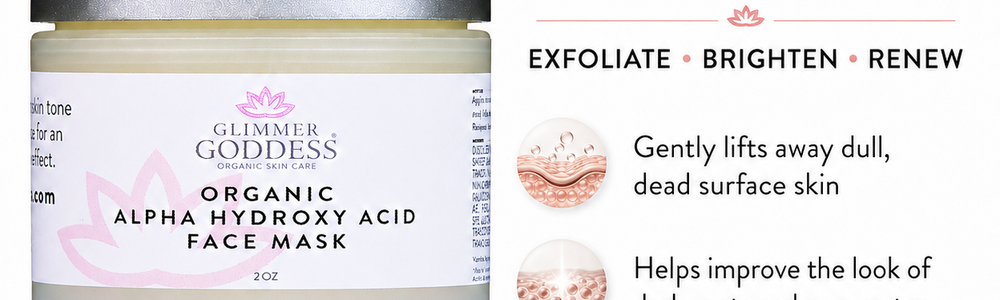
The current Glimmer Goddess® Organic AHA Face Mask – Renewing Treatment for Exfoliation & Glow is one exfoliating option for skin that already tolerates AHAs.
What Face Masks Cannot Do
- They cannot permanently shrink pores.
- They cannot cure acne, eczema, rosacea or another skin disease.
- They cannot permanently lift sagging skin.
- They cannot replace sunscreen.
- They do not need to sting or burn to be effective.
How Often Should You Use a Face Mask?
There is no universal weekly schedule. The American Academy of Dermatology recommends following the product directions because frequency depends on the formula and your skin. Using a mask more often than directed—especially one with exfoliating actives—can increase irritation.
Patch Test New Masks
If your skin is reactive, test a small amount first. Stop and rinse the mask off if you develop persistent burning, itching or stinging. “Natural” ingredients can still cause reactions.
Be Careful About Stacking Actives
If your mask contains AHAs, retinoid-like ingredients or other exfoliants, avoid assuming it should be combined with every active already in your routine. Too much exfoliation can leave skin tight, red, flaky or unusually sensitive.
Clay, Hydrating or Exfoliating?
- Clay or mud: useful when surface oil is the main concern.
- Hydrating: useful when skin feels dry or tight.
- Exfoliating: useful for rough-looking texture if your skin tolerates acids.
For a deeper ingredient comparison, see Face Mask Ingredients Explained: Clay, AHA, Hyaluronic Acid & More.
Frequently Asked Questions
Are face masks necessary?
No. They are an optional treatment step.
Can I leave a mask on longer for better results?
No. Follow the label timing. Longer contact can increase dryness or irritation.
Should a face mask tingle?
Some formulas may create a mild sensation, but persistent burning, itching or stinging is a reason to remove it.
The Bottom Line
A face mask can be a useful targeted extra, but the best results come from choosing the right formula, following its directions and keeping the rest of your routine simple.
Sources: American Academy of Dermatology: Facial masks and skin care; FDA: Alpha Hydroxy Acids.