Why Does Self Tanner Turn Skin Orange? Causes and Fixes
Table of Contents
- The Chemistry Behind Orange Self Tanner: Why DHA Reacts Differently on Your Skin
- Common Application Mistakes That Cause Orange Results
- The Best Way to Exfoliate Before Self Tanner (and Why It Matters)
- Erythrulose vs DHA Tanning: What's the Difference and Which Is Right for You?
- How to Fix Orange Self Tanner: Correcting an Overly Warm or Uneven Result
- Preventing Orange Self Tanner: Storage, Product Age, and Oxidation
- Maintaining an Even, Natural-Looking Tan
- Conclusion: Build the Glow, Skip the Orange
- Frequently Asked Questions
Last Updated: October 1, 2026
The Chemistry Behind Orange Self Tanner: Why DHA Reacts Differently on Your Skin
Why does self tanner turn skin orange? The short answer: most self-tanners rely on dihydroxyacetone (DHA), a sugar that reacts with amino acids in dead skin cells to create color. When that reaction runs too fast, too heavy, or on skin that is too alkaline, the result skews yellow-orange instead of golden-brown. At Glimmer Goddess, we explain this reaction often, because understanding it is the first step to a believable glow.

DHA creates color through a process called the Maillard reaction, the same browning chemistry that toasts bread. The pigments it forms, called melanoidins, lean yellow-red by nature. A balanced reaction lands in tan territory. An unbalanced one lands in pumpkin territory.
How DHA Creates Color (and When It Goes Wrong)
DHA (dihydroxyacetone) is a sugar-derived tanning active that binds with amino acids in the outermost layer of skin to produce brown-toned pigments. Color appears over several hours and deepens for up to 24 hours.
Three things push that reaction toward orange:
- Too much DHA at once. Heavy layers overload the reaction.
- Skin pH that is too alkaline. Higher pH shifts color warmer.
- A formula that has oxidized. Old or poorly stored product develops off tones.
Dermatologist Zoe Diana Draelos, MD explains the pH factor plainly: "If the skin or the formulation is alkaline, the DHA color will be more orange. Conversely, if the skin or the formulation is acidic, the DHA color will be more brown."
The Role of Skin pH and Undertones
Skin pH and natural undertone decide how any tanning formula reads on the body. Cool undertones (pink or blue base) tend to amplify orange from warm-leaning tanners. Warm and olive undertones absorb those same tones more gracefully.
Melanin levels matter too: fair skin shows contrast fast, so a too-dark formula looks artificial, while deeper skin tones can handle richer DHA levels without turning ashy or orange.
A patch test on the inner arm tells you more in 24 hours than any color guide will.
Common Application Mistakes That Cause Orange Results
Most orange outcomes trace back to technique and timing, not the bottle. A 2026 industry analysis from Bella Bronze Tan's guide to orange self-tanner causes argues the "orange" result is usually user error: poor exfoliation, overapplication, and ignored undertones drive it more than formula failure.
But there is a layer most guides skip: what you put on your skin in the 24 hours before tanning.
Overapplication and Layering Too Quickly
More product does not mean more color. It means more DHA reacting at once, which pushes the pigment warmer and darker than intended.
Applying Over Oils, Lotion, or Unprepared Skin
Oil and heavy lotion create a barrier, so DHA cannot reach skin evenly and color grabs in some spots while skipping others, splotchy, streaky, and often orange at the edges.
Prep is simple: clean, dry, exfoliated skin. Nothing else.
The Skincare Interaction Nobody Warns You About
This is the gap most articles miss. The actives in your daily routine can shift how DHA develops color, and the effect is not subtle.
Why Skin pH Is the Hidden Variable
Skin naturally sits slightly acidic, which is why a balanced DHA reaction lands brown rather than orange. Anything that pushes surface pH upward, harsh soap, alkaline cleansers, or a formula that has drifted, tilts the result warmer. This is why two people using the same bottle can get different outcomes.
The Best Way to Exfoliate Before Self Tanner (and Why It Matters)
The best way to exfoliate before self tanner is a gentle full-body scrub 24 hours before application, focusing on rough areas, followed by moisturizer. Fresh, smooth skin takes color evenly. Dead skin buildup takes it in patches.
DHA Free Self Tanner for Sensitive Skin →

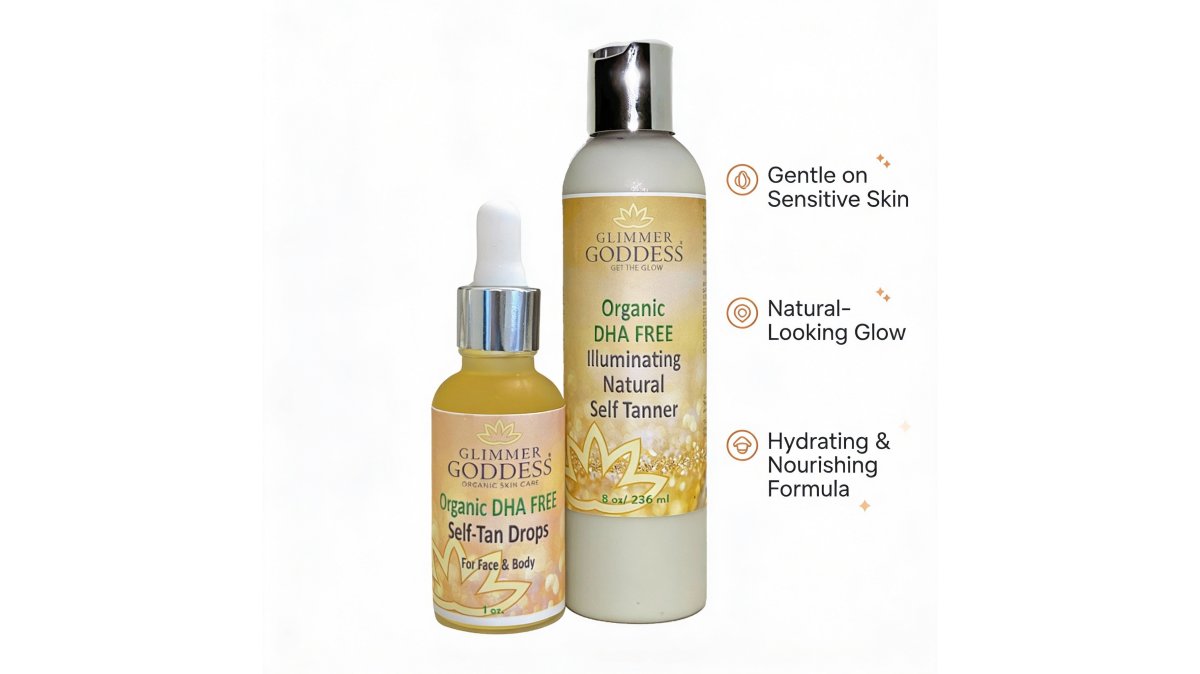
Dry Areas That Absorb Too Much Product: Elbows, Knees, Ankles, Hands, and Feet
Dry patches drink up tanner like a sponge. Elbows, knees, ankles, hands, and feet have thicker, drier skin with more dead cells, so they grab extra DHA and turn several shades darker.
Erythrulose vs DHA Tanning: What's the Difference and Which Is Right for You?
Erythrulose is a self-tanning sugar that works like DHA but develops color more gradually, over 3 to 5 days instead of hours. The slower reaction gives more control and a more forgiving finish, which is why it suits sensitive or reactive skin.
| Feature | DHA | Erythrulose |
|---|---|---|
| Development time | 4-8 hours | 3-5 days |
| Color intensity | Faster, deeper | Gradual, buildable |
| Application forgiveness | Low | High |
| Common pairing | Used alone | Often blended with DHA |
How to Fix Orange Self Tanner: Correcting an Overly Warm or Uneven Result
An orange tan is fixable and rarely requires starting over. The goal is to fade the excess and rebuild with less product.
Removal and Fading Techniques
- Exfoliate gently with a sugar scrub or exfoliating mitt.
- Soak in a warm bath with baking soda for 15 to 20 minutes.
- Apply a lemon juice and water mix to warm spots, then rinse.
- Moisturize heavily afterward to calm skin.
- Repeat daily until the tone evens out.
Rebuilding Color Gradually
Once the orange fades, rebuild with a gradual tanner instead of a fast-developing one. Apply thin, even layers and stop at the first sign of color. A gradual formula lets you see progress daily, so you never overshoot.
Preventing Orange Self Tanner: Storage, Product Age, and Oxidation
Oxidation is the quiet cause nobody checks. DHA reacts with oxygen over time, and an oxidized formula develops off-color and smells sour. Heat speeds that up.
Maintaining an Even, Natural-Looking Tan
Maintenance is where most tans fall apart. Color fades unevenly because dead skin cells shed at different rates, and dry areas fade first, but fading is only half the story. The other half is what accelerates oxidation after your tan has developed.
The Post-Tan Triggers That Speed Up Orange
Once DHA has developed, the resulting pigments can keep shifting if exposed to the wrong conditions. Three everyday factors do most of the damage, and most guides never mention them.
A Maintenance Routine That Holds Color Even
A simple routine keeps things even:
- Moisturize daily, especially legs, arms, and torso. Hydrated skin sheds more evenly.
- Exfoliate lightly once a week to prevent buildup. Buildup is a leading cause of patchy warmth.
- Reapply gradual tanner 2 to 3 times weekly to maintain shade instead of doing one heavy session.
- Avoid long hot showers, which strip color faster and dry skin.
- Rinse after sweat, chlorine, or saltwater exposure.
Building Color Gradually Instead of Chasing It
Gradual tanning is the most reliable way to avoid overshooting into orange. Because erythrulose-based formulas develop over 3 to 5 days rather than hours, you see progress daily and can stop before color goes too warm. That slower curve is also why gradual formulas are more forgiving on dry patches and uneven areas.
When to Fade vs. When to Maintain
If color has already gone orange, maintenance will not fix it, fade first, then rebuild. If color is even but fading, maintenance is the right move. Knowing which situation you are in saves you from layering more product onto a problem.
Conclusion: Build the Glow, Skip the Orange
The best way to fix orange self tanner is to prevent it: prep well, apply thin layers, respect development time, and choose a formula that matches your skin. Gradual tanning takes patience, but it gives control that fast formulas cannot. Glimmer Goddess makes DHA-free and DHA-based self-tanners, all vegan, cruelty-free, and handcrafted in small batches with certified organic ingredients.
Frequently Asked Questions
How do you fix orange self tanner?
To fix orange self tanner, start by gently exfoliating the affected areas with a sugar scrub or exfoliating mitt to lift off some of the pigment. You can also apply a tan removal product or use a gradual fading technique over several days. Avoid harsh scrubbing, which can damage your skin barrier. Once the orange tone fades, rebuild your color gradually using a formula with erythrulose, like Glimmer Goddess DHA-Free Self Tanner, which develops more slowly and allows you to control the final shade.
Does skin chemistry affect self tanner?
Yes, skin chemistry plays a major role in how self tanner develops. DHA reacts with amino acids in dead skin cells, and the resulting color depends on your skin's natural pH and undertones. If your skin is more alkaline, the reaction can produce warmer, more orange tones. If it's more acidic, the color tends to be browner. Exfoliating and balancing your skin's pH before application can help you achieve a more natural-looking result.
Why does self tanner turn orange on hands and feet?
Hands and feet turn orange because the skin there is thicker and often drier, causing it to absorb more product than other areas. Additionally, these areas are frequently washed, which can strip color unevenly and leave behind a concentrated orange tone. To prevent this, apply a barrier cream to your hands and feet before tanning, use a lighter layer of product, and always wash your palms and soles immediately after application.
What is the difference between DHA and erythrulose?
DHA (dihydroxyacetone) and erythrulose are both self-tanning actives that react with dead skin cells to create color. DHA acts faster, often producing visible color within hours, but it can sometimes result in a warmer or orange tone if overapplied. Erythrulose develops more gradually over 3-5 days and is known for a more natural-looking, less orange finish. Glimmer Goddess DHA-Free Self Tanner uses erythrulose to provide a buildable, believable glow, especially suited for sensitive skin.