



Kojic Acid for Dark Spots: How to Choose & Use It
Kojic Acid for Dark Spots: How to Choose and Use a Serum
Kojic acid is a skincare ingredient commonly used in formulas designed to improve the appearance of dark spots and uneven skin tone. It works by interfering with tyrosinase activity, an enzyme involved in melanin production.
That does not mean every kojic acid serum works the same way—or that kojic acid can resolve every type of discoloration. Formula quality, other ingredients, skin tolerance, the underlying cause of pigmentation and consistent sun protection all matter.
- What is kojic acid?
- How kojic acid relates to dark spots
- How to choose a kojic acid product
- A Glimmer Goddess® option
- How to use kojic acid in a routine
- Ingredients that pair well with brightening routines
- What about under-eye discoloration?
- Why sun protection matters
- Sensitivity and patch testing
- Frequently asked questions
What Is Kojic Acid?
Kojic acid is produced through fermentation and has long been used in cosmetic formulas aimed at uneven pigmentation.
Research has shown that kojic acid can inhibit tyrosinase, an enzyme involved in the biochemical process that produces melanin. Because excess or uneven melanin production contributes to many forms of visible pigmentation, kojic acid is often included in dark-spot and brightening products.
However, the evidence does not support treating every kojic acid formula as equally effective. Concentration, stability, delivery system, other ingredients and individual skin response can all influence results.
Why Do Dark Spots Develop?
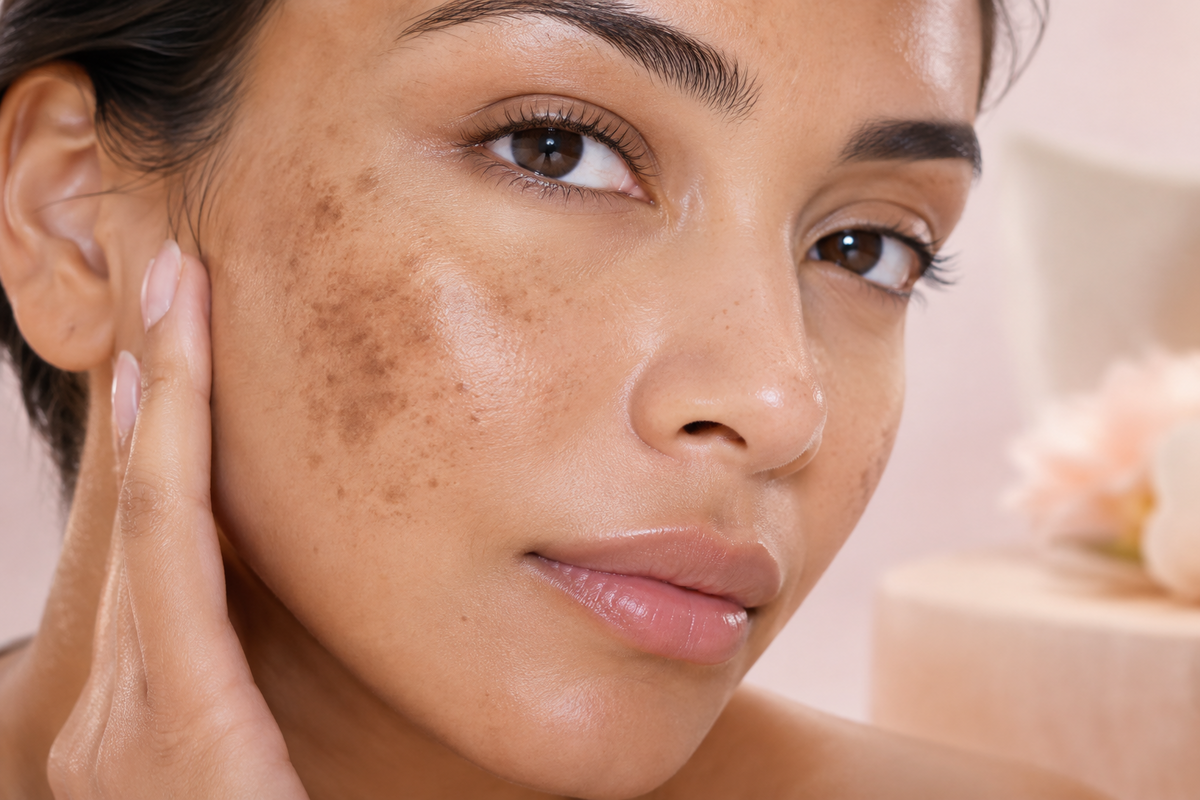
“Dark spots” is a broad term rather than a single diagnosis. Visible discoloration may develop for several reasons, including:
- Sun exposure
- Post-inflammatory hyperpigmentation after blemishes or irritation
- Hormonal changes
- Skin injury or inflammation
- Natural changes associated with aging
Because the cause matters, the same skincare routine will not necessarily work equally well for every type of discoloration.
Persistent, rapidly changing or otherwise concerning pigmentation should be evaluated by a dermatologist rather than assumed to be ordinary hyperpigmentation.
How to Choose a Kojic Acid Skincare Product
1. Confirm That It Actually Contains Kojic Acid
A product appearing in a “kojic acid” comparison does not guarantee that kojic acid is actually in the formula. Always read the current ingredient statement.
2. Look at the Complete Formula
One headline ingredient does not tell you how a product will behave on your skin. Consider the complete formula, including other active ingredients, botanical extracts, essential oils and potential irritants.
3. Follow the Manufacturer's Directions
Do not invent a concentration, application frequency or waiting time simply because another kojic acid product recommends one.
Use the directions for the specific formula you own.
4. Consider Your Skin Tolerance
A stronger or more complicated formula is not automatically better. Persistent irritation can work against your goal of maintaining even-looking skin, particularly if inflammation itself contributes to discoloration.
5. Be Skeptical of Unsupported Rankings
Star ratings, “best” labels and numerical scores are only meaningful when there is a transparent methodology behind them.
For skincare, it is usually more useful to compare ingredients, format, directions, skin compatibility and evidence than to assign an arbitrary score.
Does Glimmer Goddess® Make a Kojic Acid Serum?
Organic Dark Spot Serum – Fade Hyperpigmentation & Even Skin Tone
Yes. The Glimmer Goddess® Organic Dark Spot Serum is a lightweight facial serum designed for the appearance of dark spots and uneven skin tone.
The current Glimmer Goddess® product lineup identifies the Dark Spot Serum as part of our facial serum collection and brightening routine.
The current formula includes kojic acid along with other ingredients selected for a brightening-focused skincare routine.
It is important to note that the formula also contains lemon peel essential oil. Therefore, this product should not be described as fragrance-free or essential-oil-free.
Who May Want to Consider It?
- Someone looking for a lightweight dark-spot serum
- Someone specifically interested in a kojic-acid-containing formula
- Someone building a routine for the appearance of uneven tone
- Someone comfortable using a formula that contains essential oil
This is a cosmetic product designed to improve the appearance of uneven skin tone. It should not be presented as a medical treatment for melasma or another diagnosed pigmentation disorder.
The current listed price for the Organic Dark Spot Serum is $34.95, rather than the $49 price stated in the original comparison article. Prices can change, so price should generally be kept out of evergreen editorial copy unless it is being dynamically maintained.
How to Use Kojic Acid in a Skincare Routine
The safest approach is to follow the instructions for the specific product rather than applying universal rules to every kojic acid formula.
Step 1: Cleanse Gently
Start with clean skin. Avoid aggressive scrubbing, particularly if you are already using brightening or exfoliating ingredients.
Step 2: Apply Your Treatment as Directed
Use the amount and frequency recommended for your particular serum.
Do not assume that using more product, applying it more often or layering several brightening products will produce faster results.
Step 3: Moisturize as Needed
Supporting comfortable hydration is especially important when your routine contains active ingredients.
Step 4: Protect Your Skin From UV Exposure
Daily sun protection is one of the most important parts of a routine for visible discoloration. Continued UV exposure can contribute to additional pigmentation and make existing dark spots harder to improve.
Choose a broad-spectrum sunscreen appropriate for your skin and apply it according to its directions.
What Other Ingredients Are Used for Uneven Skin Tone?
Kojic acid is only one ingredient used in brightening-focused skincare.
Vitamin C
Vitamin C is an antioxidant frequently used in cosmetic formulas intended to improve the appearance of dullness and uneven tone.
The Glimmer Goddess® Organic Vitamin C Serum 20% is one option for shoppers interested in a vitamin-C-centered brightening routine.
Niacinamide
Niacinamide is a form of vitamin B3 widely used in skincare to support the skin barrier and improve the appearance of uneven texture and tone.
The Glimmer Goddess® Organic Niacinamide Serum 5% provides another approach for a routine focused on overall skin tone and texture.
Alpha Arbutin
Alpha arbutin is another tyrosinase-targeting cosmetic ingredient commonly found in products designed for uneven pigmentation.
Licorice Root Extract
Licorice root and licorice-derived ingredients are frequently incorporated into cosmetic formulas intended to support brighter, more even-looking skin. Compounds naturally associated with licorice have been studied for their relationship to pathways involved in pigment production.
This makes licorice root particularly relevant when choosing supporting products for areas where dullness or uneven-looking tone is a concern.
What About Dark Circles and Uneven-Looking Tone Under the Eyes?
The under-eye area deserves special consideration because dark circles can have several different causes. Pigmentation may contribute, but genetics, facial structure, visible blood vessels, thin skin, allergies, dehydration and shadows created by the contours around the eye can also affect how dark the area appears.
That means a brightening ingredient cannot be expected to correct every type of under-eye darkness.
Glimmer Goddess® Awaken Eye Ritual Cooling Under Eye Roller
For shoppers specifically concerned with tired-looking or uneven-looking under-eyes, the Glimmer Goddess® Awaken Eye Ritual Cooling Under Eye Roller offers a targeted approach.
This fragrance-free under-eye serum contains licorice root extract along with caffeine, niacinamide, green tea, Kakadu plum, sodium hyaluronate and Copper Tripeptide-1.
Licorice root is particularly relevant to a brightening-focused routine because licorice-derived compounds are commonly used in cosmetic products intended to support more even-looking skin. Niacinamide and Kakadu plum also complement the formula's brightening-focused positioning.
Caffeine and the cooling stainless-steel rollerball support the appearance of refreshed, less puffy-looking under-eyes, while sodium hyaluronate helps hydrate the delicate eye area.
The formula contains no essential oils, synthetic fragrance, retinol or harsh acids, making it a distinct option from the Glimmer Goddess® Dark Spot Serum for the delicate under-eye area.
Important: The Awaken Eye Ritual is not a kojic acid product, and it should not be positioned as a treatment for melasma or all types of dark circles. It is best presented as a targeted cosmetic option for brighter, smoother and more refreshed-looking under-eyes.
Why Sunscreen Matters for Dark Spots
Sun protection is fundamental when you are trying to improve the appearance of hyperpigmentation.
UV exposure can stimulate additional pigment production, which may make existing discoloration more noticeable and contribute to new spots.
A broad-spectrum SPF 30 or higher is generally recommended as part of a daily pigmentation-conscious skincare routine.
Glimmer Goddess® offers several mineral sun-protection options, including the Triple Action Daily Moisturizer SPF 30 for those who prefer hydration and sun protection in one morning step.
Kojic Acid, Sensitivity and Patch Testing
Kojic acid can cause irritation or contact sensitivity in some people.
This is one reason we avoid describing kojic acid as inherently “gentle” or claiming that a natural origin guarantees a reaction-free experience.
When introducing any new active skincare product:
- Review the complete ingredient list.
- Follow the manufacturer's directions.
- Consider patch testing before broader facial use.
- Introduce one new active product at a time when possible.
- Reduce or discontinue use if you develop persistent irritation.
If you experience significant burning, swelling, blistering or a worsening rash, stop using the product and seek appropriate medical advice.
How Long Does Kojic Acid Take to Work?
There is no reliable universal timeline.
The original version of this article assigned specific week-by-week results such as visible fading at weeks three to four and “significant results” after twelve weeks. Those timelines should not be presented as expected outcomes for every kojic acid user or every formula.
Changes in visible pigmentation depend on factors including:
- The cause of the discoloration
- How long the spot has been present
- The depth of pigment within the skin
- The complete product formula
- How consistently the product is used
- Sun exposure
- Individual skin response
Think in terms of consistent skincare over time rather than expecting a guaranteed result by a specific week.
Not Sure Which Brightening Products Fit Your Skin?
Your ideal routine depends on more than one ingredient. Use our AI-powered skin analysis to explore a Glimmer Goddess® routine based on your visible skin concerns and preferences.
Find My RoutineFrequently Asked Questions About Kojic Acid
What Does Kojic Acid Do for Skin?
Kojic acid inhibits tyrosinase activity, an enzyme involved in melanin production. For that reason, it is commonly used in cosmetic products intended to improve the appearance of uneven pigmentation.
Does Kojic Acid Treat Melasma?
Kojic acid has been studied as part of pigmentation-management approaches, including for melasma, but a cosmetic kojic acid serum should not be described as a medical treatment for melasma. Melasma can be complex and recurring, and professional dermatologic guidance may be appropriate.
Can Kojic Acid Irritate Sensitive Skin?
Yes. Irritation and contact sensitivity are possible. Sensitive or reactive skin should introduce new active ingredients cautiously.
Can I Combine Kojic Acid and Vitamin C?
Products containing kojic acid and vitamin C may both appear in a brightening routine, but there is no universal requirement to wait a specific number of minutes between them. Whether they should be used together depends on the formulas and your skin tolerance.
Can I Combine Kojic Acid and Niacinamide?
They can appear within the same overall skincare routine. As with any combination of products, introduce new formulas thoughtfully and reduce use if irritation develops.
Is Licorice Root Good for Brightening-Focused Skincare?
Licorice root and licorice-derived ingredients are commonly used in cosmetic brightening formulas because compounds associated with licorice have been studied in relation to pathways involved in pigment production. The Glimmer Goddess® Awaken Eye Ritual contains licorice root extract as part of its fragrance-free under-eye formula.
Can I Use the Awaken Under Eye Roller for Dark Circles?
The Awaken Eye Ritual Cooling Under Eye Roller is designed to help tired-looking under-eyes appear brighter, smoother and less puffy. Because dark circles can result from pigmentation, facial structure, visible blood vessels, genetics and other factors, no cosmetic under-eye product will address every cause.
Do I Need Sunscreen When Using Kojic Acid?
Daily sun protection is strongly recommended when managing visible hyperpigmentation, regardless of whether kojic acid is part of your routine. UV exposure can stimulate pigmentation and work against your brightening goals.
Will Dark Spots Come Back?
New or recurring pigmentation is possible because sun exposure, hormonal changes and inflammation can continue to trigger pigment production.