



Zum Inhalt springen

Melden Sie sich an, um Ihre Prämien zu sehen

Anmelden

Warenkorb

Dein Warenkorb ist leer

Artikel: Skincare for Dark Spots: Ingredients, Routine & What to Expect

Glimmer Goddess guide to dark spots, uneven skin tone, brightening ingredients, and daily sun protection.

Skincare for Dark Spots: Ingredients, Routine & What to Expect

The best skincare routine for dark spots starts with two things: identifying the cause of the discoloration and protecting the skin from ongoing light exposure. After that, targeted ingredients such as vitamin C, azelaic acid, kojic acid, retinoids, and other brightening agents may help improve the appearance of uneven tone over time.

The American Academy of Dermatology notes that hyperpigmentation can follow acne, irritation, injury, hormonal changes, or certain skin conditions. It also emphasizes gentle skincare and daily sun protection as foundational steps. See the AAD guide to fading dark spots.

What makes a dark spot product worth using?

Look for a formula that matches the likely cause of the discoloration, fits your skin type, and can be used consistently without causing irritation. More aggressive is not always better: irritation itself can trigger or worsen post-inflammatory hyperpigmentation in some skin tones.

For over-the-counter skincare, dermatologists commonly point to ingredients such as vitamin C, azelaic acid, kojic acid, glycolic acid, and retinoids. Sunscreen remains essential because ultraviolet and visible light can make dark spots more noticeable.

Ingredients commonly used for uneven-looking tone

Vitamin C

Vitamin C is widely used in cosmetic skincare to support a brighter, more even-looking complexion. The AAD lists vitamin C among ingredients that may help fade dark spots.

Azelaic acid

Azelaic acid is used in dermatology and cosmetic skincare for uneven tone and certain inflammatory skin concerns. The AAD lists it among options dermatologists may recommend for pigmentation concerns, including melasma.

Kojic acid

Kojic acid is another ingredient used in formulas designed to improve the appearance of excess pigmentation. It can be irritating for some people, so tolerance matters.

Retinoids

Retinoids can support cell turnover and are also included in dermatology guidance for some forms of hyperpigmentation. They can be irritating, especially when first introduced, so gradual use and sun protection are important.

Niacinamide

Niacinamide is commonly used in cosmetic formulas aimed at supporting the skin barrier, reducing the look of uneven tone, and improving overall radiance. It can be especially useful when a routine needs to stay relatively gentle.

Alpha arbutin

Alpha arbutin is used in cosmetic brightening formulas to support a more even-looking complexion. Its role is cosmetic, so it should not be described as a prescription-strength treatment or a guaranteed solution for melasma.

A verified Glimmer Goddess dark spot serum

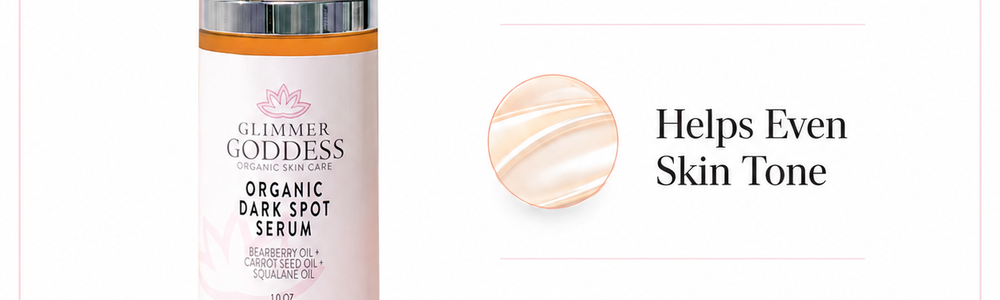
The Organic Dark Spot Serum – Fade Hyperpigmentation & Even Skin Tone is an active Glimmer Goddess product positioned specifically for visible discoloration and uneven-looking tone.

Its verified live formula positioning includes alpha arbutin, plant-based vitamin C, niacinamide, and botanical brighteners. The product is hydroquinone-free and is intended to help improve the appearance of dark spots, sun-related discoloration, post-acne marks, and uneven skin tone.

That makes it a targeted serum step rather than a replacement for sunscreen or professional dermatologic care.

Where Vitamin C fits

The Organic Vitamin C Serum 20% – Brightening Treatment with Hyaluronic & Ferulic Acid is another active Glimmer Goddess option for shoppers focused on dullness and uneven-looking tone.

It can be used as an antioxidant and brightening serum within a broader routine. As with any active formula, introduce it gradually if your skin is reactive.

Can you use niacinamide with vitamin C?

Yes. The old advice that niacinamide and vitamin C must never be used together is outdated. They can coexist in the same routine when the formulas are compatible and your skin tolerates them.

The bigger practical issue is avoiding unnecessary complexity. If you introduce several active products at the same time, it becomes harder to tell which one is helping or irritating your skin.

A simple dark spot routine

Morning

  1. Gentle cleanser.
  2. One brightening serum, if desired.
  3. Moisturizer if needed.
  4. Broad-spectrum SPF 30 or higher.

Evening

  1. Gentle cleanser.
  2. Targeted serum or treatment.
  3. Moisturizer.

If your skin becomes persistently red, itchy, hot, or stingy, simplify the routine and stop the product that appears to be causing irritation.

Why sunscreen matters so much

The AAD describes sunscreen as an essential part of treating and preventing hyperpigmentation. For people especially prone to dark spots, dermatologists often recommend a tinted sunscreen with iron oxide because iron oxide also helps protect against visible light. Read the AAD recommendations.

For a Glimmer Goddess mineral SPF option, the Triple Action Daily Moisturizer – Organic SPF 30 provides daily hydration plus mineral SPF 30 using non-nano zinc oxide. It is not a tinted iron-oxide sunscreen, so readers whose primary concern is visible-light-driven hyperpigmentation may prefer a separate tinted SPF.

How long do dark spots take to fade?

There is no single timeline. The AAD notes that once the trigger is controlled, a dark spot that is only a few shades darker than the surrounding skin may take roughly 6 to 12 months to fade naturally, while deeper pigmentation can take much longer. Treatment may speed improvement, but results vary by cause, depth, skin tone, and consistency.

That is why fixed promises like “visible fading in 6 weeks” should be treated cautiously unless a specific finished product has strong clinical data supporting that claim.

Dark spots vs melasma

Not every patch of discoloration is the same. Melasma often appears as broader patches and can be influenced by sunlight, hormones, pregnancy, medications, stress, and genetics. The AAD recommends professional evaluation because treatment depends on the diagnosis and can include prescription medications, procedures, and strict sun protection. See the AAD melasma treatment guide.

If you are unsure whether you have post-acne marks, sun spots, melasma, or another skin condition, a dermatologist can help identify the cause.

What to avoid

  • Products that promise to erase pigmentation overnight.
  • Liquid household bleach or unregulated “bleaching” products.
  • Stacking several strong acids or retinoids before your skin has adjusted.
  • Continuing a product that repeatedly burns or stings.
  • Skipping sunscreen while trying to improve discoloration.

The AAD warns that some imported skin-lightening products have been found to contain undeclared steroids or mercury, and specifically advises never applying liquid bleach to the skin.

Frequently asked questions

What skincare ingredient is best for dark spots?

There is no single best ingredient for everyone. Vitamin C, azelaic acid, kojic acid, glycolic acid, retinoids, and other brightening agents may be useful depending on the cause of the pigmentation and your skin’s tolerance.

Can dark spots disappear completely?

Some may fade substantially once the trigger is controlled, while others can persist for months or years. Deeper pigmentation and melasma often require more patience and sometimes professional treatment.

Should I use multiple brightening serums at once?

Usually not at first. Start with one targeted product, give your skin time to adjust, and add other steps only if they serve a clear purpose.

When should I see a dermatologist?

See a dermatologist if discoloration is persistent, rapidly changing, difficult to identify, or accompanied by bleeding, pain, texture change, or other unusual symptoms.

Related Glimmer Goddess guides

This article is for skincare education only and is not a diagnosis or substitute for medical care.

Mehr erfahren

Glimmer Goddess guide to safer dark spot brightening options, hyperpigmentation care, and skin-lightening safety.
Dark Spots

Dark Spot Brightening Creams: Safer Options & Hydroquinone Facts

Searching for a bleaching cream for dark spots? Learn why OTC hydroquinone is not legally marketed in the U.S., which brightening ingredients to consider, and what to avoid.

Weiterlesen
Glimmer Goddess Organic Copper Peptide GHK-Cu Serum featured in an evidence-based guide to peptide skincare.
Copper Peptides

Peptides in Skincare: Types, Benefits & How to Choose

Learn what peptides do in skincare, how GHK-Cu, Argireline® and Matrixyl 3000 differ, and how to choose between a peptide serum, moisturizer, or layered routine.

Weiterlesen