




7 Ways to Hydrate Dry Skin in Autumn: A Complete Routine
Table of Contents
- Why Autumn Dries Skin Out (and What Changes First)
- 1. Switch to a Gentle Cleanser That Doesn't Strip
- 2. Apply Moisturizer to Damp Skin Within Minutes
- 3. Layer a Hydrating Serum Under Your Cream
- 4. Pick Ingredients for Dry Skin That Hold Water In
- 5. Find the Best Moisturizer for Dry Sensitive Skin
- 6. Take Shorter, Lukewarm Showers and Add a Humidifier
- 7. Build an Autumn Skincare Routine for Dry Skin You'll Repeat
- Frequently Asked Questions
Last Updated: October 17, 2026
Why Autumn Dries Skin Out (and What Changes First)
Autumn dryness may appear as tight-feeling cheeks, rough elbows or flaky hands. Changes in outdoor air and indoor heating can make it useful to adjust cleansing and moisturizing routines.

Harvard Health Publishing's guidance on dry skin points to a telling detail: their recommended measures focus on using a humidifier, limiting baths or showers to 5-10 minutes, and minimizing soap use. Notably, Harvard Health's dry skin guidance does not list drinking more fluids as a remedy.
Glimmer Goddess has spent years formulating for dry, sensitive, and mature skin, and the pattern is consistent: what changes in autumn is not your skin type but the environment your skin is defending against.
1. Switch to a Gentle Cleanser That Doesn't Strip
Choose a cleanser that removes everyday buildup without leaving the skin uncomfortable. No single cleanser change is universally the most effective step for everyone.
Over-cleansing and some soaps can worsen dryness. Sulfate-free formulas may appeal to some shoppers, but sulfate presence alone does not establish that a finished cleanser is harsh or gentle.
How to tell a harsh cleanser from a gentle one
- Ingredient check: sulfates (SLS, SLES) near the top of the list signal a stripping formula
- After-feel test: tightness or a squeaky finish means the barrier took a hit
- Fragrance position: fragrance listed high suggests a formula built for scent, not sensitivity
The Organic Hydrating Facial Cleanser with Exfoliating Jojoba Beads is described in Shopify as a sulfate-free formula that pairs hyaluronic acid with organic aloe vera, For highly reactive skin, remember that its jojoba beads add physical exfoliation; consider a non-exfoliating option during irritation.

2. Apply Moisturizer to Damp Skin Within Minutes
Applying moisturizer soon after washing, while skin is still slightly damp, helps reduce evaporation. The American Academy of Dermatology recommends applying moisturizer immediately after bathing.
Damp skin already holds surface water, and a moisturizer applied on top seals it in before it evaporates.
Organic Coconut Milk Body Lotion provides a lighter moisturizing texture and is listed with Lavender Lemon and Fragrance-Free choices. Check the current product page for options.
3. Layer a Hydrating Serum Under Your Cream
A hydrating serum goes on before moisturizer, not after, because humectants need to pull water into the skin and then be sealed there. Reverse the order and the sealant blocks the hydrator from doing its job.
Hyaluronic acid is the best-known humectant for this role, and it works best applied to slightly damp skin. The Organic Hyaluronic Acid Serum uses multi-weight hyaluronic acid to hydrate at multiple skin depths, paired with plant-based vitamin C and botanical antioxidants.
The order that actually works
- Cleanse with a gentle, sulfate-free formula
- Pat damp, do not towel dry completely
- Serum while skin still holds surface water
- Eye treatment, if you use one
- Moisturizer to seal everything underneath
- SPF in the morning, mineral formulas layer well over cream
4. Pick Ingredients for Dry Skin That Hold Water In
Ingredients for dry skin fall into three jobs: humectants attract water, emollients soften and smooth the spaces between skin cells, and occlusives form a seal that slows water loss. The distinction matters in autumn, when drier air means the seal has to work harder, a routine with only humectants will underperform in cool, low-humidity air.
The three jobs, and what each one does
- Humectants, hyaluronic acid, glycerin, aloe, panthenol. They bind water at the skin surface. Best applied to damp skin, and always followed by something that seals.
- Emollients, shea butter, coconut oil, plant oils, squalane-type ingredients, fatty alcohols. They fill the gaps between cells so skin feels smooth rather than rough.
- Occlusives, petrolatum, dimethicone, beeswax-type waxes, rich butters in high concentration. They sit on top and slow water loss. The heaviest option, and the one most likely to feel greasy.
A study indexed by PubMed Central on consistent skin care regimens evaluated a routine built on a mild cleanser followed by a glycerin-rich moisturizing lotion, which reflects the same humectant-plus-barrier logic. The practical takeaway is not a specific product but a sequence: water first, then a humectant, then an emollient-rich cream or an occlusive on the driest areas.
Match the ingredient to the concern
| Skin concern | Ingredient focus | Where it fits |
|---|---|---|
| Tight, flaky patches | Glycerin, hyaluronic acid, panthenol | Serum and lotion layers on damp skin |
| Rough elbows, knees, heels | Shea butter, coconut oil, rich butters | Body butter as the last step |
| Fine lines from dehydration | Multi-weight hyaluronic acid plus emollient cream | Serum under night cream |
| Redness and reactivity | Fragrance-free formulas, soothing botanicals, colloidal-type agents | Dedicated sensitive-skin lotion |
| Oily but dehydrated | Light humectant serum, gel-cream emollient, skip heavy occlusives | Morning layer only |
| Dull, rough texture | Gentle exfoliation plus humectants | Weekly, not daily |
The autumn trade-off most guides skip
A gel that feels comfortable in summer may provide insufficient moisture when indoor air gets drier. Consider adjusting to a richer cream or balm if your skin needs it.
5. Find the Best Moisturizer for Dry Sensitive Skin
The best moisturizer for dry sensitive skin is fragrance-free, barrier-supporting, and rich enough to last overnight without triggering irritation.
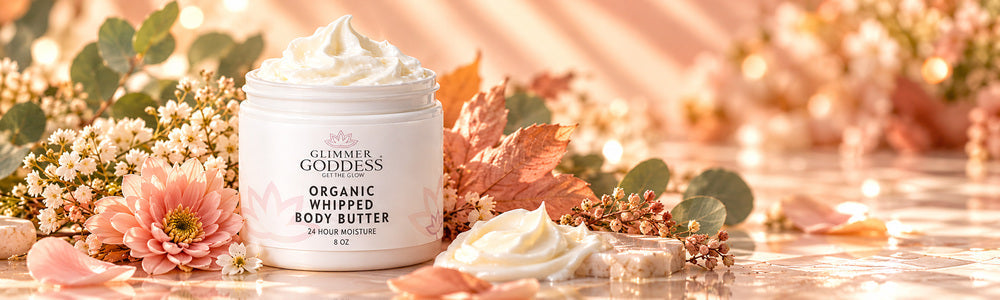
Organic Whipped Body Butter for Extremely Dry Skin →
Fragrance may irritate sensitive skin. The American Academy of Dermatology recommends fragrance-free skincare for dryness; the best product still depends on individual tolerance.
Organic Skin Renewal Night Cream is a verified Shopify facial moisturizer with botanical oils. Separate seasonal formula versions could not be confirmed and are not recommended here.
6. Take Shorter, Lukewarm Showers and Add a Humidifier
Shorter, lukewarm showers and a humidifier address the two environmental causes of autumn dryness: hot water stripping lipids and dry indoor air pulling moisture from skin all day. Together they change the conditions your routine is working in. What most guides skip is the autumn-specific part: the shift from air conditioning to indoor heating happens over a few weeks, and home humidity can drop faster than the outdoor weather changes.
Why hot water works against you
Hot water dissolves the oils that make up the skin barrier faster than lukewarm water does. A long, hot shower removes those lipids, and the dry indoor air that follows pulls water from the now-unsealed surface. Harvard Health's guidance recommends limiting baths or showers to 5-10 minutes and minimizing soap use. Keep the water lukewarm, crack the bathroom door for steam, and apply moisturizer while skin is still damp.
What a humidifier actually changes in autumn
Heating can lower relative humidity, although conditions vary. Use a hygrometer rather than guessing. The EPA recommends not exceeding 50% indoor relative humidity and cleaning portable humidifiers every third day.
The autumn transition checklist
- Turn the heat down a notch and add a layer instead; every degree of indoor heat lowers relative humidity further.
- Run the humidifier overnight in the bedroom, and check the level with a hygrometer rather than guessing.
- Shorten showers to 5-10 minutes and drop the temperature to lukewarm, especially on cold mornings.
7. Build an Autumn Skincare Routine for Dry Skin You'll Repeat
An autumn skincare routine for dry skin works because it repeats, not because any single product is remarkable. Consistency is what the research points to, and what most people abandon first when the season gets busy.
The Organic Sweet Almond Silky Skin Oil offers an emollient body-care option. Apply according to its current label and avoid assuming a guaranteed hydration duration.

How often to moisturize dry skin
Moisturize after bathing and handwashing and whenever skin feels dry. Some people benefit from morning and evening use, while others need more frequent applications.
| Step | Product type | Frequency |
|---|---|---|
| Gentle cleanse | Sulfate-free cleanser | Twice daily |
| Hydrating serum | Hyaluronic acid serum | Twice daily, on damp skin |
| Face moisturizer | Cream or night cream | Twice daily |
| Body moisturizer | Lotion or body butter | After every shower, plus as needed |
| Gentle exfoliation | Mild exfoliant | Once or twice weekly |
| Humidifier | Bedroom unit | Overnight, through the dry months |
Autumn asks more of your skin barrier, and the routine that answers it is simple: cleanse gently, apply to damp skin, layer a humectant under a cream, and repeat.
Frequently Asked Questions
How often should you moisturize dry skin in autumn?
Twice a day covers most people: once in the morning and once at night, plus a reapplication on hands and any tight-feeling patches after washing. The step that matters most is applying moisturizer to damp skin within a few minutes of bathing or cleansing, because that traps water rather than just coating dry surface. If your skin still feels tight by mid-afternoon, add a third application on the body rather than switching to a heavier product everywhere.
What ingredients for dry skin should you look for?
Look for two jobs being done: humectants that pull in water, such as hyaluronic acid and glycerin, and occlusives that hold it there, such as shea butter, coconut oil, and other plant butters. A study indexed in PubMed Central in 2021 examined a regimen of a mild cleanser followed by a glycerin-rich moisturizing lotion, which reflects that pairing approach. Fragrance-free formulas help if your skin is reactive, and a serum layered under a cream gives you both jobs in one routine.
Does a humidifier help with dry skin?
It can help with the air, not the skin directly. Harvard Health Publishing's dry-skin guidance lists using a humidifier alongside limiting baths or showers to 5 to 10 minutes and minimizing soap use. Indoor heating drops humidity in autumn, so adding moisture back to a bedroom or living room reduces how much water your skin loses overnight. Keep using your moisturizer and serum; the humidifier supports them rather than replacing them.
Should you exfoliate dry skin in autumn?
Yes, but gently and less often than in summer. Flaky, rough patches respond to a mild exfoliant, while scrubbing hard or using strong acids on already-irritated skin makes tightness worse. An exfoliating cleanser may be inappropriate when skin is inflamed, cracked or stinging. If your skin stings, looks red, or feels raw, stop exfoliating until it settles and focus on cleansing, serum, and moisturizer instead.
Is drinking more water enough to fix dry skin?
No. Harvard Health Publishing's dry-skin advice focuses on a humidifier, shorter baths or showers of 5 to 10 minutes, and less soap; it does not list drinking more fluids as a remedy. Water intake supports overall health, but surface dryness is about how well your skin barrier holds moisture, which is what a gentle cleanser, a hydrating serum, and a richer moisturizer address. Treat fluids as background support, not the fix.
Related skincare resources
Explore our routine for mature, dry skin, vitamin C and fine lines guide, and overview of eczema types if dryness comes with persistent irritation. Seek a dermatologist if skin cracks, bleeds or remains uncomfortable.
For expert guidance, read AAD dry-skin recommendations.
%0A%0A1.%20Switch%20to%20a%20Gentle%20Cleanser%20That%20Doesn't%20StripHow%20to%20tell%20a%20harsh%20cleanser%20from%20a%20gentle%20one%0A%0A2.%20Apply%20Moisturizer%20to%20Damp...)