


Reading a skincare ingredient list can sometimes feel like learning a new language. If you prefer a gluten-conscious beauty routine, you do not need to memorize every cosmetic ingredient. Learning the major gluten-containing grain sources, recognizing a few common botanical names, and knowing when to ask the manufacturer for clarification can make shopping much easier.
The Simple Answer
Which Gluten-Free Skincare Ingredients Should You Look For?
When reviewing skincare from a gluten-conscious perspective, the main gluten-containing grain sources to recognize are wheat, barley, rye, and triticale.
Cosmetic ingredient labels may use everyday names, botanical names, or technical ingredient terminology. Examples associated with these grains can include hydrolyzed wheat protein, Triticum vulgare, Hordeum vulgare, and Secale cereale.
Seeing an unfamiliar or scientific-looking ingredient does not mean it contains gluten. The goal is to identify actual grain relationships rather than treating every complex ingredient name as a concern.
In simple terms: look for the grain source first, review the complete formula, and contact the manufacturer when ingredient sourcing or processing is unclear.
For the foundation of the topic, read What Is Gluten-Free Skincare?.
Why Can Skincare Ingredient Labels Feel So Complicated?
Ingredients Can Have More Than One Name
A plant-derived cosmetic ingredient may appear under a familiar common name, a botanical name, or standardized cosmetic terminology.
For example, a shopper may see Triticum vulgare rather than simply seeing the word “wheat.”
You Do Not Need to Become a Cosmetic Chemist
A little label literacy goes a long way. Start with the major grain families and then investigate only the ingredients that truly need clarification.
Ingredient-conscious beauty should make you feel informed—not overwhelmed.
The U.S. Food and Drug Administration provides guidance on cosmetic ingredient names and nomenclature.
The Four Gluten-Containing Grain Sources to Know
Wheat
One of the most recognizable gluten-containing grains and a source of several cosmetic ingredient derivatives.
Barley
A gluten-containing grain that may appear under its common name or botanical terminology.
Rye
Another naturally gluten-containing grain that may appear as the source of botanical cosmetic ingredients.
Triticale
A hybrid of wheat and rye and therefore another gluten-containing grain source.
Common Skincare Ingredient Names Worth Recognizing
The following examples can help you connect technical or botanical terminology with the grain source behind the ingredient.
| Grain Source | Ingredient Names You May See | What the Name Tells You | What to Do Next |
|---|---|---|---|
| Wheat |
Wheat protein Hydrolyzed wheat protein Wheat germ oil Triticum vulgare |
The ingredient is associated with wheat. | Review finished-product information if avoiding wheat- or gluten-containing ingredients is important to you. |
| Barley |
Barley-derived ingredients Barley extract Hordeum vulgare |
The ingredient is associated with barley. | Look for clear formulation information or ask the manufacturer when needed. |
| Rye |
Rye-derived ingredients Rye extract Secale cereale |
The ingredient is associated with rye. | Contact the manufacturer if the finished product's formulation status is unclear. |
| Triticale | Triticale-derived ingredients | Triticale is a wheat-rye hybrid. | Review the product information if you are avoiding gluten-containing grain sources. |
What Does Triticum Vulgare Mean on a Skincare Label?
Triticum Vulgare Is Associated With Wheat
Triticum vulgare is botanical terminology associated with wheat and may appear in cosmetic ingredient declarations.
If you intentionally avoid wheat-derived ingredients, this is a term worth recognizing.
Look at the Finished Product, Not Just One Word
An ingredient's botanical source is only one piece of information. Processing, formulation, sourcing, and finished-product details can also matter.
Contact the manufacturer when you need product-specific clarification.
What Does Hordeum Vulgare Mean?
Hordeum Vulgare Refers to Barley
Barley is one of the primary gluten-containing grains and may appear on cosmetic labels under its botanical terminology.
Do Not Rely Only on Front-Label Claims
Review the complete ingredient declaration whenever possible and look for clear finished-product formulation information.
What Does Secale Cereale Mean?
Secale Cereale Refers to Rye
Rye is another gluten-containing grain and can appear in skincare as the source of botanical or plant-derived ingredients.
Source Recognition Makes Label Reading Easier
Knowing a few botanical names allows you to scan labels more efficiently without treating every unfamiliar ingredient as a concern.
What About Hydrolyzed Wheat Protein?
Hydrolyzed wheat protein is derived from wheat. That makes its source relevant to shoppers who intentionally avoid wheat-derived or gluten-containing grain ingredients.
What the Name Tells You
The ingredient originates from wheat.
What the Name Does Not Tell You
The name alone does not establish how much gluten may remain after processing or how much may be present in the finished cosmetic formula.
If that information is important to you, contact the manufacturer for product-specific details rather than making assumptions from the ingredient name alone.
What About Malt?
Malt Is a Useful Word to Recognize
Malt is commonly associated with barley and is a term frequently taught in gluten-free food label education.
If “malt” appears in a cosmetic ingredient name, it is reasonable to investigate the source more closely.
Do Not Assume Every Similar Word Contains Gluten
Scientific-looking terminology does not automatically mean an ingredient is wheat-, barley-, or rye-derived.
Look for the actual botanical or ingredient source instead of judging a name by how complicated it looks.
For additional background on gluten-containing grains and malt, see the Celiac Disease Foundation's Sources of Gluten.
Are Oats a Gluten-Containing Skincare Ingredient?
Oats Are Different From Wheat, Barley & Rye
Oats are not wheat, barley, or rye and are not inherently one of those primary gluten-containing grain sources.
Sourcing and Cross-Contact Can Matter
For people following medically strict gluten avoidance, sourcing and possible cross-contact may be important considerations. Ask the manufacturer when you need product-specific information.
A Simple 6-Step Way to Read a Skincare Ingredient Label
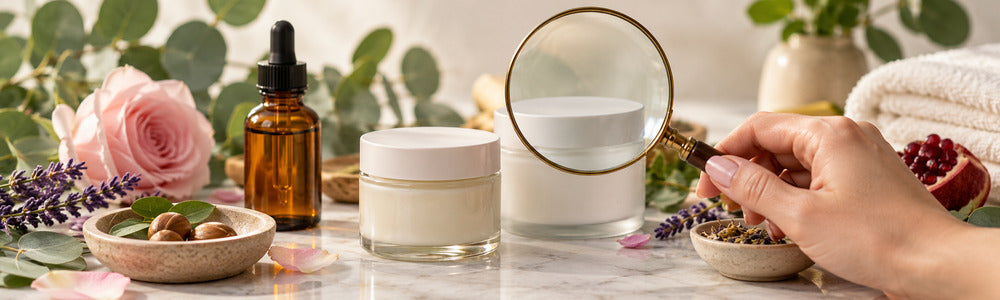
You do not need a magnifying glass and a chemistry degree. Use this process when gluten-conscious formulation matters to you.
1. Start With the Product Claim
Look for clear language about whether the formula is made without gluten-containing ingredients.
2. Read the Full Ingredient List
Do not rely only on front-label wording. Review the complete ingredient declaration whenever possible.
3. Look for Wheat, Barley & Rye
Scan for both familiar common names and recognizable botanical terminology.
4. Recognize Triticale & Malt
Triticale is a wheat-rye hybrid, while malt is commonly associated with barley.
5. Consider How the Product Is Used
Products used near the mouth may deserve closer attention when accidental ingestion is a concern.
6. Ask Instead of Guessing
When ingredient sourcing or finished-product information is unclear, contact the manufacturer.
For a full step-by-step label-reading guide, visit How to Read a Skincare Ingredient Label for Gluten.
Does “Gluten-Free” Mean the Same Thing on Skincare and Food?
No—and this distinction is important.
Food Has a Federal Gluten-Free Definition
The FDA's gluten-free labeling regulation applies to foods and establishes specific requirements for products marketed with a gluten-free food claim.
Under that food rule, gluten must remain below the applicable 20-parts-per-million threshold for qualifying foods using the claim.
Cosmetics Follow Different Rules
Ordinary cosmetics do not simply inherit the FDA food-labeling definition as a cosmetic certification standard.
Cosmetic labeling and marketing claims must still be truthful and not misleading.
Learn more from the FDA's Gluten-Free Labeling of Foods and Cosmetics Labeling resources.
Does “Wheat-Free” Automatically Mean Gluten-Free?
No. Wheat is only one gluten-containing grain.
Wheat-Free
Tells you specifically that wheat is absent or excluded, but does not automatically address barley, rye, or other related gluten-containing grain sources.
Gluten-Conscious Formulation
Looks more broadly at the grain sources associated with gluten rather than focusing only on wheat.
This is why reading the complete ingredient list matters more than relying on a single “wheat-free” statement.
Gluten-Free, Vegan & Organic Are Different Product Attributes
Gluten-Free
Relates to gluten-containing ingredients and grain-derived sources in the formulation.
Vegan
Means a formula contains no animal-derived ingredients. Vegan does not automatically mean gluten-free.
Organic
Relates to how qualifying agricultural ingredients are grown, handled, processed, or certified. Organic does not automatically mean gluten-free.
For the full comparison, read Gluten-Free vs. Vegan Skincare: What’s the Difference?.
Glimmer Goddess® maintains a strictly vegan formulation standard.
Do You Need to Avoid These Ingredients for Celiac Disease?
Ingredient identification and medical necessity are two different questions.
Topical Exposure Is Different From Ingestion
Current celiac guidance indicates that gluten is not absorbed through intact skin.
For someone with celiac disease, accidental ingestion is generally more relevant than ordinary topical contact.
Personal Preference Still Matters
Some shoppers still prefer formulas made without gluten-containing ingredients because that approach simplifies shopping or better fits their ingredient preferences.
That choice does not need to be framed as medically necessary for everyone.
For a deeper explanation, read Does Skincare Need to Be Gluten Free? and Can Gluten Be Absorbed Through Your Skin?.
Why Ingredient Transparency Matters More Than Memorizing a List
Ingredient education should make skincare easier—not give you a new reason to worry about every unfamiliar term.
Recognize the Major Sources
Wheat, barley, rye, and triticale give you a practical starting point.
Use Context
Consider the complete formula, product use, ingredient source, and any available manufacturer information.
Ask When Needed
A transparent skincare brand should be willing to provide clarification when ingredient information is available.
Choosing Gluten-Free Moisturizer and Body Care
Once you understand the ingredient terminology, the next step is choosing products based on both formulation preferences and what your skin actually needs.
Looking for Facial Moisture?
A moisturizer still needs to deliver the hydration, texture, and skin feel that work for you.
Looking for Body Care?
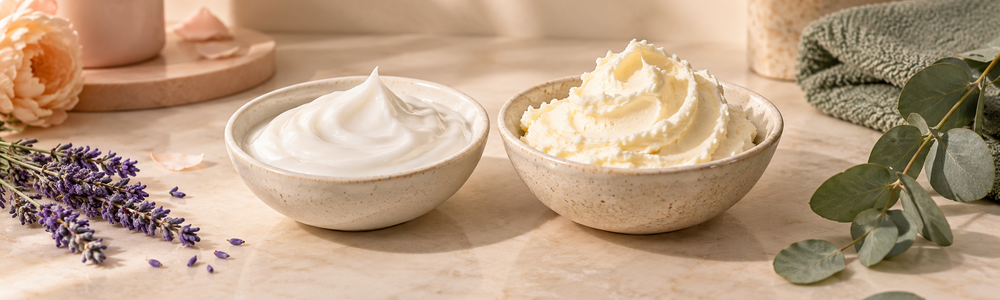
Body lotion and body butter both moisturize, but their textures and richness are different.
How Do These Ingredients Fit Into a Complete Gluten-Free Skincare Routine?
Ingredient knowledge becomes most useful when you apply it to the products you use every day.
A complete routine may include cleanser, serum, moisturizer, and body care selected according to your skin needs and personal formulation preferences.
See the full routine in Best Gluten-Free Skincare Routine: Cleanser, Serum, Moisturizer & Body Care.
The Glimmer Goddess® Approach to Ingredient Transparency
At Glimmer Goddess®, we believe skincare should be easier to understand.
Our approach combines transparent ingredient communication, strictly vegan formulation standards, thoughtfully selected ingredients, and small-batch skincare handcrafted in Texas.
For shoppers who prefer formulas made without gluten-containing ingredients, our Gluten-Free Skincare Collection brings qualifying facial skincare and body care together in one convenient place.
Unless an individual product specifically states otherwise, inclusion in this collection should not be interpreted as third-party gluten-free certification.
Ingredient-Conscious Beauty, Made Easier
Explore qualifying Glimmer Goddess® vegan skincare and body care thoughtfully formulated without gluten-containing ingredients and handcrafted in Texas.
Shop Gluten-Free SkincareOur Editorial Standard
How This Ingredient Guide Was Created
Created for Practical Label Literacy
This guide was developed to help shoppers recognize major gluten-containing grain sources and common cosmetic terminology without encouraging fear of unfamiliar ingredient names.
Grounded in Current Authoritative Guidance
Regulatory information was reviewed against U.S. Food and Drug Administration cosmetic and gluten-free food-labeling resources. Gluten terminology was cross-checked with Celiac Disease Foundation educational guidance.
Glimmer Goddess® has been creating vegan skincare and body-care products since 2015, with an emphasis on ingredient transparency, thoughtful formulation, clean, conscious beauty, and small-batch care handcrafted in Texas.
Experience
Glimmer Goddess® develops skincare and body-care products and works directly with cosmetic formulations and ingredient declarations.
Expertise
Ingredient information is reviewed against product specifications and recognized regulatory or educational sources when applicable.
Authoritativeness
Regulatory and gluten-related statements are supported by sources including the FDA and Celiac Disease Foundation.
Trustworthiness
We distinguish ingredient source, finished-product formulation, medical guidance, and third-party certification.
Gluten-Free Skincare Ingredient FAQs
Which skincare ingredients may be derived from gluten-containing grains?
Ingredient names associated with wheat, barley, rye, or triticale deserve a closer look. Examples can include hydrolyzed wheat protein, Triticum vulgare, Hordeum vulgare, and Secale cereale.
What does Triticum vulgare mean on a skincare label?
Triticum vulgare is botanical terminology associated with wheat. If you intentionally avoid wheat-derived ingredients, review the finished-product information or contact the manufacturer when clarification is needed.
What does Hordeum vulgare mean?
Hordeum vulgare refers to barley. Barley is one of the primary gluten-containing grains.
What does Secale cereale mean?
Secale cereale refers to rye, another gluten-containing grain source.
Does hydrolyzed wheat protein contain gluten?
Hydrolyzed wheat protein is derived from wheat. Its ingredient name alone does not tell you how much gluten may remain after processing or in the finished cosmetic, so product-specific clarification may be needed.
Are oats a gluten-containing grain?
Oats are not wheat, barley, or rye and are not inherently one of those primary gluten-containing grains. However, sourcing and cross-contact may matter for people following medically strict gluten avoidance.
Does wheat-free skincare mean gluten-free skincare?
Not automatically. A formula can exclude wheat while still containing ingredients associated with other gluten-containing grains such as barley or rye.
Are Glimmer Goddess® gluten-free skincare products certified gluten-free?
Products featured in our Gluten-Free Skincare Collection are qualifying formulas made without gluten-containing ingredients. Unless an individual product specifically states otherwise, this should not be interpreted as third-party gluten-free certification.
Continue Your Gluten-Free Skincare Guide
Explore the Complete Gluten-Free Skincare Resource Center
Choose the topic that best matches your next question.
Start with the complete definition, ingredient overview, and shopping guide.
Understand the difference between medical necessity and personal preference.
Explore topical exposure, celiac guidance, and accidental ingestion.
Use a practical process for evaluating cosmetic ingredient declarations.
Choose facial hydration based on ingredients, skin needs, and texture.
Compare rich body butter with lighter everyday lotion.
Understand two commonly confused formulation terms.
Put cleanser, serum, moisturizer, and body care into the right order.
Explore qualifying Glimmer Goddess® facial and body-care formulas.
References
FDA Cosmetic Ingredient Names
FDA Cosmetics Labeling
FDA Gluten and Food Labeling
FDA Gluten-Free Food Labeling
Celiac Disease Foundation Sources of Gluten
Shop Glimmer Goddess® Gluten-Free Skincare