




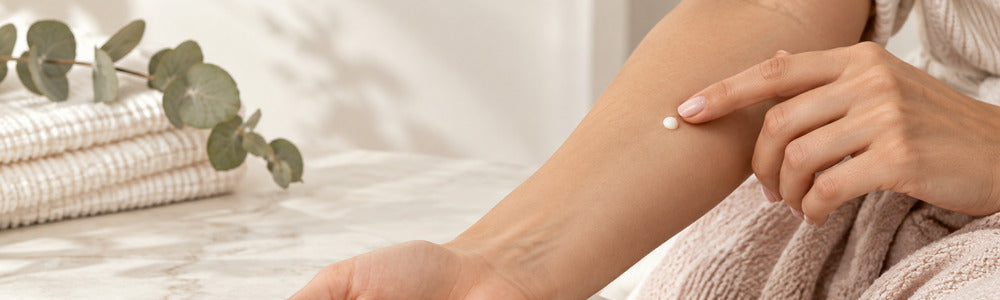
How to Patch Test Skincare for Sensitive Skin
Testing a new skincare product on a small area can reveal an obvious irritation or delayed reaction before full-face or full-body use. It is a useful screening step for sensitive skin, but it cannot guarantee future tolerance and is not the same as diagnostic patch testing performed by a dermatologist.
Choose the test area
The underside of the arm or bend of the elbow is practical because the area is easy to observe and cover. Avoid eyelids, lips, freshly shaved skin and any site with eczema, cuts or sunburn.
The American Academy of Dermatology provides detailed at-home product testing guidance. If the product instructions specify rinse-off use, rinse the test area after the normal contact time rather than leaving it on.
Test only one product
- Photograph the clean test area if helpful.
- Apply the directed amount to the same small area.
- Repeat twice daily for seven to ten days.
- Keep other new products away from the site.
- Record any delayed redness, itch or bumps.
Introducing several products together makes it difficult to identify the trigger. After a successful small-area test, begin normal use slowly and continue watching for a reaction.
Keep the product packaging so the ingredient list and batch information remain available if a reaction occurs.
Know what a reaction looks like
Concerning changes include persistent burning, itching, swelling, hives, a spreading rash or blisters. Wash the product off and stop using it. Facial swelling, breathing difficulty or rapidly worsening symptoms require urgent medical care.
A mild temporary sensation from a known active is not automatically an allergy, but discomfort should never be treated as proof that the product works.
At-home testing versus medical patch testing
A dermatologist’s patch test uses standardized allergens under controlled conditions to investigate allergic contact dermatitis. It differs from a skin-prick test, which checks immediate allergy. The AAD’s medical patch-testing overview explains the process.
The active Organic Sensitive Skin Deluxe Sample Kit provides smaller sizes for product trial, but a sample is not hypoallergenic and still requires one-at-a-time testing.
Frequently asked questions
Can I test behind my ear?
It can be used for some products, but the inner arm is easier to monitor and follows common dermatology guidance.
Should I cover the test spot?
Do not occlude it unless the product instructions or a clinician specifically directs you to do so.
Can children patch test adult skincare?
Ask a pediatric clinician or dermatologist before introducing adult active products to children.
At-home product testing is not a diagnostic allergy test and does not replace medical care.


