




Sensitive Skin Skincare Guide 2026: How to Choose Products
Sensitive skin does not need a complicated routine or a “top five” leaderboard. The best products are the ones your skin tolerates consistently, with clear ingredient information and a routine that minimizes unnecessary irritation.
What “Sensitive Skin” Can Mean
People use the term sensitive skin to describe stinging, burning, redness, dryness, or reactions to products and environmental changes. Those symptoms can have many causes, so persistent or severe reactions deserve professional evaluation rather than endless product switching.
Build a Simple Core Routine
1. Gentle Cleanser
Choose a cleanser that removes sunscreen, makeup, oil, and daily debris without leaving the skin feeling stripped. Fragrance-free formulas are often a sensible starting point for reactive skin.
2. Moisturizer
Use a moisturizer that fits your skin type and helps reduce dryness. Ingredients such as glycerin, hyaluronic acid, niacinamide, and skin-compatible oils may be useful depending on the formula and your tolerance.
3. Daily Sunscreen
Use broad-spectrum SPF 30 or higher during the day. If one sunscreen stings or irritates, try a different formula rather than skipping sun protection entirely.
Introduce New Products Slowly
Add one new product at a time. Patch testing can help identify obvious irritation before full-face use, although it cannot rule out every possible reaction.
A Verified Glimmer Goddess Example
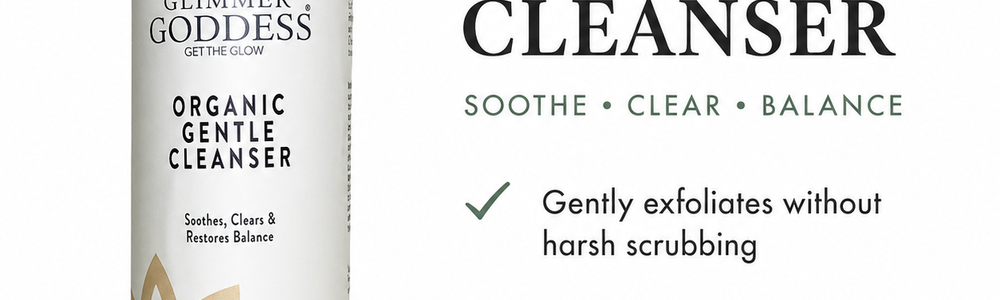
Organic Sensitive Skin Cleanser – Gentle AHA Face Wash is an active Glimmer Goddess product. Its live product page describes a fragrance-free, sulfate-free cleanser with mild AHAs, almond extract, and algae. Because exfoliating acids can still be too much for some reactive skin, introduce it gradually and follow the product directions.
We are including it as a verified formula example—not claiming it is universally “#1” for sensitive skin.
Ingredients to Approach Thoughtfully
Fragrance, essential oils, exfoliating acids, Vitamin A products, strong vitamin C formulas, and frequent physical exfoliation can all be irritating for some people. That does not make each ingredient universally “bad”; tolerance, concentration, frequency, and the finished formula matter.
Signs to Simplify the Routine
If a new product causes persistent burning, swelling, rash, or worsening irritation, stop using it. If reactions are frequent or severe, a dermatologist can help determine whether eczema, rosacea, contact dermatitis, or another condition is involved.
Frequently Asked Questions
Do I need a toner if I have sensitive skin?
No. Toner is optional. Cleanser, moisturizer, and sunscreen are a complete basic routine for many people.
Does “natural” automatically mean gentler?
No. Plant-derived ingredients can be irritating or allergenic too. Judge the full formula and your own tolerance.
Should sensitive skin avoid all exfoliation?
Not necessarily, but exfoliation should be introduced carefully and reduced or stopped if it causes irritation.
The Bottom Line
For sensitive skin, simplicity, fragrance-free options, gradual introduction, and realistic expectations matter more than rankings or trend-driven routines.