




Clean Beauty for Sensitive Skin: A Gentle Routine
Quick answer: “Clean beauty” is not a guarantee that a product will suit sensitive skin. Start with a gentle cleanser, a moisturizer you tolerate, and broad-spectrum sunscreen during the day. Choose fragrance-free options when scent is a trigger, introduce one product at a time, and test a new formula on a small area before applying it widely.
Skin that stings, itches, flushes, or feels tight may react to a product—or to something else altogether. A stripped-down routine can make it easier to spot what agrees with your skin. Persistent or worsening symptoms deserve a dermatologist’s assessment, especially if you suspect eczema, rosacea, or an allergy.
What does “clean” mean for sensitive skin?
“Clean” is a shopping shorthand, not a diagnosis or a reliable safety test. A botanical ingredient can irritate, and a synthetic ingredient can be well tolerated. The FDA advises consumers to read cosmetic labels and notes that “natural” or “organic” does not automatically mean safe. Your own reaction to the full formula matters more than a front-label promise.
Fragrance deserves special attention. “Unscented” may still contain ingredients that mask an odor; “fragrance-free” is the clearer starting point when you want to avoid added scent. Essential oils are fragrance ingredients too, even when they come from plants. A formula that works for someone else may not work for you.
A simple morning and evening routine
Morning: cleanse gently, moisturize, protect
- Wash with lukewarm water and a mild cleanser if needed. Avoid scrubbing or repeatedly washing skin that already feels uncomfortable.
- Apply a moisturizer suited to the area and your preference. A lighter face lotion and a richer body cream need not be interchangeable.
- Finish with a broad-spectrum SPF 30 or higher sunscreen. If one sunscreen stings, try another formula and ask a dermatologist for help finding one you can use consistently.
Evening: keep the reset uncomplicated
Gently remove sunscreen and daily buildup, then moisturize. Pause exfoliating acids, strong actives, and new scented products when your skin is irritated. You can add optional steps later, one at a time, once you know the basics agree with your skin.
How to choose a moisturizer without overpromising
Look at the complete ingredient list, texture, and fragrance choice—not just a star ingredient. Humectants and emollients can help skin feel hydrated and comfortable, but even a carefully formulated moisturizer may not suit every person. For dry body skin, apply moisturizer after bathing while skin is still slightly damp. The American Academy of Dermatology (AAD) recommends short, warm showers and fragrance-free skin care for eczema-prone skin; a cosmetic moisturizer is not a substitute for treatment of an active skin condition.
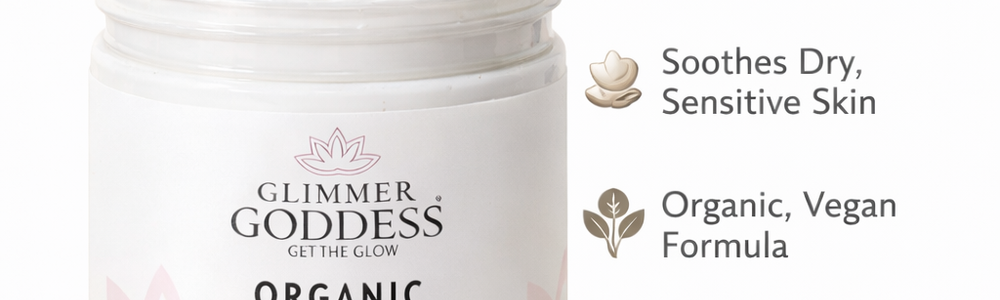
If you want to explore Glimmer Goddess® options, these current product pages offer a Fragrance-free selection:
- Organic Copper Peptide Moisturizer — a lightweight face moisturizer with aloe, squalane, jojoba, rosehip, and vitamin B5. Select the Fragrance-free variant; the other scent option includes essential oils. Patch test before adding it to your face routine.
- Organic Whipped Body Butter for Extremely Dry Skin — a richer body-care option. Select the Fragrance-Free variant if you prefer no added scent. It is body moisturizer, not an eczema or rosacea treatment.
Neither product is guaranteed to prevent irritation. Check the product page and label for the full ingredient list and stop use if a formula causes a reaction.
Patch test before committing
The AAD’s at-home testing guidance recommends trying a new skin-care product on a small area twice daily for 7 to 10 days before wider use, following its directions and avoiding damaged skin. If redness, itching, or swelling appears, wash it off and discontinue use. For a severe reaction or ongoing symptoms, seek medical advice. Add only one new product at a time so you can better identify a possible trigger.
Common questions
Is organic skin care always better for sensitive skin?
No. “Organic” describes how qualifying ingredients are produced; it does not predict how your skin will respond to the finished formula. Read the label and test the product you intend to use.
Are essential oils safe for sensitive skin?
Some people tolerate them, but plant-derived scent can still be irritating. If fragrance has been a trigger—or your skin is in a flare—consider a genuinely fragrance-free formula first.
Can moisturizer treat eczema or rosacea?
Moisturizer may support a comfortable daily routine, but it cannot diagnose or treat either condition. If you have recurrent redness, rash, burning, broken skin, or persistent itch, consult a dermatologist. The AAD’s rosacea skin-care advice also emphasizes gentle, fragrance-free products.
For more detail, read our guide to a gentle sensitive-skin routine. Keep the core routine simple, make ingredient choices based on your own tolerance, and let your skin—not a marketing label—have the last word.
Educational information only; not medical advice. Products mentioned are cosmetics, not treatments for skin disease.