



Benefits of Niacinamide for Mature Skin
Table of Contents
- Why Niacinamide for Mature Skin Deserves a Place in Your Routine
- What Niacinamide (Vitamin B3) Does for Aging Skin
- How to Use Niacinamide Serum in a Mature-Skin Routine
- Niacinamide for Dry Skin: Hydration and Barrier Support
- Niacinamide with Retinol: Layering Without Irritation
- Niacinamide Side Effects and Realistic Expectations
- Choosing a Concentration and Formula That Fits Your Skin
- Conclusion
- Frequently Asked Questions
Last Updated: October 18, 2026
Why Niacinamide for Mature Skin Deserves a Place in Your Routine
The benefits of niacinamide for mature skin start with a simple fact: this form of vitamin B3 is one of the most studied skincare ingredients available, and it addresses several visible signs of aging at once. Research published in a peer-reviewed review of niacinamide's clinical evidence describes it as a cosmetic ingredient with real potential for skin aging and hyperpigmentation. At Glimmer Goddess, that combination of evidence and gentleness is exactly why the ingredient earns a permanent spot in mature-skin routines.
Mature skin rarely has just one complaint. It is usually dryness plus uneven tone plus fine lines, all at once. Niacinamide is unusual because it works on several of those fronts without the irritation that comes with stronger actives.
Below, this guide breaks down what the research actually shows, how to layer niacinamide with retinol, and how to set realistic expectations.
What Niacinamide (Vitamin B3) Does for Aging Skin
Niacinamide is a water-soluble form of vitamin B3 that supports the skin barrier, helps regulate oil, and improves the visible appearance of tone and texture. It is not an exfoliant and does not resurface skin; it works by supporting how skin cells function.
A 2005 study on topical niacinamide and aging facial skin reported improvements in the appearance of fine lines and wrinkles, hyperpigmented spots, red blotchiness, and skin sallowness (PubMed study on niacinamide and aging facial skin). Those four concerns map closely to what mature skin typically shows.
Fine Lines, Wrinkles, and Skin Texture
A 12-week study of a topical 5% niacinamide emulsion reported a 21% improvement in fine lines and a 14% improvement in skin-tone clarity (Dermatology Times coverage of niacinamide's anti-aging effects). Texture improvements tend to show up as smoother-feeling skin before visible line reduction.
Uneven Tone, Dark Spots, and Redness
Niacinamide is frequently studied for hyperpigmentation and redness. A 2026 literature review notes research into its potential to reduce inflammation and pigmentation while supporting anti-aging effects (Cosmoderma review of niacinamide in skin therapy). Dark spots and blotchiness often respond gradually, over months rather than weeks.
How to Use Niacinamide Serum in a Mature-Skin Routine
Apply niacinamide serum to clean, dry skin after cleansing and before moisturizer, morning or evening. A few drops pressed gently into the face and neck are enough; there is no benefit to over-applying. The ingredient is water-soluble and layers well, which is why it fits near the start of a routine rather than at the end.

A practical order for mature skin:
- Gentle cleanser
- Niacinamide serum, patted in and left to absorb
- Moisturizer to seal in hydration
- Mineral sunscreen in the morning
Morning and Evening Examples
Mature skin often tolerates a simple routine better than a crowded one. Two workable templates:
Morning (brightening and protection):
- Gentle cleanser or a rinse with lukewarm water
- Niacinamide serum
- Vitamin C serum, if you use one (apply after niacinamide has absorbed)
- Moisturizer
- Broad-spectrum mineral sunscreen, SPF 30 or higher
Evening (repair and hydration):
- Gentle cleanser
- Niacinamide serum
- Retinol, two to three nights per week to start (see the layering section below)
- A richer night moisturizer or barrier cream
If your skin is dry or reactive, you can use niacinamide twice daily from the start. If it is sensitive, begin once daily in the evening and add a morning application after two weeks.
How to Introduce Niacinamide Gradually
A common pattern for mature or sensitive skin is to start with one application every other evening for the first week, then move to once daily, then twice daily if the skin is comfortable. This is not because niacinamide is harsh, most people tolerate it well, but because mature skin often has a compromised barrier, and introducing one new product at a time makes it easier to identify what works and what does not.
Application Details That Matter
- Amount: a few drops, roughly the size of a pea, is enough for the face and neck. More does not improve results.
- Technique: press and pat rather than rub, especially around the eyes and along the jawline where mature skin is thinner.
- Wait time: you do not need to wait long between niacinamide and moisturizer. Thirty to sixty seconds is usually enough for the serum to absorb.
- Neck and hands: these areas show aging early and are often skipped. Extend the serum down the neck and onto the backs of the hands if the product is affordable enough to do so.
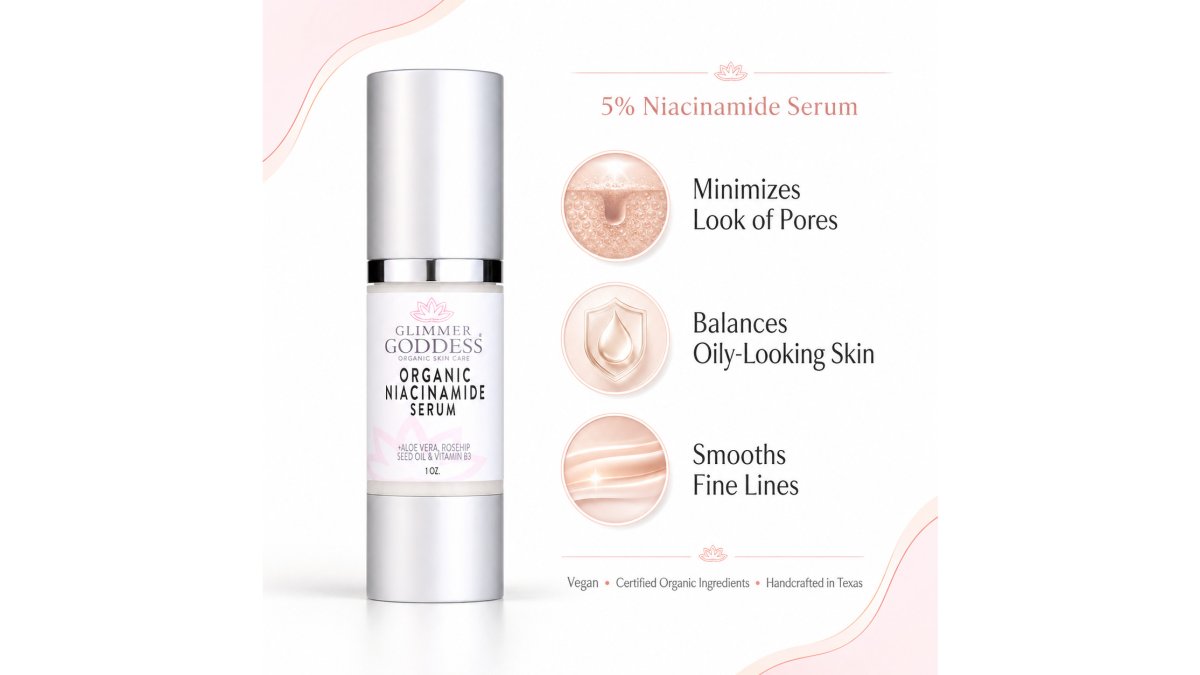
Glimmer Goddess's Organic Niacinamide Serum 5% ($34.95) is formulated at a 5% concentration and layers easily into both morning and evening routines. For those who prefer a paired approach, the Organic Niacinamide + Resveratrol Serum Duo ($55.92) offers a step-up option.

Niacinamide for Dry Skin: Hydration and Barrier Support
Niacinamide for dry skin works indirectly: it supports the skin barrier, which is what holds moisture in. Mature skin loses moisture more readily, so barrier support matters as much as any humectant.
The 2026 Cosmoderma review notes niacinamide may help prevent dryness as part of its broader effects on aging skin. Pair it with a moisturizer rather than relying on the serum alone, especially in winter or in low-humidity indoor air.
Niacinamide with Retinol: Layering Without Irritation
Niacinamide with retinol is a well-tolerated pairing for most people, and it can reduce the irritation retinol sometimes causes. The two ingredients work on different pathways, so layering them is not redundant.
Organic Niacinamide Serum 5% – Pore Minimizer & Anti-Aging Treatment →
A sensible approach for sensitive or mature skin:
- Use niacinamide in the morning and retinol at night
- Or apply niacinamide first, let it absorb, then apply a pea-sized amount of retinol
- Start retinol two nights per week and build up slowly
If stinging or redness appears, separate the two into different routines rather than stopping both.
Niacinamide Side Effects and Realistic Expectations
Niacinamide side effects are uncommon and usually mild: brief tingling, warmth, or slight redness when first used. Reactions are more likely at higher concentrations or when the skin barrier is already compromised. Most people who experience irritation find it settles within a week or two of consistent use, especially if they drop to once daily and pair the serum with a moisturizer.
What the Evidence Actually Supports
The research on niacinamide is stronger than for many cosmetic ingredients, but it is not unlimited. Most studies are small, short (often 8 to 12 weeks), and frequently use a single formulation rather than comparing multiple concentrations head to head. That means the findings are encouraging but should be read as "this ingredient shows measurable potential" rather than "this ingredient will erase your wrinkles."
The concerns with the best supporting evidence include:
- Fine lines and texture: modest improvements in the appearance of fine lines and smoother-feeling skin.
- Uneven tone and dark spots: gradual fading of hyperpigmentation and blotchiness, usually over months.
- Redness and blotchiness: reduced visible redness in some studies.
- Sallowness: improved skin-tone clarity and brightness.
What the evidence does not support is dramatic restructuring of the skin, instant results, or replacement of procedures such as lasers or prescription retinoids. Niacinamide is a supportive ingredient, not a corrective procedure.
Realistic Timelines
Improvements in tone and texture typically take eight to twelve weeks of consistent use. Texture changes, smoother-feeling skin, often appear before visible line reduction. Dark spots and pigmentation can take longer, sometimes three to six months, because pigment cycles slowly. If you see no change at all after three months of daily use, the product or concentration may not be the right fit for your skin.
When to Seek Professional Advice
Some skin changes deserve a clinician's eye rather than another serum. Consider seeing a dermatologist or primary care provider if you notice:
- Persistent redness, stinging, or burning that does not settle after two weeks of gentle use
- A new or changing spot, mole, or pigmentation patch, especially one that is asymmetric, irregular, or evolving
- Sudden or severe dryness, cracking, or peeling that does not respond to moisturizer
- Signs of a skin condition such as rosacea, eczema, or perioral dermatitis, which need targeted treatment rather than general skincare
Niacinamide is generally compatible with most skin types, but it is not a treatment for a medical condition. If you are using prescription topicals or have a diagnosed skin condition, ask your provider before adding a new active to your routine.
Choosing a Concentration and Formula That Fits Your Skin
Concentration is where most buyers guess, and guessing is unnecessary. A 5% formula suits most mature and sensitive skin types as a daily starting point. A 10% formula may suit those who have used niacinamide before and want a more targeted approach to pores and tone.
| Concentration | Best For | Typical Use |
|---|---|---|
| 5% | First-time users, sensitive or dry skin | Daily, morning or evening |
| 10% | Experienced users targeting pores and firmness | Daily, often paired with an antioxidant |
Glimmer Goddess's Organic Niacinamide + Resveratrol Serum Duo ($55.92) pairs 10% niacinamide with resveratrol, an antioxidant, for those ready to step up. Both formulas are vegan, cruelty-free, and handcrafted in small batches.
Conclusion
Mature skin asks a lot of one routine, and niacinamide answers more of those asks than most single ingredients can. Start at 5%, layer it sensibly with retinol, and give it two to three months before judging results.
Glimmer Goddess formulates with certified organic ingredients and offers a 60-day return window, so trying a niacinamide serum carries little risk. Explore the full serum collection and build a routine that supports skin without overwhelming it.
Frequently Asked Questions
Should mature skin use niacinamide?
Yes, mature skin can benefit from niacinamide. Research on topical niacinamide and aging facial skin reported improvements in the appearance of fine lines and wrinkles, hyperpigmented spots, red blotchiness, and skin sallowness. A 2021 review also suggests it may be useful for skin aging and hyperpigmentation. It layers easily with moisturizers and sunscreen, which makes it a practical addition for skin that is drier or more sensitive with age. Start with a lower concentration and patch test first.
What are the downsides or side effects of niacinamide?
Most people tolerate niacinamide well, but some experience mild redness, stinging, or irritation, especially at higher concentrations or on sensitive skin. Start with a 5% formula a few times a week and increase gradually. If you notice persistent irritation, stop use and consult a dermatologist. Patch testing on your inner arm before applying to your face is a sensible first step.
How long does niacinamide take to show results on mature skin?
Timelines vary, but a 12-week study of a topical 5% niacinamide emulsion reported a 21% improvement in fine lines and a 14% improvement in skin-tone clarity. That suggests visible changes often build over weeks, not days. Use it consistently once or twice daily and pair it with sunscreen, since UV exposure affects tone and texture. If you see no change after three months, reassess the concentration or talk to a dermatologist about your routine.
Can you use niacinamide with retinol?
Niacinamide and retinol can be used together, and many routines pair them to support firmness and tone. If your skin is sensitive, apply niacinamide in the morning and retinol at night to reduce the chance of irritation. A 5% niacinamide serum layers well under moisturizer and sunscreen. Introduce one active at a time, wait a few weeks before adding the next, and watch for redness or stinging. Consult a dermatologist if irritation persists.