

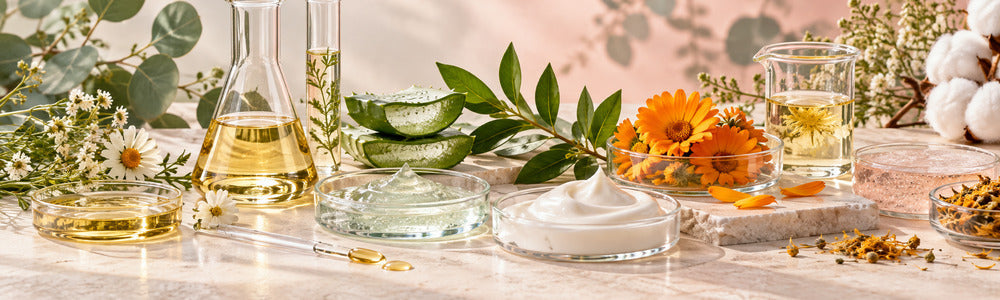
What Clean Beauty Means—and What It Does Not
Clean beauty is a brand or retailer philosophy used to describe choices such as ingredient transparency, vegan formulas, fragrance preferences or environmental priorities. It is not one regulated U.S. safety category, and there is no universal list of ingredients that makes every “clean” product safer or more effective.
What clean beauty can mean
A thoughtful clean-beauty standard may address ingredient sourcing, animal-derived ingredients, fragrance, manufacturing practices, packaging or substances a brand chooses not to use. Those choices can reflect meaningful values, but different brands define the term differently.
Glimmer Goddess® uses “clean beauty” to express a vegan, cruelty-free, botanical-forward formulation philosophy with transparent ingredient information. It should not imply that every natural ingredient is harmless or that conventional cosmetics are inherently unsafe.
Why “chemical-free” is not accurate
Everything—including water, aloe and plant oils—is made of chemicals. The useful question is whether a specific ingredient is appropriate at its concentration and in its product type. Source, dose, purity, exposure and personal allergy history all affect safety.
The FDA notes that cosmetic labeling claims have legal limits even though most cosmetic claims are not preapproved. Review the agency's cosmetic claims guidance.
Four signs of a useful clean-beauty claim
- Specific: “Fragrance-free” communicates more than a vague “pure” claim.
- Verifiable: certifications, ingredient lists and defined policies can be checked.
- Contextual: an ingredient is discussed by function and exposure rather than fear.
- Honest about limits: botanical ingredients can still irritate, and preservatives serve an important safety purpose.
Environmental language also needs precision. The Federal Trade Commission advises marketers not to make broad, unqualified “green” or “eco-friendly” claims that are difficult to substantiate. See the FTC Green Guides summary.
How to shop clean beauty thoughtfully
- Define your goal: cleansing, hydration, tone, exfoliation or sun protection.
- Read the complete ingredient list and directions.
- Check fragrance and essential oils if scent is a trigger.
- Look for appropriate preservation in water-based products.
- Patch test and change one product at a time.
Frequently asked questions
Is clean beauty safer?
Not automatically. A defined standard may help you shop according to your priorities, but safety depends on the full formula and how it is used.
Does clean mean preservative-free?
No. Water-based cosmetics need microbial protection. A compatible preservative system is part of responsible formulation.
Is clean the same as organic?
No. Organic is tied to agricultural production and labeling standards; clean is a broader brand or retailer concept. Read what organic skincare means.
This article provides general cosmetic education, not individualized medical or toxicology advice.