




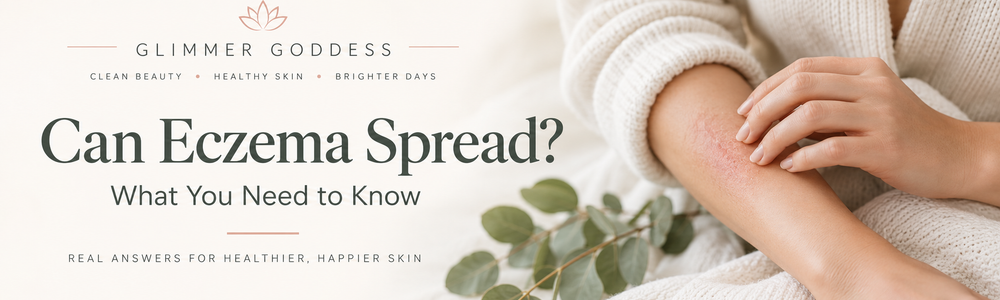
Can Eczema Spread? What You Need to Know
No—eczema is not contagious, and it does not “spread” across your body the way an infection does. However, eczema symptoms can appear in new areas or flare in several places at the same time. Scratching can make irritated skin worse and increase the risk of infection, but it does not transfer eczema from one part of your body to another.
That distinction matters because a new patch of eczema, a widespread flare and a secondary skin infection can look similar at first but may require very different care.
Important: This article provides general skincare education and is not a diagnosis or treatment plan. New, rapidly worsening, painful or potentially infected skin changes should be evaluated by a qualified healthcare professional.
What Does It Mean When Eczema Seems to “Spread”?
When people say their eczema is spreading, they usually mean that they are noticing irritated, itchy or dry patches in places that were previously clear.
That can happen, but it does not mean eczema is moving across the skin from one patch to another. Depending on the type of eczema, individual triggers and other factors, symptoms can develop in different areas at different times.
Atopic dermatitis—the condition many people mean when they use the word eczema—is a chronic inflammatory skin condition. It is not an infection and cannot be passed from one person to another.
Why Can Eczema Appear in New Areas?
There is rarely one simple explanation. Several factors can contribute to a flare or cause previously unaffected areas to become irritated.
Skin-barrier changes
People with atopic dermatitis tend to have difficulty keeping moisture in the skin and irritants out. When the skin becomes dry or irritated, symptoms may become more noticeable in multiple areas.
Personal triggers
Fragrance, certain skincare products, detergents, fabrics, heat, sweat, dry weather and other environmental factors can trigger or worsen symptoms in some people. Triggers are highly individual, which is why identifying patterns can be more useful than following a universal avoidance list.
Changes in weather or environment
Dry air, temperature changes and seasonal conditions can affect larger areas of skin at once. This can make a flare appear to be “spreading” even though several areas are reacting to the same conditions.
Stress
Stress does not cause eczema, but some people notice that itching or existing symptoms become more difficult to manage during stressful periods.
Does Scratching Make Eczema Spread?
Scratching does not transfer eczema from one body part to another.
It can, however, make an existing flare worse. Repeated scratching can further irritate the skin, cause cracking or bleeding and make it easier for germs to enter damaged skin.
Keeping fingernails short and smooth can help reduce accidental skin damage. A clean, cool compress may also feel soothing when the urge to scratch becomes difficult to ignore.
Could a Rapidly Changing Rash Be an Infection?
Sometimes what looks like rapidly “spreading eczema” may actually involve a secondary skin infection. Skin affected by eczema can be more vulnerable to infection when the skin barrier is damaged.
Signs that deserve medical attention can include:
- Yellow or honey-colored crusting
- Pus-filled bumps or blisters
- Increasing pain, tenderness, warmth or swelling
- Redness that is rapidly expanding
- Cold-sore-like or grouped painful blisters
- Fever or feeling generally unwell along with worsening skin symptoms
If you notice signs of infection—or if a rash is changing quickly and you are unsure what you are seeing—contact a healthcare professional. Seek immediate medical care for rapidly developing painful blisters, especially with fever or feeling unwell. These symptoms can occur with eczema herpeticum, a serious viral infection. See the AAD guide to atopic dermatitis symptoms. Treatment depends on the cause, so an accurate diagnosis matters.
Can You Catch Eczema From Someone Else?
No. Eczema itself is not contagious.
You cannot develop atopic dermatitis because you touched, hugged or spent time with someone who has it. Likewise, someone with eczema does not need to avoid normal physical contact because of the eczema itself.
A separate skin infection can sometimes be contagious, however, which is another reason not to assume that every new or changing rash is simply eczema.
Gentle Skin Care That May Help Reduce Flares
Good skin care cannot guarantee that eczema will never flare, but keeping the skin moisturized and reducing unnecessary irritation can be an important part of an eczema-management plan.
Choose warm rather than hot water
Keep baths and showers relatively short and use warm—not very hot—water. After bathing, gently pat the skin instead of rubbing it aggressively.
Moisturize while skin is still slightly damp
Applying a thick moisturizer shortly after bathing can help reduce dryness. Creams and ointments are often preferred over lightweight lotions for eczema-prone skin. The AAD's skin-care guidance recommends a fragrance-free cream or ointment while skin is still damp.
Look for “fragrance-free” rather than “unscented”
These terms are not interchangeable. An unscented product may contain ingredients used to mask another odor. If fragrance is a trigger for your skin, look specifically for products labeled fragrance-free.
Test new skincare products cautiously
Even a product marketed for sensitive skin may not agree with everyone. Introducing one new product at a time can make it easier to identify something that causes irritation.
Learn your individual triggers
Instead of trying to avoid every ingredient or environmental factor associated with eczema, pay attention to your own patterns. A simple record of products, weather, activities and flare timing can sometimes help you and your dermatologist identify useful connections.
The Glimmer Goddess approach: We separate cosmetic skincare from medical treatment. Moisturizers can support dry, uncomfortable-feeling skin, but cosmetics should not be positioned as a cure or treatment for eczema. Diagnosis and medical treatment belong with a qualified healthcare professional.
What About Food and Eczema?
The relationship between food allergy and atopic dermatitis is complex. A food allergy can coexist with eczema, especially in some children, but that does not mean everyone with eczema should eliminate common foods from their diet.
Do not begin a restrictive elimination diet solely because eczema has worsened. If you suspect a food allergy or notice a consistent reaction after eating a particular food, discuss it with a dermatologist, allergist or other qualified healthcare professional who can evaluate the situation appropriately.
Can Stress Make Eczema Worse?
Stress does not cause eczema, but it can contribute to a difficult itch-scratch cycle or make an existing flare feel harder to manage for some people.
Sleep, regular movement, relaxation practices and other stress-management habits may be useful parts of overall wellbeing, but they should complement—not replace—appropriate eczema care.
Different Types of Eczema Can Affect Different Areas
“Eczema” is an umbrella term rather than one single pattern of rash. Different forms can affect different parts of the body.
- Atopic dermatitis commonly causes dry, itchy, inflamed skin and can affect different locations depending on age and the individual.
- Contact dermatitis develops after skin exposure to an irritant or allergen, although the visible rash does not always appear immediately after exposure.
- Dyshidrotic eczema primarily affects the hands and feet and can cause intensely itchy blisters.
Because several skin conditions can look alike, a dermatologist can help determine what type of eczema—or another condition altogether—is causing your symptoms.
When Should You See a Dermatologist?
Consider professional evaluation if:
- Your rash is new and you are unsure whether it is eczema
- Symptoms suddenly become widespread or significantly worse
- You see possible signs of infection
- Itching repeatedly interferes with sleep or daily life
- Your skin is painful, severely cracked or bleeding
- Your current care plan is no longer controlling your symptoms
Getting the diagnosis right is especially important when a rash is changing rapidly. What looks like an eczema flare can sometimes be another skin condition or an infection that needs different care.
Frequently Asked Questions
Is eczema contagious through touch?
No. Atopic dermatitis and other common forms of eczema are not contagious. You cannot catch eczema by touching someone who has it.
Can eczema spread from your hands to your face by touching it?
No. Touching your face with a hand affected by eczema does not transfer eczema to your face. A person can develop eczema on both the hands and face, but that reflects the underlying skin condition, triggers or another cause—not the eczema being physically transferred.
Can eczema suddenly appear in several places?
Yes. A flare can affect multiple areas, particularly when the skin is responding to environmental conditions, irritants or another personal trigger. A rash that changes very rapidly, becomes painful or develops signs of infection should be evaluated medically.
Can an infection associated with eczema spread?
Yes. This is different from eczema itself spreading. Damaged eczema-prone skin can become infected, and some infections can worsen or extend beyond the original area. Seek medical care if you suspect an infection.
Can moisturizer prevent eczema from spreading?
Moisturizer does not stop eczema from “spreading” because eczema is not transferred from one area to another. Regular moisturizing can help manage dryness and support the skin barrier as part of an eczema-care routine.
Should I avoid certain foods if I have eczema?
Not automatically. Food allergy and eczema can overlap, but unnecessarily eliminating foods is not recommended. If you suspect a food-related reaction, discuss it with a dermatologist or allergist rather than starting a restrictive diet on your own.
Related Guides
The Bottom Line
Eczema does not spread from person to person or travel from one patch of skin to another. What people often describe as “spreading eczema” is usually a flare appearing in additional areas, irritation affecting several parts of the body or, in some cases, a secondary infection.
Gentle, fragrance-free skin care and consistent moisturizing can help support eczema-prone skin, but rapidly changing, painful, infected-looking or difficult-to-control symptoms deserve professional evaluation.