

Gluten-Free Moisturizer: What to Look For Before You Buy
A good gluten-conscious moisturizer should still be a good moisturizer first. Look for clear ingredient information, a texture that fits your skin, and a formula that combines useful hydration with any other cosmetic benefits you actually need.
What Makes a Good Moisturizer?
Most moisturizers rely on some combination of humectants, emollients, and occlusive ingredients.
- Humectants help attract water at the skin's surface. Examples include glycerin and hyaluronic acid.
- Emollients help soften and smooth the feel of dry skin.
- Occlusives help reduce moisture loss by forming a more protective surface layer.
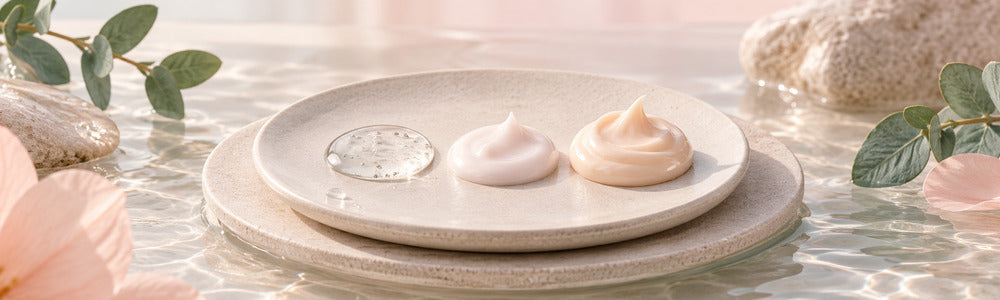
Choose Texture by Skin Type
Dry skin
Richer creams can feel more comfortable when skin is tight or dry.
Combination or oily skin
A lighter lotion or cream may feel easier to wear consistently.
Sensitive-feeling skin
Gluten-free status does not automatically make a formula gentler. Review the complete ingredient list and introduce new products gradually.
A Verified Glimmer Goddess Gluten-Free Moisturizer
The current live Shopify description for Triple Action Daily Moisturizer – Organic SPF 30 states that its mineral SPF formula contains no wheat, gluten, or gluten-derived ingredients. It combines facial hydration with non-nano zinc oxide mineral SPF 30.
That makes it a verified example for this guide. Follow the product's sunscreen directions and reapplication instructions rather than treating it like an ordinary night moisturizer.
Does Moisturizer Need to Be Gluten-Free for Celiac Disease?
Not generally for ordinary use on intact skin. The Celiac Disease Foundation says gluten is not absorbed through intact skin and must be ingested to affect someone with celiac disease. Products near the mouth or residue on hands before eating deserve more attention because transfer and ingestion are possible.
Read Celiac Disease Foundation guidance.
Is “Gluten-Free Moisturizer” an FDA Cosmetic Certification?
No. The FDA has a defined gluten-free labeling standard for foods, while cosmetics follow separate labeling requirements. Unless a cosmetic specifically states that it has third-party certification, do not assume certification from the words “gluten-free” alone.
What About Hand Cream?
For someone who needs strict dietary gluten avoidance, hand-product residue can be more relevant than moisturizer on the arms or face because the hands may touch food. Washing hands before eating is a simple practical step.
Frequently Asked Questions
Is gluten-free moisturizer better for sensitive skin?
No. The whole formula matters.
Is vegan moisturizer automatically gluten-free?
No. Vegan and gluten-free describe different formulation standards.
Do I need a separate moisturizer if my sunscreen is moisturizing?
Not necessarily. If a sunscreen product provides enough hydration for your skin and is used according to its directions, a separate daytime moisturizer may not be needed.
Related Guides
The Bottom Line
Choose a moisturizer for hydration, texture, and skin compatibility first. Then verify that its formulation fits your gluten-conscious preferences rather than letting one label make the entire decision for you.