



Castor Oil vs. Rosehip Oil for Skin: Moisture, Texture & Evidence Compared
Castor oil and rosehip oil are often grouped together as “anti-aging” facial oils, but they are not interchangeable. Castor oil is notably thick and rich in ricinoleic acid, while rosehip seed oil is lighter and valued for its fatty-acid profile. Both can support the feel of dry skin, but neither should be presented as a fountain of youth or a proven treatment for acne, eczema or wrinkles.
Castor Oil: What It Is Best Known For
Castor oil is pressed from Ricinus communis seeds. In skincare, its most straightforward role is as an emollient: it helps soften the skin surface and reduce the dry, tight feel that comes with moisture loss.
A 2026 dermatology review found promising uses for castor oil but also emphasized that more clinical research is needed to establish its effectiveness for many proposed benefits. Rare cases of contact dermatitis have also been reported.
For deeper background, see Jamaican Black Castor Oil for Skin: Benefits, Limits & Risks and How to Use Castor Oil on Skin: Patch Testing, Texture & Safety.
Rosehip Oil: How It Differs
Rosehip seed oil is a plant oil rich in fatty acids and naturally occurring antioxidant compounds. Reviews of topical plant oils describe rosehip as potentially useful for supporting the skin barrier and cosmetic skin conditioning, but the strength of evidence varies by outcome and formulation.
One important correction to common marketing language: rosehip oil is not the same thing as a prescription or over-the-counter retinoid. It should not be described as though it delivers the same clinically established effects as a retinoid medication.
Castor vs. Rosehip: Which Texture Fits Better?
- Castor oil: thicker, heavier and more occlusive-feeling.
- Rosehip oil: lighter and generally easier to spread in a facial oil blend.
- Dry skin: may appreciate a richer blend, especially at night.
- Oily or acne-prone skin: may prefer fewer drops or a lighter formula; there is no universal “non-comedogenic” guarantee for every person.
Can You Use Them Together?
Yes. A blended facial oil can combine castor oil’s richer feel with lighter botanical oils. The goal is comfort and conditioning, not treating disease or forcing the skin to “regenerate.”
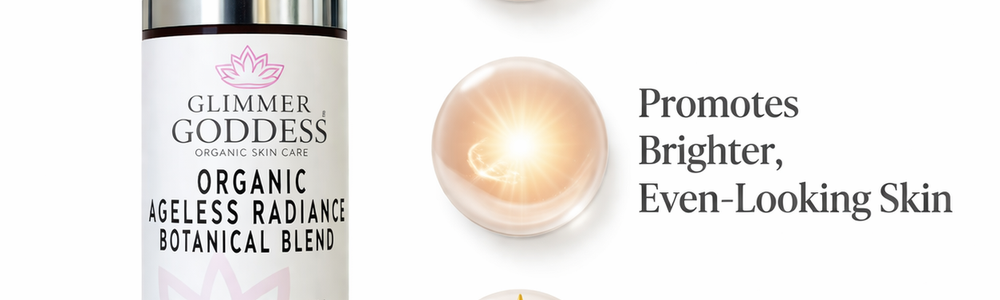
The current Organic Skin Brightening Serum – Ageless Radiance & Dark Spot Treatment is an oil-based Glimmer Goddess® formula that includes Jamaican black castor oil and rosehip seed oil among its botanical oils. Its role in a routine is cosmetic support for moisture, softness and the appearance of tone—not medical treatment.
How to Add a Facial Oil Without Making Skin Feel Greasy
- Cleanse and apply any water-based serums first.
- Use moisturizer if your routine needs one.
- Press one or two drops of facial oil over the skin rather than saturating it.
- Increase only if your skin still feels dry.
- Use sunscreen as the final morning skincare step.
If you are unsure about sequence, our skincare layering guide explains the general order.
Patch Testing Matters
“Natural” does not mean allergy-proof. Patch test a new oil or blend if you have reactive skin, and stop if you develop persistent redness, itching, swelling or burning.
Frequently Asked Questions
Does castor oil make skin produce more collagen?
There is not strong clinical evidence showing that topical castor oil reliably increases human skin collagen enough to justify that claim.
Does rosehip oil contain retinol?
Rosehip oil contains naturally occurring vitamin A-related compounds, but it should not be treated as equivalent to a formulated retinoid product.
Which oil is better for dark spots?
Neither oil has evidence comparable to established pigment-focused treatments. Consistent sun protection remains important when uneven tone is a concern.
The Bottom Line
Choose between castor and rosehip oil based on texture, tolerance and the formula around them. Both can be useful cosmetic emollients, but the evidence does not support turning either one into a cure-all.
Sources: 2026 review of castor oil in dermatology; review of topical plant oils and skin barrier effects.