



How to Wear Mineral Sunscreen Under Makeup Without Pilling
Last Updated: November 2, 2026
Quick Summary
Yes, you can wear mineral sunscreen under makeup. Apply a nickel-sized amount to a clean, hydrated base, let it set five to ten minutes until dry to the touch, then press foundation in thin layers instead of dragging it. Pilling usually comes from layering, not the sunscreen.
- Wait about five to ten minutes, or until the sunscreen film feels dry rather than tacky.
- Dot sunscreen across five points and blend outward with fingertips, not a brush.
- Fewer layers finish better; a heavy moisturizer, separate sunscreen, and silicone primer invite pilling.
- For full-coverage foundation, untinted mineral sunscreen is usually the safer choice.
- Reapply over makeup by pressing or misting, since rubbing and sweeping smear foundation.
Table of Contents
- Yes, You Can Wear Mineral Sunscreen Under Makeup: Here's How
- How to Apply Mineral Sunscreen Under Makeup Step by Step
- How Long to Wait Before Applying Makeup After Sunscreen
- Choosing Sunscreen That Does Not Pill Under Makeup
- Tinted vs. Untinted Mineral Sunscreen Under Foundation
- How to Reapply Sunscreen Over Makeup Without Ruining It
- Troubleshooting Pilling, Streaking, and Patchiness
- Build Your Morning Sun Protection Routine
- Frequently Asked Questions
Yes, You Can Wear Mineral Sunscreen Under Makeup: Here's How
A laboratory study that simulated typical consumer use tested what happens when sunscreen is worn beneath facial makeup, and the question of whether mineral sunscreen under makeup actually works comes down to formula and technique, not luck.
Here's the part most guides skip: the sunscreen isn't usually the problem. The layering is.
Below, you'll find a step-by-step routine, a wait-time chart, reapplication methods that won't wreck your foundation, and troubleshooting for the pilling that drives so many people to give up on mineral formulas entirely.
How to Apply Mineral Sunscreen Under Makeup Step by Step
Applying mineral sunscreen under makeup takes three steps: prep clean skin, apply enough sunscreen, and let it set fully before foundation. Skipping the set time is the single most common cause of pilling.
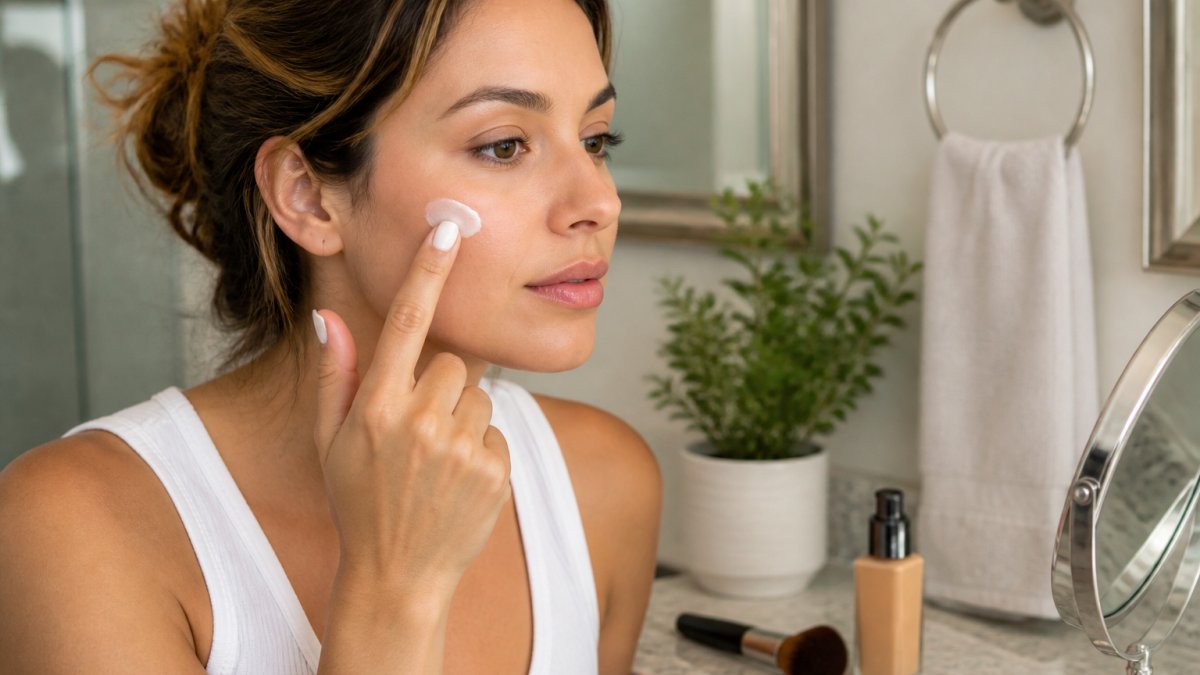
Step 1: Start With a Clean, Hydrated Base
Dry, flaky skin grabs at sunscreen and makeup alike. For more on hydrating dry skin in autumn, this routine covers the full picture. Start with a gentle cleanser, then follow with a toner or light hydrating layer while skin is still slightly damp. A cleanser and toner duo supports this clean, hydrated base. Give it a minute to absorb.
Step 2: Apply the Right Amount of Sunscreen
Most people apply far less sunscreen than they think. A thin smear gives you a fraction of the labeled SPF. Use roughly a nickel-sized amount for the face and neck, and dot it across five points before blending outward.
- Dot forehead, each cheek, nose, and chin
- Blend outward with fingertips, not a brush
- Let it dry down completely, don't rush this
Step 3: Let It Set, Then Apply Makeup
Wait until the sunscreen feels dry to the touch, not tacky. Then apply primer if you use one, followed by foundation in thin layers. Press, don't drag.
How Long to Wait Before Applying Makeup After Sunscreen
The ideal wait time before applying makeup after sunscreen is about five to ten minutes, or until the sunscreen film feels dry to the touch. There is no universal number, because dry-down time varies by formula, humidity, and skin type.
Rushing this step is where things fall apart. Foundation applied over wet sunscreen slides, separates, and pills. Use the wait as your getting-ready buffer: apply sunscreen first, then do your hair or brush your teeth, then come back to makeup.
A quick test: touch your cheek lightly. If product transfers to your fingertip, it needs more time.
Choosing Sunscreen That Does Not Pill Under Makeup
Sunscreen that does not pill under makeup tends to share three traits: a lighter texture, fewer heavy silicones or gums, and good compatibility with your primer and foundation. Mineral formulas vary widely here, so texture matters more than the label.
Look for:
- Fluid or lotion textures over thick creams for daytime layering
- Minimal white cast so foundation doesn't have to work overtime
- Non-nano zinc oxide for a smoother, more even film
- Fragrance-free options if your skin is reactive
Glimmer Goddess makes a Triple Action Daily Moisturizer with organic SPF 30 that combines daily hydration with non-nano zinc oxide in one morning step.

Watch out: layering a heavy moisturizer, a separate sunscreen, and a silicone primer under foundation is a recipe for pilling. Fewer layers, better finish.
Tinted vs. Untinted Mineral Sunscreen Under Foundation
Tinted mineral sunscreen adds light coverage and can blur uneven tone, which often means you need less foundation on top. Untinted formulas give you a blank canvas but can leave a white cast that foundation must cover.
| Feature | Tinted Mineral Sunscreen | Untinted Mineral Sunscreen |
|---|---|---|
| Coverage | Light, tone-evening | None |
| White cast risk | Lower | Higher on deeper tones |
| Best for | Minimal-makeup days | Full-coverage foundation |
| Layering tip | Skip heavy foundation | Match base to skin tone |
If you wear full-coverage foundation, untinted is usually the safer choice. For lighter makeup days, tinted sunscreen can replace your base entirely.
How to Reapply Sunscreen Over Makeup Without Ruining It
Reapplication over makeup can be tricky, and each reapplication method involves a different trade-off between protection, finish, and convenience. None of these methods fully replaces a morning application.
Here's the honest framework: the amount you apply determines the protection you get. A light dusting of SPF powder or a quick mist delivers a fraction of the labeled SPF because you're applying far less product than the label assumes.
Method 1: SPF Powder
Best for: oily and combination skin, mattifying through the day, and topping up over powder foundation.
How to apply: load a fluffy brush, tap off excess, and press, don't sweep, over the areas that catch the most sun: cheeks, nose, forehead, and chin.
Trade-off: powder is the least disruptive to makeup but also delivers the least product per pass, so protection is modest. It's a good mattifying touch-up, not a substitute for your morning application.
Method 2: Sunscreen Stick
Best for: targeted touch-ups on cheeks and nose, and for anyone who wants more product deposited than a powder provides.
How to apply: swipe the stick directly onto the back of your hand first, then press the product onto the face with a fingertip or a small sponge.
Triple Action Daily Moisturizer – Organic SPF 30 →
Trade-off: sticks deposit more product than powder, so protection is better, but they can feel heavier and may shift cream or liquid foundation if you press too hard.
Method 3: Fine Mist
Best for: a quick refresh over minimal makeup, and for anyone who prefers a weightless feel.
How to apply: hold the bottle at arm's length, close your eyes and mouth, and mist in a slow sweep. Let it dry completely before touching your face.
Trade-off: mists are the least likely to disturb makeup but also the easiest to under-apply, most people mist far less than the label assumes. They're a pleasant refresh, not a reliable protection boost.
What Reapplication Can and Can't Do
None of these methods fully replace a proper base layer in the morning. Think of them as maintenance, not a reset. If you'll be outdoors for extended periods, the most reliable approach is still to start the day with an adequate application of sunscreen and reapply with one of these methods when you can, and to accept that a makeup-preserving touch-up is a compromise, not a full reapplication.
Troubleshooting Pilling, Streaking, and Patchiness
Most layering problems aren't random, each symptom points to a specific cause. Use this diagnostic guide to match what you're seeing to what's actually going wrong, then apply the fix for that cause rather than guessing.
Pilling (Product Balls Up)
What it looks like: small rolled-up bits of product on the skin, often at the hairline, jaw, and around the nose.
Most common causes:
- Incompatible textures. A heavy cream, a silicone primer, and a mineral sunscreen can form layers that don't bond. Water-based and silicone-based products often separate when layered in the wrong order.
- Applying too fast. Foundation applied over sunscreen that hasn't fully set drags the sunscreen film and rolls it up.
- Too much product per layer. Thick layers of moisturizer, sunscreen, and primer stack into a film that can't hold together.
- Application technique. Sweeping or rubbing foundation across a set sunscreen film lifts it; pressing and patting keeps it in place.
Fixes:
- Wait longer between sunscreen and primer, until the sunscreen feels dry, not tacky.
- Use less product per layer; thin layers bond better than thick ones.
- Switch to a lighter primer or skip it entirely on sunscreen days.
- Apply foundation with a damp sponge, pressing rather than sweeping.
Streaking (Uneven, Visible Lines)
What it looks like: visible lines or bands where product hasn't blended evenly, often across the cheeks and forehead.
Most common causes:
- Uneven blending. Sunscreen or foundation applied in one thick pass rather than dotted and blended outward.
- Dry-down mismatch. A foundation that sets faster than the sunscreen beneath it can drag the sunscreen as you blend.
- Brush vs. fingers. A brush can sweep product unevenly if the sunscreen beneath is still slightly tacky.
Fixes:
- Dot sunscreen across five points and blend outward with fingertips.
- Let the sunscreen set fully before foundation.
- Apply foundation in thin layers, pressing with a sponge or blending with fingertips rather than sweeping with a brush.
Patchiness (Uneven Coverage, Dry Spots)
What it looks like: areas where makeup or sunscreen grabs, clings, or looks flaky, often on the nose, around the mouth, and on dry cheeks.
Most common causes:
- Dry or flaky skin. Dry patches grab product and hold it unevenly.
- Skipping hydration. Sunscreen applied to dry skin can emphasize texture rather than smooth it.
- Exfoliation gaps. A buildup of dead skin cells creates an uneven surface for any product to sit on.
Fixes:
- Hydrate before sunscreen, apply a light hydrating layer while skin is still slightly damp.
- Exfoliate gently once or twice a week to smooth flaky patches.
- Use a lighter sunscreen texture on dry areas, and press foundation rather than sweeping it.
For a deeper walkthrough on technique, this guide to applying mineral sunscreen without white cast covers blending and finish in more detail.
Build Your Morning Sun Protection Routine
A repeatable morning order beats any single product. Cleanse, hydrate, apply sunscreen generously, wait, then makeup. Keep the sequence the same every day and the finish gets predictable.
A ready-made routine helps here.
Consistency matters more than perfection. A routine you actually repeat daily protects your skin far better than an elaborate one you skip.
The real challenge isn't finding a mineral sunscreen that works under makeup. It's building a morning sequence you'll repeat without thinking.
Frequently Asked Questions
How long should you let mineral sunscreen sit on your face before applying makeup?
Give mineral sunscreen about 5 to 10 minutes to set before reaching for foundation or concealer. This lets the sunscreen film form and dry down, which reduces the chance of pilling or patchiness. If your sunscreen feels tacky, wait a little longer. A good test is to touch your cheek lightly; if product lifts or feels wet, it needs more time. Rushing this step is one of the most common reasons makeup separates over sunscreen.
What sunscreen does not pill under makeup?
Look for lightweight, non-greasy mineral formulas with non-nano zinc oxide and a quick-drying texture. Glimmer Goddess Organic Reef-Safe Sunscreen SPF 40 uses uncoated non-nano zinc oxide and a lightweight, quick-drying texture. Avoid thick, heavy creams or formulas with high oil content if you plan to wear foundation. Also check that your primer and foundation have compatible bases (water-based with water-based) to prevent pilling.
Can you reapply sunscreen over makeup?
Yes, but the method matters. Mineral sunscreen touch-up products can help you refresh protection without disturbing foundation. Press, don't rub, and focus on high-exposure areas like the nose, cheeks, and forehead. For a full reapplication, blot excess oil first, then gently pat a lightweight mineral sunscreen over makeup with a damp sponge. Reapply at least every two hours when you're outdoors, per the product label.
Should sunscreen go on before primer?
Sunscreen goes on after moisturizer and before primer. Think of it as the last step in your skincare routine and the first step in your makeup routine. Applying primer over sunscreen helps create a smooth canvas for foundation. Wait for the sunscreen to set fully before adding primer; otherwise, the layers can mix and pill.