




Collagen, Protein & Crepey Skin: What Really Matters
Protein supplies amino acids the body uses throughout its tissues, including skin, while collagen is one of skin’s major structural proteins. Adequate nutrition supports normal biology, but eating extra protein or taking collagen cannot guarantee that crepey skin will tighten or that visible aging will reverse.
How protein relates to skin
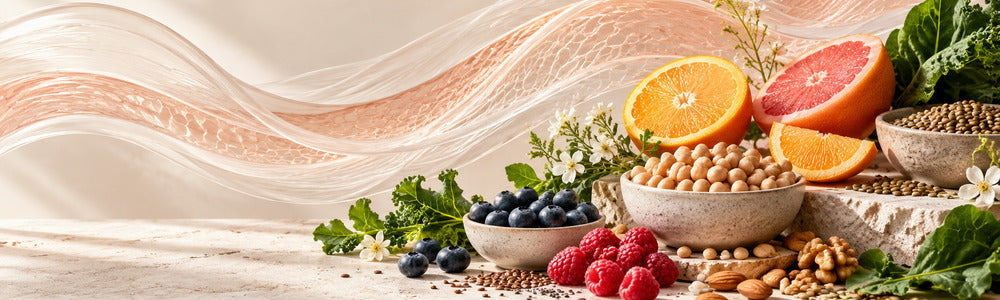
The body breaks dietary protein into amino acids and uses them where needed; it does not route a serving directly to loose skin. Protein needs differ with body size, age, activity, pregnancy and health status. Legumes, soy foods, nuts, seeds and whole grains can contribute in a plant-forward diet.
When a health issue affects protein intake, personalized guidance from a physician or registered dietitian is more appropriate than guessing from a beauty supplement label.
What collagen supplements can and cannot promise
Some studies report modest changes in hydration or elasticity after specific hydrolyzed collagen products, but trials vary in formula, dose, duration and sponsorship. Results from one branded supplement do not automatically transfer to every powder, gummy or drink.
Oral collagen is digested; it does not arrive in skin as an intact replacement layer. Supplements also cannot remove sun damage, permanently tighten loose tissue or replace a varied diet. Anyone with allergies, pregnancy, medication use or a medical condition should discuss supplements with a qualified clinician.
Topical collagen versus moisturizer
Collagen in a cream primarily contributes to surface conditioning and hydration. Large molecules do not simply rebuild the deeper collagen network. A dependable moisturizer can nevertheless make fine, dry texture look softer by reducing water loss.
The active Organic Whipped Body Butter for Extremely Dry Skin provides rich cosmetic moisturization. Apply a modest amount to slightly damp skin, especially after bathing. For very dry areas, layering a moisturizer and then oil generally works better than oil alone.
Gentle exfoliation may help remove flaky buildup. The Organic Whipped Sugar Body Scrub 10 oz should be used sparingly and never as a way to scrub wrinkles away.
A practical plan
- Eat regular meals with varied protein sources.
- Use moisturizer after bathing.
- Exfoliate gently only when needed.
- Protect exposed arms, chest and legs from sun.
- Reassess unexpected skin changes with a dermatologist.
Frequently asked questions
Can vegans support collagen without eating collagen?
Yes. The body synthesizes its own collagen using amino acids and other nutrients from a balanced diet.
Will more protein tighten loose skin?
Not reliably. Adequacy supports health, while excess intake is not a targeted skin-tightening treatment.
How fast should topical care work?
Softness can improve quickly; longer-term appearance depends on consistent hydration, sun protection and the cause of the texture.
This article provides general cosmetic and nutrition education, not individualized dietary or medical advice.