

Apple Stem Cell Skincare: How to Read the Ingredient List & Product Claims
“Apple stem cell” sounds more futuristic than the ingredient usually is. In cosmetics, the term generally refers to an extract or derivative produced from cultured plant cells—not living cells that can become human skin. The most useful way to shop this category is to read the actual ingredient list, evaluate the whole formula and separate realistic cosmetic benefits from regenerative marketing language.
Start With the Actual Ingredient, Not the Headline
A product may feature “apple stem cells” prominently on the front label, but the ingredient list tells you what is actually in the formula. Cosmetic plant stem-cell ingredients are typically cell-culture extracts or derivatives. They are not human stem-cell therapy and do not turn into new human skin cells.
For the terminology behind this category, read Plant Stem Cells in Skincare: What “Apple Stem Cell” Really Means.
Be Careful With “Regeneration” and “Reverses Aging” Claims
Botanical extracts can contribute antioxidants and other compounds to a cosmetic formula, but claims that a topical plant extract literally regenerates human tissue, replaces aged cells or reverses aging go beyond what ordinary cosmetics can establish.
Reviews of plant stem-cell cosmetics repeatedly note that clinical evidence on finished products is much more limited than marketing language can suggest.
Our Plant Stem Cell Skincare Claims: Regeneration, Collagen & What the Evidence Supports guide explains how to interpret these claims.
Look at the Supporting Formula
Visible results from a serum or moisturizer often come from the complete formula—not one featured botanical. Humectants can increase surface hydration, emollients can soften roughness, antioxidants can support protection from oxidative stress, and a well-designed moisturizer can reduce water loss.
That means an apple stem-cell product can still be useful even when you remove the “fountain of youth” language. The question is whether the full formula fits your skin and your goals.
Ask What the Product Is Supposed to Do
- Hydration: look for humectants and moisturizers, not just the featured extract.
- Smoother-looking skin: hydration and emollience can make fine dryness lines appear softer.
- Uneven tone: look for evidence-based brightening ingredients in the full formula.
- Wrinkles and photoaging: compare the evidence with better-established categories such as Vitamin A derivatives, Vitamin C and peptides.
For that comparison, see Apple Stem Cell Skincare vs. Vitamin A, Vitamin C & Peptides: How the Evidence Compares.
Current Glimmer Goddess® Options
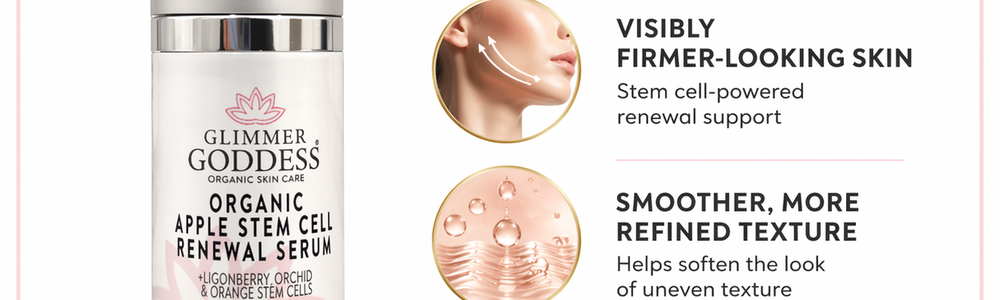
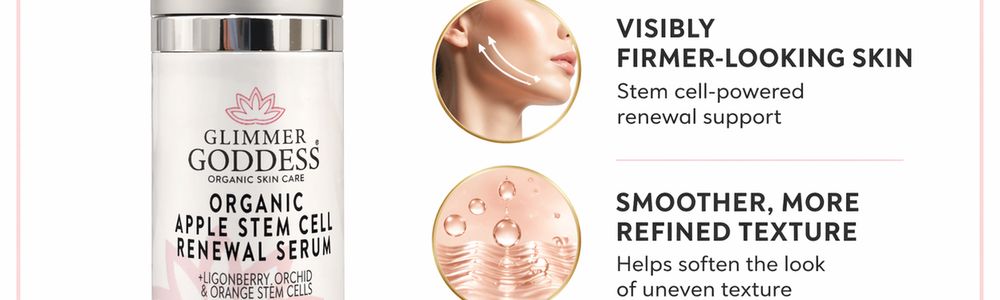
The active Organic Apple Stem Cell Anti-Aging Serum is the current Glimmer Goddess® serum in this category, and the Organic Apple Stem Cell Moisturizer – Anti-Aging Treatment provides the moisturizer step.
We recommend evaluating them as complete cosmetic formulas for hydration, conditioning and appearance support rather than treating the words “stem cell” as proof of biological regeneration.
Five Questions to Ask Before Buying
- What is the actual plant cell-culture ingredient?
- What other ingredients are doing the hydration, brightening or smoothing work?
- Are the claims cosmetic and realistic?
- Does the product fit the rest of your routine?
- Is there meaningful human evidence on the finished formula—or only ingredient marketing?
Frequently Asked Questions
Are apple stem cells alive in a serum?
Generally, no. Cosmetic formulas use extracts or derivatives from plant cell cultures.
Can apple stem cells become human skin cells?
No. Plant cells and human cells are biologically different.
Does that mean apple stem-cell skincare has no value?
No. Plant-derived extracts can be part of a well-formulated cosmetic product. The important step is matching the claims to the evidence.
The Bottom Line
Read apple stem-cell skincare the same way you would any other cosmetic: check the ingredient list, assess the whole formula, and favor realistic claims over regenerative language.
Sources: Plant stem cells in cosmetics: current trends and future directions; Stem Cells in Cosmetic Applications: Advancements, Challenges, and Future Directions.