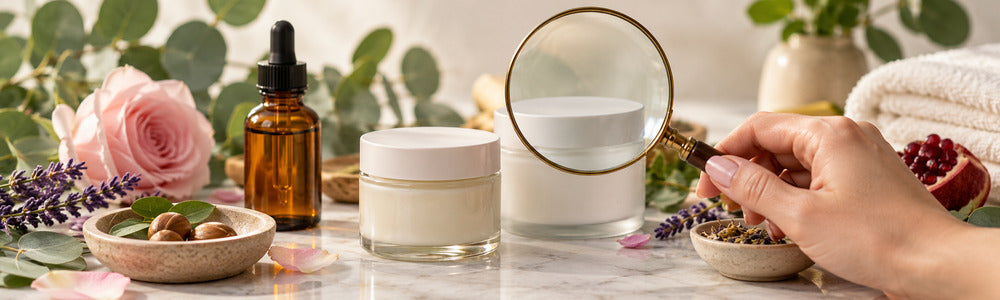




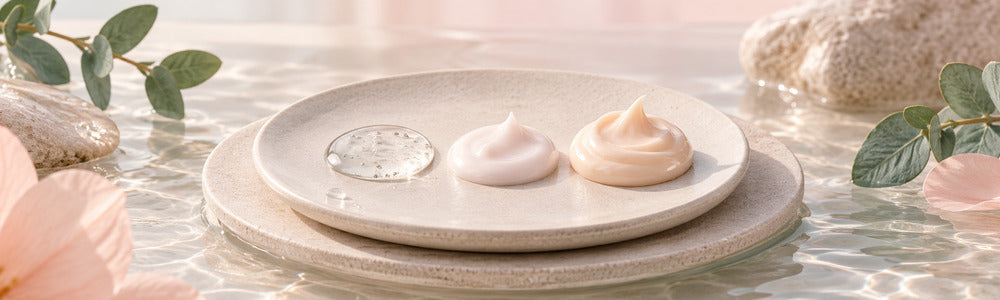
Shopping for a gluten-free moisturizer should not mean choosing between ingredient transparency and beautiful, effective skincare. The best moisturizer should fit your gluten-conscious preferences while still giving your skin the hydration, texture, comfort, and everyday support it actually needs.
The Simple Answer
What Makes a Good Gluten-Free Moisturizer?
A good gluten-free moisturizer should do more than simply avoid gluten-containing ingredients. It should also provide the right balance of hydration, softness, moisture support, texture, and skin compatibility for the person using it.
Look for clear finished-product information, a complete ingredient list, and useful moisturizing ingredients such as humectants, emollients, occlusives, botanical oils, and supportive skincare actives appropriate for your skin type.
Gluten-free status alone does not tell you whether a moisturizer will feel rich enough for dry skin, light enough for combination skin, or comfortable for sensitive-feeling skin.
Bottom line: the best gluten-free moisturizer is one that fits both your ingredient preferences and your skin's actual hydration needs.
Browse qualifying formulas in the Glimmer Goddess® Gluten-Free Skincare Collection.
6 Things to Look For in a Gluten-Free Moisturizer
1. Clear Gluten-Conscious Language
Look for straightforward information explaining whether the finished formula is made without gluten-containing ingredients rather than relying on vague wellness language.
2. A Complete Ingredient List
A transparent moisturizer should let you review the full formula, especially when wheat-, barley-, or rye-derived ingredients matter to you.
3. Hydrating Ingredients
Look beyond the gluten-free claim and choose ingredients that actually support hydrated, comfortable-feeling skin.
4. The Right Texture
Lightweight lotions and creams can suit everyday hydration, while richer textures may feel better for very dry skin or nighttime routines.
5. Skin-Type Compatibility
Gluten-free does not automatically mean appropriate for dry, oily, sensitive, mature, or combination skin. Match the whole formula to your skin.
6. A Brand That Answers Questions
If an ingredient source is unclear, a transparent skincare company should make it easy to request more information.
What Ingredients Actually Make a Moisturizer Work?
The most useful way to evaluate a gluten-free moisturizer is to look at the entire formulation rather than focusing only on the words “gluten-free.”
Humectants
Humectants help attract and bind water at the skin's surface.
Common examples include glycerin and hyaluronic acid.
Emollients
Emollients help soften and smooth the feel of dry, rough, or uneven skin.
Botanical oils and lipid-rich ingredients can play this role depending on the formula.
Occlusives
Occlusive ingredients help slow moisture loss by creating a protective layer at the skin's surface.
They can be especially useful in richer moisturizers designed for dry skin.
Supportive Actives
Some moisturizers also include antioxidants, peptides, botanical extracts, plant-derived actives, or other ingredients supporting additional cosmetic skincare goals.
These should complement—not replace—the moisturizer's core hydration function.
Do Not Let “Gluten-Free” Be the Only Reason You Buy a Moisturizer
Gluten-free is one useful product attribute, but it does not tell you everything you need to know about how a moisturizer will perform.
Ingredient Preference
A gluten-conscious formulation may align with your lifestyle or shopping preferences.
Skincare Performance
The moisturizer still needs to provide appropriate hydration, texture, comfort, and compatibility with your individual skin.
The strongest choice satisfies both.
How to Choose a Gluten-Free Moisturizer by Skin Type
Dry Skin
Dry skin often benefits from richer textures combining water-binding ingredients with nourishing emollients and moisture-sealing ingredients.
Look for a formula that leaves skin feeling soft and comfortable rather than tight shortly after application.
Normal to Combination Skin
A balanced or lightweight moisturizer may provide enough hydration without feeling overly heavy.
Texture preference and climate can also influence what feels best.
Sensitive-Feeling Skin
Gluten-free does not automatically mean sensitive-skin friendly.
Review the complete ingredient list, introduce new formulas gradually, and patch test when appropriate for your individual skin.
Mature Skin
Mature skin may benefit from formulas combining hydration with antioxidants, peptides, botanical actives, or ingredients supporting the appearance of smoother, more supple skin.
Consistent use and a comfortable texture matter too.
Face Moisturizer vs. Body Moisturizer: What Is the Difference?
Facial Moisturizers
Facial moisturizers are generally designed around the texture and needs of facial skin and may contain targeted cosmetic actives.
They often focus on hydration without feeling unnecessarily heavy under sunscreen, makeup, or other facial products.
Body Moisturizers
Body lotions and body butters are designed for broader areas and may use richer textures to help soften larger areas of dry skin.
Compare them in our Gluten-Free Body Lotion & Body Butter Guide.
Does Moisturizer Need to Be Gluten-Free for Celiac Disease?
Ordinary topical moisturizer generally does not need to be gluten-free solely because someone has celiac disease.
Medical Need
The Celiac Disease Foundation explains that gluten is not absorbed through intact skin and must be ingested to affect someone with celiac disease.
Ordinary moisturizer used on intact skin is therefore different from eating gluten.
Personal Preference
Some shoppers still prefer gluten-conscious moisturizers because the approach simplifies shopping or aligns with their broader ingredient preferences.
That can be a reasonable choice without presenting it as a universal medical necessity.
For the broader explanation, read Does Skincare Need to Be Gluten Free? and Can Gluten Be Absorbed Through Your Skin?.
What About Hand Cream and Accidental Transfer?
Where the Product Is Used Matters
A moisturizer applied to your arms or legs is different from residue sitting on your hands immediately before eating.
The concern is potential transfer to food or the mouth—not absorption through intact skin.
A Simple Practical Step
If ingredient transfer is a concern, wash your hands before preparing or eating food.
Follow individualized healthcare guidance when medically strict gluten avoidance is required.
Is “Gluten-Free Moisturizer” an FDA-Certified Cosmetic Category?
No. The FDA's formal gluten-free labeling standard applies to foods rather than creating a separate gluten-free cosmetic certification category.
Food Labeling
The FDA has a defined gluten-free rule for foods to create a consistent consumer standard.
Cosmetic Labeling
Cosmetics follow separate labeling requirements, and cosmetic claims still need to be truthful and not misleading.
How to Read a Moisturizer Label for Gluten-Related Ingredients
If you prefer to avoid gluten-containing ingredients, start with the major grain sources rather than trying to memorize every cosmetic term.
Wheat
Terms may include wheat protein, hydrolyzed wheat protein, wheat germ oil, or botanical terminology such as Triticum vulgare.
Barley
Barley-derived ingredients may appear under common names or botanical terminology such as Hordeum vulgare.
Rye
Rye-derived ingredients may appear under names including Secale cereale.
Want the Ingredient Deep Dive?
Learn the grain-derived and botanical terms that may appear across skincare formulas.
Want the Step-by-Step Label Method?
Learn how to scan an ingredient declaration and when to ask a manufacturer for clarification.
Gluten-Free, Vegan & Organic Moisturizers Are Not the Same Thing
Gluten-Free
Relates to gluten-containing ingredients or grain-derived sources in the formulation.
Vegan
Means the formula contains no animal-derived ingredients. Vegan does not automatically mean gluten-free.
Organic
Relates to how qualifying agricultural ingredients are grown, handled, processed, or certified under applicable organic standards.
These attributes can overlap, but one does not automatically guarantee another. For a deeper comparison, read Gluten-Free vs. Vegan Skincare: What’s the Difference?.
Glimmer Goddess® maintains a strictly vegan formulation standard.
Your Gluten-Free Moisturizer Shopping Checklist
Ingredient Questions
- Is the full ingredient list available?
- Does the brand clearly explain its gluten-conscious formulation?
- Are wheat-, barley-, or rye-derived ingredients present?
- Can the manufacturer answer sourcing questions?
Skin Questions
- Does the texture fit my skin type?
- Does it contain useful moisturizing ingredients?
- Will I realistically enjoy using it every day?
- Does the complete formula align with my skincare goals?
Where Does Moisturizer Fit in a Gluten-Free Skincare Routine?
Moisturizer is typically one of the later steps in a facial skincare routine because it helps seal in hydration and support the skin after cleansing and treatment steps.
The exact routine still depends on your products, skin type, and personal preferences.
See the full order in Best Gluten-Free Skincare Routine: Cleanser, Serum, Moisturizer & Body Care.
The Glimmer Goddess® Approach to Moisture
At Glimmer Goddess®, we believe a moisturizer should do more than check a box. It should feel beautiful on your skin, fit naturally into your ritual, and be supported by clear ingredient information.
Depending on the formula, Glimmer Goddess® moisturizers may include ingredients such as vegetal glycerin, hyaluronic acid, botanical oils, plant stem cells, antioxidants, and other supportive cosmetic actives.
Our skincare is strictly vegan, thoughtfully formulated, and handcrafted in Texas.
For shoppers who prefer formulas made without gluten-containing ingredients, explore our Gluten-Free Skincare Collection.
Find Your Gluten-Conscious Moisture Ritual
Explore qualifying Glimmer Goddess® vegan skincare and body-care formulas thoughtfully made without gluten-containing ingredients and handcrafted in Texas.
Shop Gluten-Free SkincareOur Editorial Standard
How This Guide Was Created
Skincare First, Marketing Claims Second
This guide was created to help shoppers evaluate gluten-free moisturizers as complete skincare formulas—not simply as products carrying one ingredient-related claim.
Grounded in Current Guidance
Cosmetic-labeling information was reviewed against current U.S. Food and Drug Administration resources. Celiac-related information was reviewed against Celiac Disease Foundation educational guidance.
Glimmer Goddess® has been creating vegan skincare and body-care products since 2015, with an emphasis on thoughtful formulation, ingredient transparency, luxurious textures, and small-batch care handcrafted in Texas.
Experience
Glimmer Goddess® develops facial moisturizers, body-care formulas, and other skincare products and works directly with ingredient declarations and finished formulations.
Expertise
Ingredient and formulation information is reviewed against current product specifications and recognized regulatory or educational sources when applicable.
Authoritativeness
Celiac and cosmetic-labeling statements are supported by sources including the Celiac Disease Foundation and U.S. Food and Drug Administration.
Trustworthiness
We distinguish cosmetic performance, formulation preferences, medical guidance, and third-party certification.
Gluten-Free Moisturizer FAQs
What is a gluten-free moisturizer?
A gluten-free moisturizer generally refers to a moisturizer formulated without gluten-containing ingredients derived from grains such as wheat, barley, rye, or related gluten-containing grain sources.
Does moisturizer need to be gluten-free if I have celiac disease?
Current Celiac Disease Foundation guidance states that gluten is not absorbed through intact skin. Ordinary topical moisturizer therefore generally does not need to be gluten-free solely because someone has celiac disease.
What ingredients should I look for in a good moisturizer?
Look for a formula appropriate for your skin type that may include humectants, emollients, occlusives, botanical oils, antioxidants, or other supportive cosmetic skincare ingredients.
Is gluten-free moisturizer better for sensitive skin?
Not automatically. Gluten-free status does not establish whether a moisturizer will suit sensitive skin. The entire formulation and your individual skin response matter.
Is vegan moisturizer automatically gluten-free?
No. Vegan describes the absence of animal-derived ingredients, while gluten-free relates to gluten-containing ingredients. A moisturizer can be one, both, or neither.
Does the FDA certify gluten-free moisturizers?
No. The FDA's formal gluten-free labeling rule applies to foods rather than creating a separate gluten-free cosmetic certification category. Cosmetic claims operate under separate labeling requirements.
What is the difference between body lotion and body butter?
Body lotion is generally lighter and easier to spread for everyday hydration, while body butter typically has a richer texture designed for more intensive conditioning. The best choice depends on your skin and texture preference.
Where can I shop Glimmer Goddess® gluten-free moisturizer options?
Browse qualifying facial and body-care formulas in the Glimmer Goddess® Gluten-Free Skincare Collection.
Continue Your Gluten-Free Skincare Guide
Explore the Complete Gluten-Free Skincare Resource Center
Choose the topic that best matches your next question.
Start with the complete definition, ingredient overview, and shopping guide.
Understand the difference between medical necessity and personal preference.
Explore topical exposure, celiac guidance, and accidental ingestion.
Learn which grain-derived and botanical ingredient names may deserve closer review.
Follow a practical process for evaluating cosmetic ingredient declarations.
Compare rich body butter with lighter everyday lotion.
Understand two commonly confused formulation terms.
Put cleanser, serum, moisturizer, and body care into the right order.
Explore qualifying Glimmer Goddess® facial and body-care formulas.
References
Celiac Disease Foundation: Gluten & Skin
FDA Cosmetics Labeling
FDA Gluten-Free Food Labeling
Shop Glimmer Goddess® Gluten-Free Skincare