



Reef-Safe Sunscreen: What the Term Means & How to Choose SPF
Protecting your skin from ultraviolet radiation and caring about marine ecosystems do not have to be competing goals. The key is understanding what labels such as “reef-safe” can—and cannot—tell you.
“Reef-safe” is commonly used in sunscreen marketing, but it should not be interpreted as a guarantee that a formula has zero environmental impact. Research on sunscreen ingredients and aquatic ecosystems is still evolving, and local rules can differ.
Start With Reliable Sun Protection
For skin health, choose a sunscreen labeled broad spectrum with an appropriate SPF and use it as directed. The U.S. Food and Drug Administration explains that sunscreen is one part of sun protection, alongside shade and protective clothing.
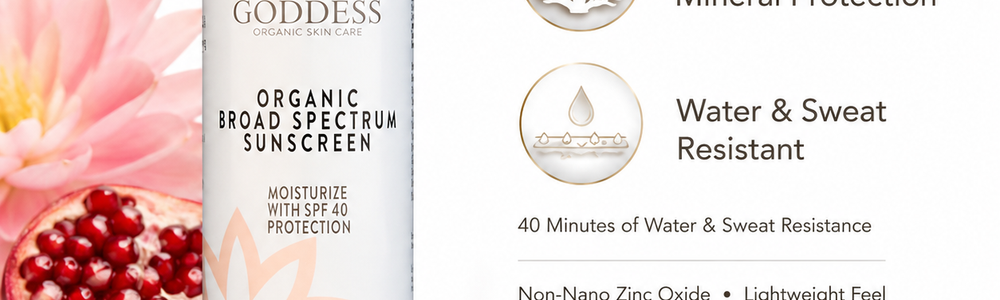
Glimmer Goddess® Organic Reef-Safe Sunscreen – Broad Spectrum SPF 40 is positioned as a mineral sunscreen option. As with any sunscreen, the practical priorities are correct application, adequate coverage and reapplication according to the label.
What Does “Reef-Safe” Mean?
There is no single label that can prove a sunscreen has no effect on every reef or marine organism under every condition. Environmental impact depends on the ingredients, concentrations, formulation, exposure and ecosystem being studied.
NOAA has reported concerns about several UV filters and other sunscreen-related compounds in marine environments. Its guidance also notes that research into how sunscreen ingredients affect reef ecosystems remains active. That makes absolute claims such as “completely harmless to coral” too broad.
Why Ingredient Choices Matter
Some sunscreen filters, including oxybenzone and octinoxate, have received particular attention because of research linking them with harm to corals and other marine life. NOAA also cautions that environmental questions are not limited to only those two ingredients.
Rather than relying on a single front-label phrase, read the active ingredients and follow any sunscreen requirements for the beach, park or destination you are visiting.
Sun-Protective Habits Reduce Reliance on Sunscreen Alone
- Seek shade when practical.
- Wear protective clothing, hats and UV-blocking sunglasses.
- Apply enough sunscreen to exposed skin.
- Reapply according to the product label, especially after swimming or sweating.
- Follow local environmental rules in reef and marine areas.
The Bottom Line
“Reef-safe” can be a useful shopping signal, but it should not be treated as a scientific guarantee of zero ecological impact. Choose effective broad-spectrum sun protection, review the active ingredients, follow local rules and pair sunscreen with shade and protective clothing.
For more environmental context, see NOAA’s overview of sunscreen chemicals and marine life.