



Winter Skincare Dos & Don’ts: 10 Habits That Protect Your Skin Barrier
Cold outdoor air, wind and heated indoor spaces can make skin feel drier or more reactive. The answer is not always a longer routine. A few winter skincare habits—gentler cleansing, smarter moisturizer timing and less unnecessary exfoliation—can do more than piling on products.
1. Do Use Lukewarm Water
Very hot showers and face washing can leave dry skin feeling tighter. The American Academy of Dermatology recommends warm rather than hot water and shorter bathing time when dryness is a problem.
2. Don’t Cleanse Until Skin Feels “Squeaky”
A stripped feeling is not a sign that skin is cleaner. Choose a cleanser that removes what you need without leaving your face uncomfortable afterward.
3. Do Moisturize While Skin Is Still Slightly Damp
Moisturizer works best when it helps hold onto water already present in the skin. After washing, gently pat rather than rubbing completely dry, then apply moisturizer.
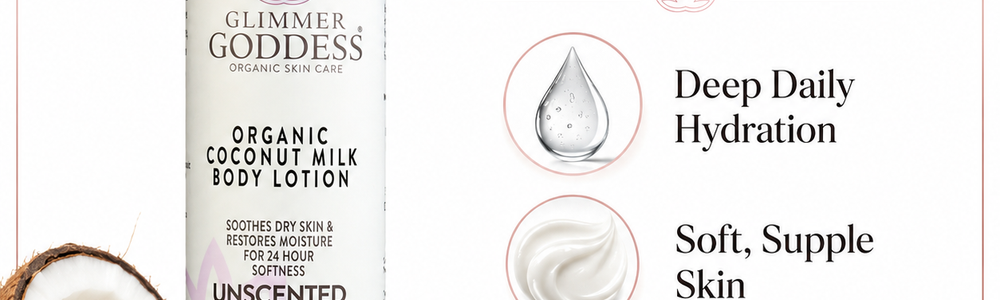
For body care, the current Glimmer Goddess® Organic Coconut Milk Body Lotion is a lighter daily option. If you prefer a richer texture, choose a body butter where needed.
4. Don’t Scrub Flaky Skin Just Because You Can See It
Visible flakes can tempt you to exfoliate harder, but irritated winter skin may need less friction and more moisture. If skin is stinging, peeling or red, pause nonessential exfoliation until it feels comfortable again.
5. Do Keep Sunscreen in Your Morning Routine
UV exposure does not disappear in cold weather. Use a broad-spectrum sunscreen as directed, especially when you will be outdoors for extended periods.
6. Don’t Introduce Several New Actives at Once
If your skin becomes irritated, you need to know what changed. Add new serums, acids or treatments one at a time rather than rebuilding the entire routine because the season changed.
Our six signs your winter routine needs an adjustment can help you decide whether a change is actually necessary.
7. Do Protect Exposed Skin Outdoors
Hats, scarves and gloves are practical skin-care tools. They reduce direct exposure to cold wind and help protect areas such as hands, ears and neck that are easy to overlook.
8. Don’t Assume “Natural” or Fragranced Means Gentle
Botanical extracts and essential oils can still irritate sensitive skin. If your skin becomes reactive in winter, choose products based on your own tolerance rather than marketing labels.
9. Do Manage Indoor Dryness Sensibly
A humidifier can add moisture to dry indoor air, but it needs proper cleaning and humidity control. More humidity is not always better; condensation or damp surfaces are signs to turn it down.
See our winter skin hydration guide for shower, moisturizer and humidifier tips.
10. Don’t Use Body Scrubs on an Irritated Face
Body products are formulated for body skin unless the label specifically says otherwise. A coarse or strongly scented body scrub is not a substitute for facial exfoliation, especially when facial skin is dry or wind-irritated.
A Simple Winter Routine
- Gentle cleanse.
- Optional hydrating serum or established treatment.
- Moisturizer appropriate for your skin.
- Broad-spectrum sunscreen in the morning.
For the body, apply lotion after bathing and add a richer product to especially dry areas if needed.
Frequently Asked Questions
Do I need to change every product for winter?
No. Keep products that are working. Adjust only the steps that no longer feel comfortable or sufficient.
Should I exfoliate less in winter?
There is no universal schedule. Let the product directions and your skin’s tolerance guide you. Reduce or pause exfoliation if skin is irritated or peeling.
Is fragrance always bad for winter skin?
No, but fragrance can irritate some people. If your skin is reactive, fragrance-free products may be easier to tolerate.
Does drinking more water replace moisturizer?
No. Normal hydration supports overall health, but topical moisturizer has a different role in reducing surface dryness and water loss.
The Bottom Line
Good winter skincare is less about chasing a perfect ingredient list and more about protecting comfort and barrier function. Use warm water, moisturize promptly, avoid over-exfoliating, protect exposed skin and make one routine change at a time.
Sources: American Academy of Dermatology: Tips to relieve dry skin; U.S. EPA: Use and Care of Home Humidifiers.